Healthcare Content Marketing: Strategy, Tactics, Examples
Patients, caregivers, and health-conscious consumers all start the same way, they search. They type symptoms, treatment options, provider comparisons, and wellness questions into Google before they ever pick up the phone. That makes healthcare content marketing one of the most effective ways to reach people at the exact moment they're looking for answers. But healthcare isn't like other industries. Regulatory requirements, medical accuracy, and patient trust raise the stakes on every piece of content you publish.
Getting it right means more than just blogging on a schedule. You need a strategy that accounts for HIPAA considerations, E-E-A-T signals (experience, expertise, authoritativeness, trustworthiness), clinical review processes, and the specific ways people search for health-related information. Without those foundations, even well-written content can fall flat in search results, or worse, erode trust with your audience.
This guide breaks down exactly how to build a healthcare content marketing strategy from scratch, including the tactics that move the needle, the pitfalls to avoid, and real examples from organizations doing it well. Whether you run a private practice, a health tech startup, or a hospital marketing department, or you're weighing medical content marketing services, you'll walk away with a clear framework you can put into action. And if producing SEO-optimized content consistently is the bottleneck (it usually is), tools like RankYak can automate the heavy lifting, from keyword discovery to daily publishing, so your team can focus on clinical accuracy and patient care instead of staring at a content calendar.
Why healthcare content marketing matters
The healthcare industry sits at a unique intersection of high-stakes decisions and constant information-seeking behavior. People don't just browse health content casually. They search with urgency, compare providers, look for explanations of diagnoses, and try to understand treatment options before they ever walk into a clinic. That behavior creates a wide-open opportunity for healthcare organizations that show up with accurate, helpful content at the right moment.
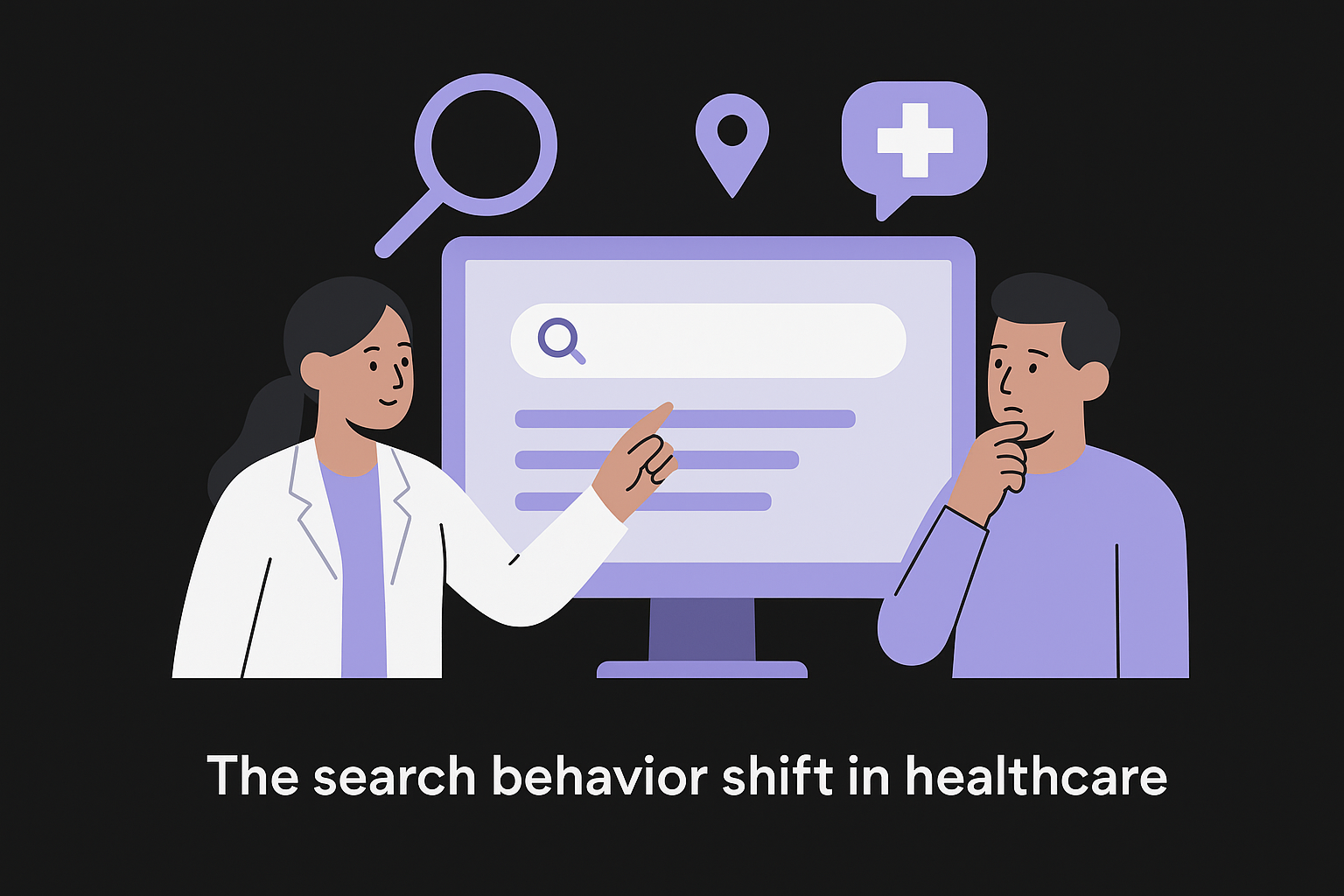
The search behavior shift in healthcare
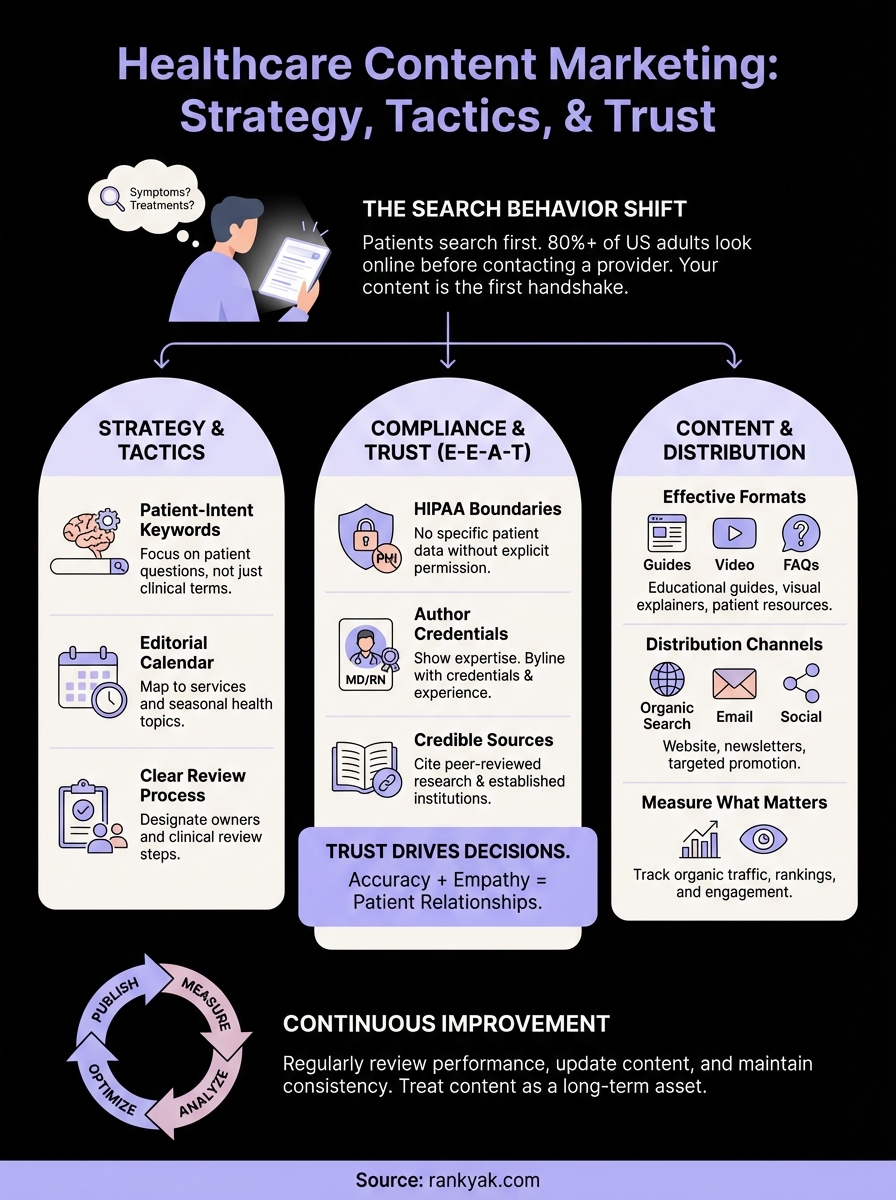
Patients have fundamentally changed how they find and evaluate healthcare providers. Research from the Pew Research Center shows that more than 80% of U.S. adults search for health information online before contacting a provider. They type in symptoms, look up conditions, compare hospitals, and read patient reviews. By the time someone calls your office or books an appointment, they've already formed a strong opinion about whether they trust you.
Your content is often the first handshake. A well-researched article or a detailed FAQ page about a specific condition does more than drive traffic. It signals to a prospective patient that your organization understands their concern, communicates clearly, and values their time. Organizations that ignore this shift hand that first impression over to whoever ranks above them in search results.
Trust drives patient decisions
Healthcare is a high-trust category. People aren't choosing a product they can return. They're choosing who manages their health, their child's care, or a serious medical decision. Content that demonstrates clinical accuracy and genuine empathy builds that trust before a patient ever sets foot in your facility or speaks to a staff member.
Content that earns trust in healthcare doesn't just attract traffic. It creates the foundation for long-term patient relationships.
This is where E-E-A-T principles (experience, expertise, authoritativeness, and trustworthiness) become especially important. Google applies stricter scrutiny to health-related content because it falls under the "Your Money or Your Life" category. Content that signals real clinical expertise, cites credible sources, and includes author credentials performs better in search because it's genuinely more trustworthy, not because it gamed a ranking system.
The competitive advantage of consistent content
Most healthcare organizations underinvest in content. They post sporadically, rely on generic copy from a website template, or publish material that reads like a brochure rather than a resource. That gap is your opportunity. A consistent healthcare content marketing strategy lets you capture the attention of patients who are actively searching, build authority around the conditions and services you specialize in, and stay visible as AI-powered search tools increasingly pull answers from trusted sources.
Organizations winning in organic search right now are publishing structured, expert-reviewed content on a regular basis. They answer the questions their patients actually ask, in language that's clear without dismissing the complexity involved. You don't need a massive team to compete here. You need a strategy that prioritizes the right topics, keeps publishing consistent through a rolling content plan, and treats content as a long-term asset rather than a one-time campaign push.
Who you're creating content for
Before you write a single article, you need a clear picture of your audience. Healthcare content marketing serves a wider range of readers than most industries, and lumping them all together leads to content that's too generic to be useful to anyone. Different readers come with different questions, different levels of health literacy, and different decision-making timelines. Getting specific about who you're targeting changes everything from the topics you choose to the tone you use.
Patients at different stages of their health journey
A person who just received a diagnosis has completely different content needs than someone proactively researching preventive care options. Early-stage patients are typically searching for condition explanations, symptoms, and what to expect from treatment. Further along in their journey, they want provider comparisons, procedure details, recovery timelines, and cost information.
Mapping your content to where a patient is in their decision process is one of the highest-leverage moves you can make in healthcare content strategy.
You should build out content that covers each stage without assuming your reader already knows the basics. Write condition overview pages that explain terminology in plain language. Then write more detailed content that supports readers who are ready to take action. Both types serve real search intent and build authority in your specialty area.
Caregivers and family members
Caregivers are a significant and often overlooked segment of your audience. A parent researching pediatric treatment options, a spouse navigating a partner's cancer diagnosis, or an adult child looking into memory care facilities all rely heavily on online research to make informed decisions. They tend to search with urgency and look for content that combines clinical detail with practical guidance.
Your content should acknowledge their perspective directly. Guides on "what to expect when a loved one has X condition" or "how to talk to a doctor about Y" perform well with this group because they address the emotional reality alongside the clinical facts. Caregivers are often the ones booking appointments, so earning their trust through content translates directly into patient acquisition.
Referring physicians and professional audiences
If your organization relies on physician referrals, your content strategy needs a professional-facing component alongside your patient-facing content. Physicians respond to clinical depth, outcome data, and clear communication about your specialization. Case studies, clinical white papers, and evidence-based practice guides serve this audience far better than general wellness articles.
Keeping these three audiences distinct in your planning means every piece of content you create has a clear purpose and a specific person in mind.
What to include in a healthcare content strategy
A healthcare content strategy isn't just a list of blog post ideas. It's a documented plan that connects your content output to specific business goals, audience segments, and clinical specialties. Before you start producing anything, you need to map out the core components that will guide every decision your team makes, from topic selection to publication cadence.
Keyword and topic research grounded in patient intent
Start with the questions your patients are actually asking, not the terminology your clinical staff uses internally, which is why keyword research matters so much here. Patients search for "back pain that won't go away" not "chronic lumbar syndrome." Tools like Google Search Console give you direct insight into what phrases are already bringing people to your site. From there, you can expand into related topics that align with the conditions you treat and the services you offer.
Keyword research in healthcare content marketing should always start with the patient perspective, then layer in clinical accuracy.
You also want to identify content gaps relative to your competitors. Look at what ranks in your specialty area and ask whether your site covers those topics with equal or greater depth. The goal is to build a library of content that answers the full range of questions a patient might have across the entire decision-making process.
An editorial calendar built around your services
Once you have your target topics, you need a realistic publishing schedule on a content calendar you can actually keep, tied to your core service lines. Map content themes to the conditions and treatments that drive the most patient volume for your organization. A cardiology practice might prioritize content around heart disease prevention, diagnostic procedures, and post-surgery recovery in that order of patient search volume.
Your calendar should account for seasonal health topics as well. Flu season, allergy season, and awareness months like Breast Cancer Awareness Month create predictable spikes in search demand. Planning around those windows puts your content in front of people exactly when they're searching most.
Clear ownership and a review process
Every piece of content needs a designated owner and a defined clinical review step before it publishes. Assigning responsibility prevents content from stalling in drafts indefinitely. Your review process should specify which credentials are required to approve content in each clinical area, whether that's a physician, a certified health educator, or a licensed specialist.
Without a formal content creation workflow and review step, even well-researched content can slip through with inaccuracies that damage patient trust and create regulatory risk. Build the process before you need it, not after a problem surfaces.
How to create compliant, trustworthy content
Compliance and trust aren't separate goals in healthcare content marketing. They reinforce each other. Content that meets regulatory requirements while clearly demonstrating clinical expertise builds the kind of credibility that earns both patient trust and better search visibility. The frameworks below give you a foundation for producing content that holds up on both fronts.
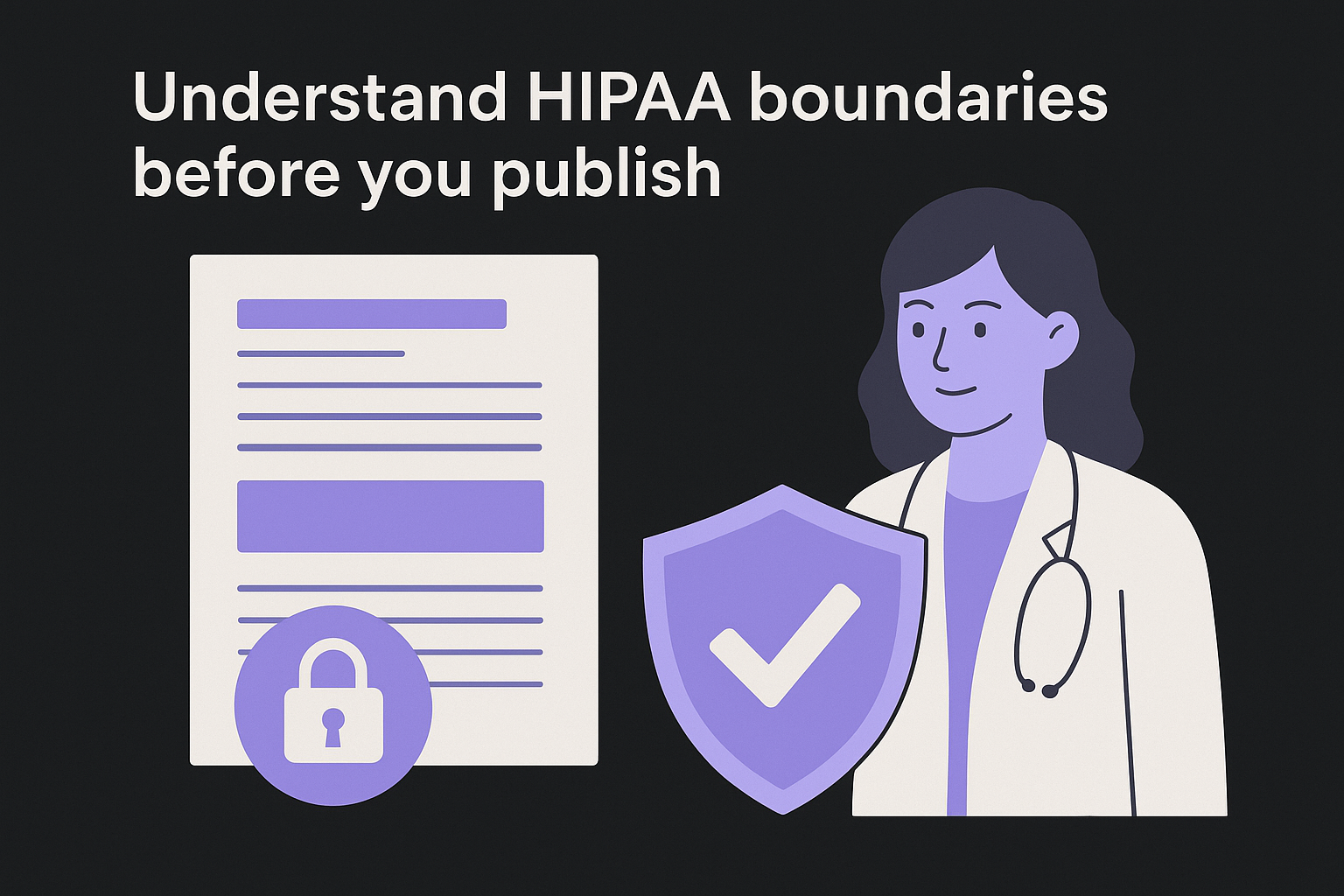
Understand HIPAA boundaries before you publish
HIPAA doesn't restrict you from writing about conditions, treatments, or health topics in general. What it governs is the use or disclosure of protected health information (PHI). Where content creators most commonly run into trouble is in case studies, testimonials, and patient success stories. Before you publish any content that references a specific patient's experience, confirm that you have explicit written authorization, and that the content doesn't disclose identifiable details beyond what the patient approved.
The safest approach is to treat any patient-specific narrative as requiring legal review before it goes live, regardless of how anonymized it appears.
Your clinical and legal teams should both sign off on any templates you create for patient stories or condition spotlights. Build that checkpoint into your workflow from the start.
Build author credentials directly into the page
Google's quality rater guidelines place health content in the highest-scrutiny category because the stakes for readers are real. That means authorship information isn't optional. Every article should carry a clear byline that links to an author page listing the author's credentials, clinical background, and areas of expertise, one of the SEO writing techniques that signals real expertise. If a licensed clinician reviewed the content rather than wrote it, include a reviewer credit with equal detail.
This practice directly supports E-E-A-T signals that Google's systems use to evaluate trustworthiness. Readers also respond to it. When someone is researching a diagnosis or treatment option, knowing that a board-certified specialist reviewed the content gives them a reason to stay and trust what they're reading rather than bouncing to another source.
Use credible sources and cite them visibly
Your content should reference peer-reviewed research, clinical guidelines, and established health institutions wherever claims are made. Citing sources like the CDC or NIH isn't just good practice for accuracy; it signals to both readers and search engines that your content is grounded in evidence rather than opinion. Link directly to the source material within the body of the article so readers can verify claims themselves. That transparency builds trust faster than any marketing message ever will.
Content types and examples that work in healthcare
Not every content format works equally well in healthcare, and spreading your effort thin across too many formats usually produces mediocre results everywhere. Successful healthcare content marketing focuses on the formats that match how patients actually consume health information and that lend themselves to the kind of depth and credibility your audience expects. The following content types consistently perform well and are worth prioritizing in your plan, and it also helps to study content marketing examples from other industries.
Educational blog posts and condition guides
In-depth articles and condition pages are the backbone of most high-performing healthcare content programs. Patients searching for information about a diagnosis or treatment option want comprehensive explanations, not surface-level summaries. A well-structured guide covering what a condition is, how it's diagnosed, what treatment options exist, and what recovery looks like gives readers a complete picture without forcing them to visit five different sites.
The organizations that rank consistently in healthcare search are the ones publishing thorough, clinician-reviewed content that answers the full range of patient questions in one place.
The Cleveland Clinic's Health Library is a widely cited example of this approach done well. Each article covers a topic with enough depth to be genuinely useful while linking to related conditions and next steps, making it easy for readers to navigate their own questions. You can apply the same structure at a smaller scale by focusing first on the conditions most central to your practice and expanding from there.
Video and visual explainers
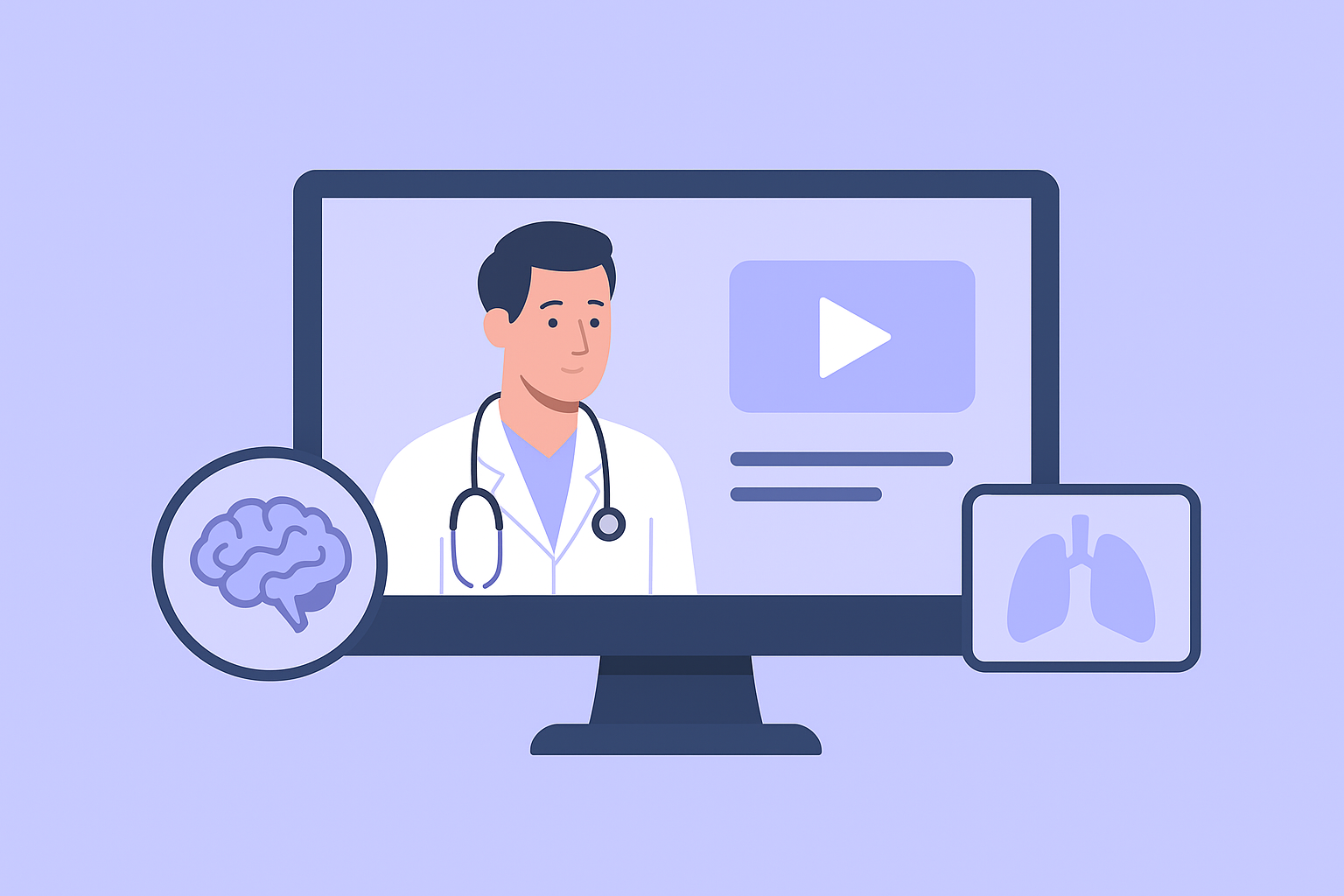
Video performs strongly in healthcare because it gives patients a way to understand complex procedures, anatomy, and treatment processes in a format that's easier to absorb than dense text. Short videos explaining what to expect during a specific procedure, or a physician walking through a common diagnosis, help reduce patient anxiety and position your organization as approachable and transparent.
Pairing video with a written transcript or supporting article also gives you SEO value that video alone can't deliver, since search engines index the text. Even simple, well-lit recordings of a provider answering frequently asked questions outperform generic stock-image content by a wide margin.
FAQ pages and patient resource guides
FAQ pages directly match the question-based search behavior that defines how patients look for health information. A structured FAQ page targeting specific questions tied to your services captures search traffic and builds trust at the same time. Resource guides collecting downloadable checklists, preparation instructions, or post-visit care summaries serve existing patients while also attracting new ones searching for practical information.
Distribution and promotion across channels
Creating strong content is only half the work. Getting that content in front of the right people at the right time requires a deliberate content distribution strategy that matches where your audiences actually spend their time. In healthcare content marketing, the channels you prioritize should reflect your specific audience segments, whether that's patients searching for answers, caregivers doing research on behalf of a loved one, or referring physicians looking for clinical depth.
Organic search and your website
Your website is the primary destination for all your content, and organic search is the highest-value channel for healthcare organizations because it captures people who are already looking for what you offer. Structuring your content with clear headings, internal links, and condition-specific landing pages, the core on-page SEO techniques, helps search engines understand the breadth of your expertise and surfaces the right article for each query.
Internal linking between related content is especially important in healthcare because patients rarely have a single question. Someone reading about managing Type 2 diabetes will also want to know about nutrition, medication options, and what to expect at follow-up appointments. Connecting those articles keeps readers on your site longer and builds topical authority across your entire specialty area.
Your website content works hardest when it's structured to serve a reader's full line of questions, not just the one that brought them there.
Email and patient communication
Email gives you a direct line to people who already trust your organization enough to share their contact information. A regular newsletter or health education email keeps your practice top of mind between appointments and gives you a reliable channel to promote new articles, seasonal health reminders, and service updates.
Segmenting your email list by condition, care stage, or patient demographics lets you send more relevant content to each group instead of sending generic messages to everyone, which is personalised content marketing in practice. A patient managing a chronic condition has different information needs than someone who came in for a routine checkup, and matching your distribution to those differences directly increases engagement.
Social media and paid promotion
Social platforms work best in healthcare for amplifying content that already performs well organically rather than as a standalone content destination, which is the practical difference between content marketing and social media marketing. Sharing well-researched articles, provider spotlights, and patient education resources on platforms like Facebook and LinkedIn extends your reach to caregivers, community members, and professional referral networks.
Paid search promotion can accelerate visibility for high-priority service lines while your organic content builds long-term momentum. Running targeted campaigns around your strongest content gives it an initial boost and helps you gather performance data faster than organic search alone.
How to measure results and improve over time
Publishing content without tracking performance means you're spending time and budget with no way to know what's working. Healthcare content marketing requires the same discipline in measurement as it does in production. Measuring content marketing success means the metrics you track connect directly to the goals you set at the start, whether that's increasing patient inquiries, growing organic traffic to specific service pages, or building authority around a clinical specialty.
The metrics that actually tell you something
Not every number in your analytics dashboard deserves equal attention. Organic search traffic and keyword rankings tell you whether your content is reaching people who are actively searching for your services. Track these at the page level, not just the site level, so you can see which topics and formats drive the most meaningful visits.
The gap between a page that ranks on page two and one that ranks in the top three positions is the difference between occasional traffic and consistent patient inquiries.
Content engagement metrics like average time on page and scroll depth show you whether visitors are actually reading your content or bouncing immediately. A high-ranking article with poor engagement is a signal that the content isn't matching what the reader expected, which gives you a clear direction for revision. Google Search Console (available at search.google.com/search-console) is one of the most reliable free tools for monitoring impressions, click-through rates, and the specific queries driving traffic to each page.
Turning data into content decisions
Raw data only creates value when you use it to make decisions. Set a regular review cadence, monthly at minimum, to evaluate which content is gaining traction, which is stalling, and which pages have lost ground to competitors. Articles that rank well but generate low engagement often need stronger internal links or a clearer call to action. Pages that have slipped in rankings may need updated statistics, expanded coverage of a topic, or improved author credentials to recover.
Building a simple tracking document that logs each article's ranking position, organic traffic, and conversion rate over time gives your team a clear baseline to track SEO performance against. Prioritize updates to your highest-traffic pages first, since improvements there produce the largest immediate return. Over time, this review process compounds. Each round of updates strengthens your content library and builds the kind of sustained search visibility that a one-time publishing push can never match.
Next steps
Building a successful healthcare content marketing strategy comes down to consistent execution across every element covered in this guide: knowing your audience, producing clinically accurate content, optimizing for trust and search visibility, and measuring what moves the needle. None of these pieces work in isolation, and the organizations that see real results treat content as an ongoing program, not a one-time project.
Your most practical next step is to pick one underserved topic your patients search for regularly and build a thorough, expert-reviewed piece around it. From there, add a publishing schedule you can realistically maintain, track your rankings, and update content that loses ground over time.
If keeping up with daily content production is the bottleneck holding your strategy back, you can hand keyword research, article writing, and daily publishing to RankYak so your team stays focused on patient care. Start a free 3-day trial and see how much ground you can cover.
Lars Koole is a co-founder of RankYak and has worked in SEO since 2021, on the side where a strategy has to become a live page: inside agencies, alongside them, for clients directly, and in-house on the products being ranked. He is a software engineer by trade, which is how that page gets built. Before RankYak he founded companies of his own, two of which were acquired. At RankYak he owns the engineering and everything AI, and works out the solution and the implementation of each new feature.