What Is the Importance of Backlinks for SEO? Examples + Tips
Backlinks are links from other websites pointing to yours. Think of them as votes of confidence that tell search engines your content is worth reading. When a reputable site links to your page, Google interprets this as a signal that your content provides value. More quality backlinks typically mean better rankings and more organic traffic flowing to your site.
This article breaks down why backlinks matter for SEO and how they influence your search visibility. You'll learn the characteristics that separate powerful links from weak ones, discover practical methods to earn backlinks that move the needle, and see real examples of different backlink types. We'll also cover the mistakes that waste your time or damage your rankings so you can focus your efforts where they count. By the end, you'll know exactly how to build a backlink strategy that strengthens your site's authority and brings in the traffic you need.
Why backlinks are crucial for SEO
Backlinks shape how search engines evaluate your website's trustworthiness and relevance. When another site links to yours, it sends a signal that your content deserves attention. Google's algorithms use these signals to determine which pages should rank for specific queries. The importance of backlinks extends beyond just rankings because they connect your content to a broader network of information that search engines crawl and index every day, which is the starting point of any beginner's guide to SEO backlinks.
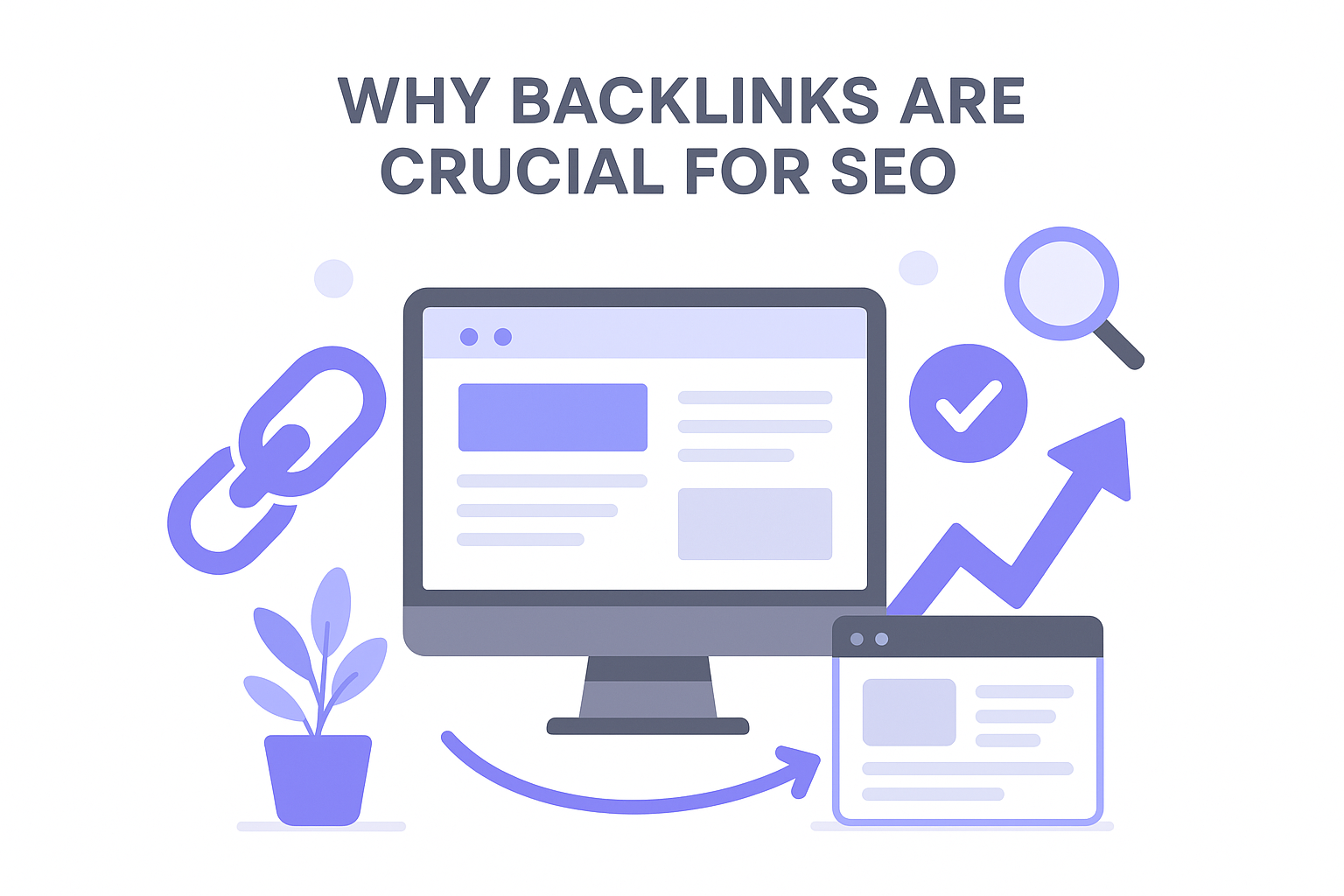
Search engines treat them as trust signals
Google uses backlinks as one of its primary ranking factors when deciding which pages deserve top positions in search results. Each link acts as a vote that tells the algorithm your content provides value worth sharing. Sites with more quality backlinks typically outrank competitors with fewer links because search engines interpret this pattern as evidence of expertise and reliability.
The trust signal becomes stronger when the linking site has established authority in your niche. A backlink from a respected industry publication carries more weight than one from a new blog with limited traffic. Search engines analyze not just the quantity of your backlinks but also their quality, relevance, and the context in which they appear.
Quality backlinks from authoritative sources tell search engines your content meets high standards and deserves visibility.
They drive referral traffic to your site
Backlinks create direct pathways for visitors to discover your content through other websites. When someone reads an article on a popular site and clicks a link to your page, you gain referral traffic that wouldn't have found you through search alone. This traffic often converts better because these visitors arrive with context and interest already established by the content they were reading.
Referral traffic from backlinks can continue flowing to your site for months or years after publication, one of the proven benefits of link building for SEO growth. Unlike paid advertising that stops when your budget runs out, a single backlink on a high-traffic page keeps sending visitors your way. The cumulative effect of multiple backlinks means you build steady traffic streams from various sources across the web.
Your site gains authority and credibility
Each quality backlink strengthens your site's overall domain authority in the eyes of search engines. This authority accumulates over time and helps all your pages rank better, not just the specific pages that received links. Your site becomes recognized as a trusted resource in your niche, which makes it easier to rank for competitive keywords and attract more organic traffic.
Authority also affects how quickly new content gets indexed and starts ranking. Search engines crawl sites with higher authority more frequently, which means your fresh content appears in search results faster. This advantage compounds as you continue publishing, creating a cycle where strong authority leads to better rankings, which attract more backlinks, which further increase your authority.
How to earn backlinks that actually help
Earning backlinks requires a strategic approach focused on creating value and building genuine relationships. You need methods that attract links naturally while also allowing you to proactively reach out when appropriate. The tactics below give you concrete ways to build backlinks that strengthen your rankings and bring real traffic to your site.
Create content worth linking to
Your content needs to solve specific problems or answer questions that people in your industry actively search for. Focus on creating comprehensive guides, original research, case studies, or visual content like infographics that provide unique value. When you publish something genuinely helpful, other sites naturally want to reference it as a resource for their own readers.
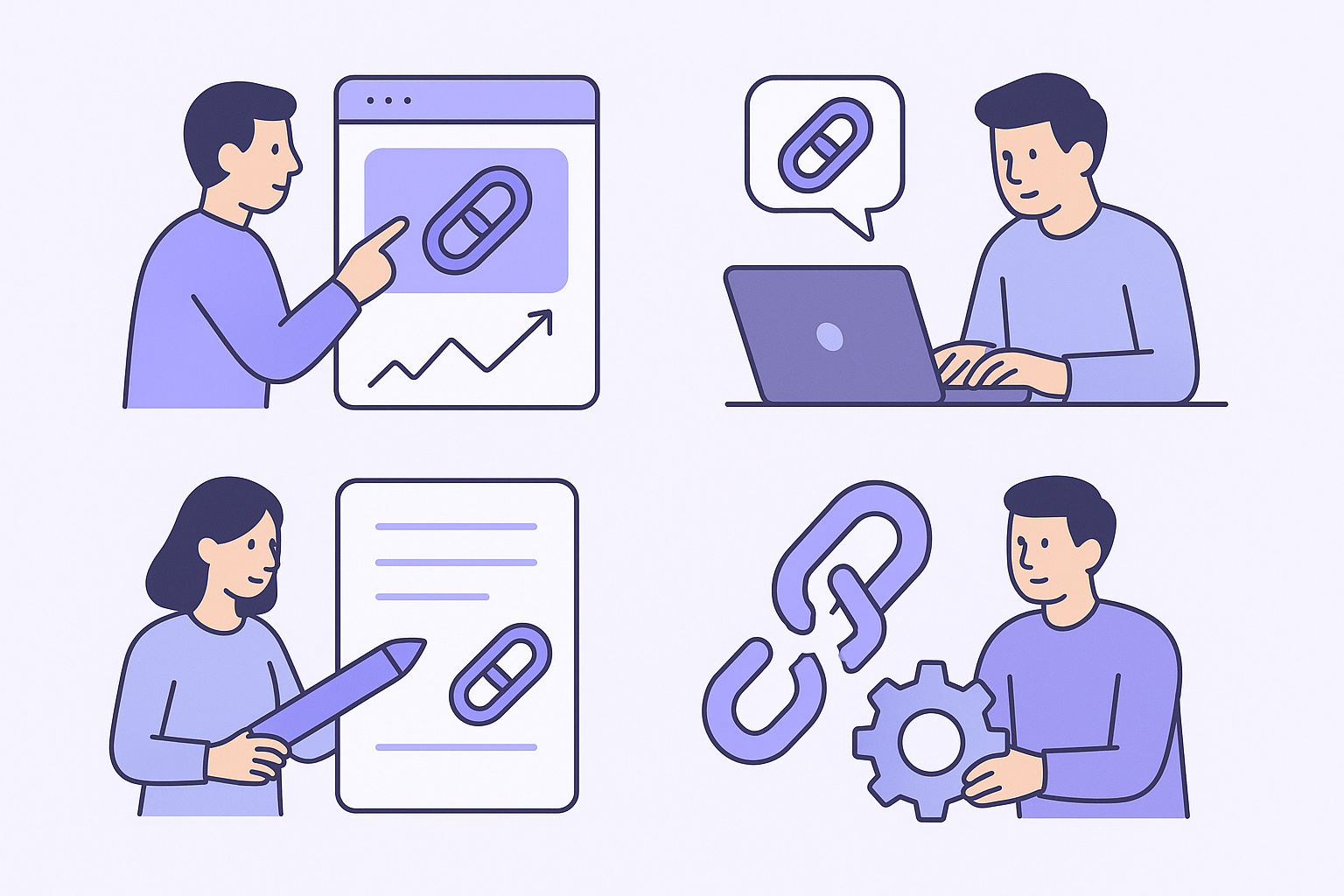
Original research and data stand out because few websites invest the time to create them. Conduct surveys in your industry, analyze trends, or compile statistics that don't exist elsewhere. Websites looking for credible sources to back up their claims will link to your data, and these citations often come from high-authority sites, the same dynamic behind digital PR link building, strengthening your overall link profile.
Content that offers unique insights or data naturally attracts backlinks because other creators need reliable sources to support their work.
Reach out to relevant sites in your niche
Identify websites that already cover topics related to your content and could benefit from linking to your resource. Look for articles where your content would add value to their readers. Send personalized emails explaining exactly how your resource improves their existing article or fills a gap their audience needs, one of the most dependable white hat link building techniques.
Your outreach message should focus on the benefit to their readers rather than what you gain from the link. Keep it brief and specific about where your content fits naturally into their article. Most site owners appreciate when you point out ways to make their content more valuable, especially if you've clearly read their work and understand their audience.
Guest post on established platforms
Writing articles for reputable websites in your industry lets you demonstrate expertise while earning backlinks to your site. Target publications that accept contributions from outside writers and have engaged audiences in your niche, since guest posting for backlinks only pays off when the host site is a real fit. Your guest posts should match the quality of content you publish on your own site and provide genuine value to the host site's readers.
Include links back to your site naturally within the content where they add context or support your points. Avoid forcing links that don't enhance the reader's experience. Most publications allow author bios where you can link to your homepage or a relevant resource, which still provides SEO value even if it's a nofollow link.
Fix broken links on other websites
Find broken links on high-authority sites in your industry that previously pointed to resources similar to your content. You can identify these opportunities by searching for pages about topics you cover and checking for links that no longer work. Reach out to the site owner, let them know about the broken link, and suggest your content as a replacement, the core move in any step-by-step broken link building campaign.
This strategy works because you're helping site owners fix a problem while earning a quality backlink. They get to maintain their content quality by replacing dead links with working resources, and you gain a link from an established site. The approach feels less like asking for a favor and more like offering a solution that benefits both parties.
What a high quality backlink looks like
A high quality backlink shares specific characteristics that separate valuable links from worthless ones. You can evaluate any link by examining where it comes from, how it relates to your content, and where it appears on the page. Understanding these factors helps you focus your efforts on earning links that actually improve your rankings instead of wasting time on links that provide little benefit.
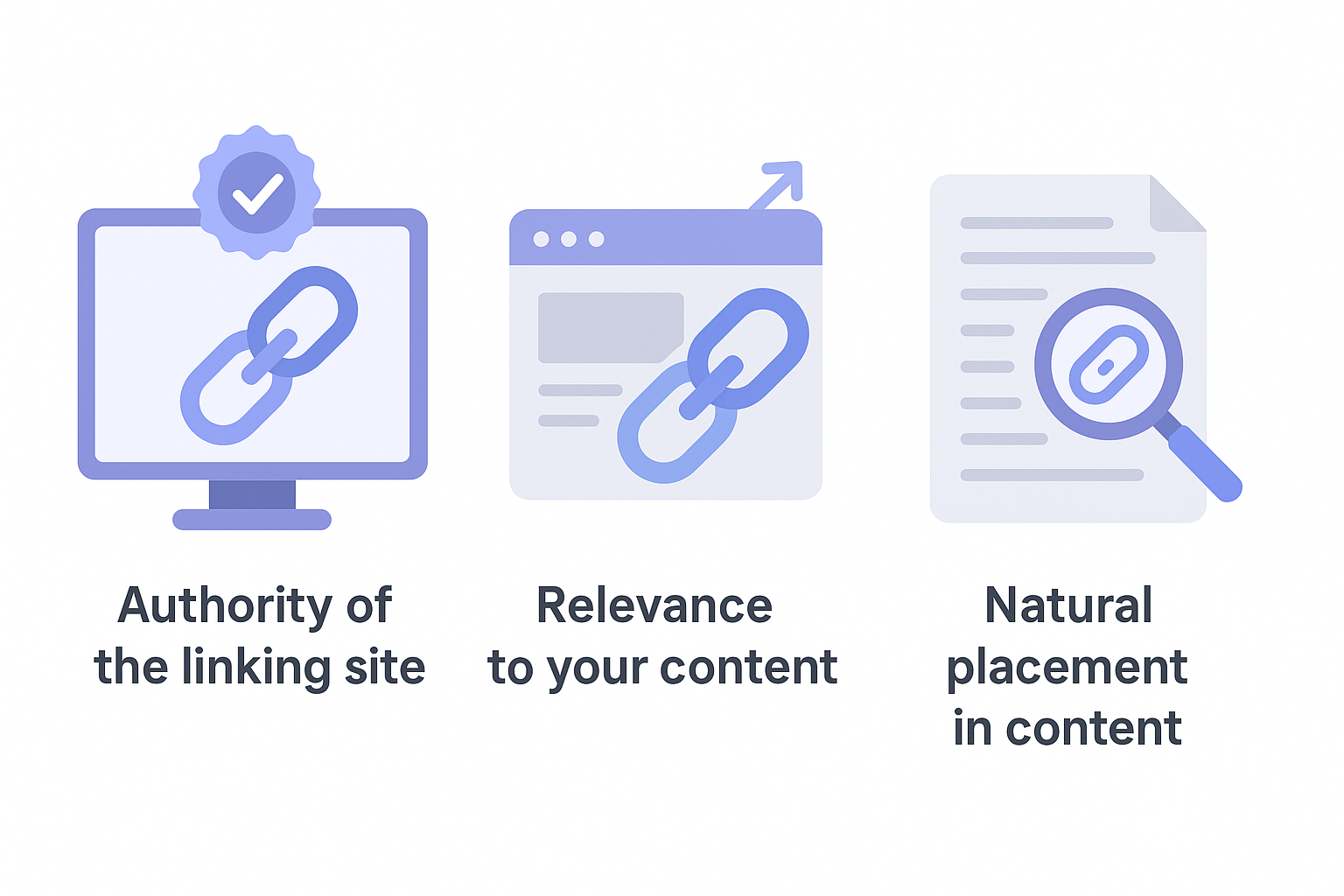
Authority of the linking site
The linking site's established reputation and domain authority directly affect how much value its backlink passes to your page. Links from sites that Google already trusts carry significantly more weight than links from new or low-quality domains. You want backlinks from websites that have built credibility through years of publishing quality content and earning their own strong backlink profiles.
Check whether the linking site ranks well for competitive keywords in its niche. Sites that appear in top positions for relevant searches typically possess the authority that makes their backlinks valuable. A single link from an industry leader often delivers more SEO benefit than dozens of links from unknown blogs or directory sites.
Relevance to your content
Quality backlinks come from sites that cover topics related to yours. A backlink from a website in your industry tells search engines that the link makes sense contextually and provides value to readers. Links from completely unrelated niches look suspicious to Google and carry minimal ranking power because they lack the topical connection that validates their relevance.
Backlinks from sites in your niche signal to search engines that your content belongs in the conversation and deserves to rank for related queries.
The importance of backlinks increases dramatically when they connect content that shares topical relevance. Search engines recognize these natural connections and reward them with stronger ranking boosts compared to random links from unrelated sources.
Natural placement in content
Links placed within the main body of an article pass more value than those tucked in footers, sidebars, or comment sections. Editorial links that authors choose to include because they genuinely enhance their content carry the most weight. You can spot these valuable placements when the link appears in context and helps readers understand a point or find additional information about the topic being discussed.
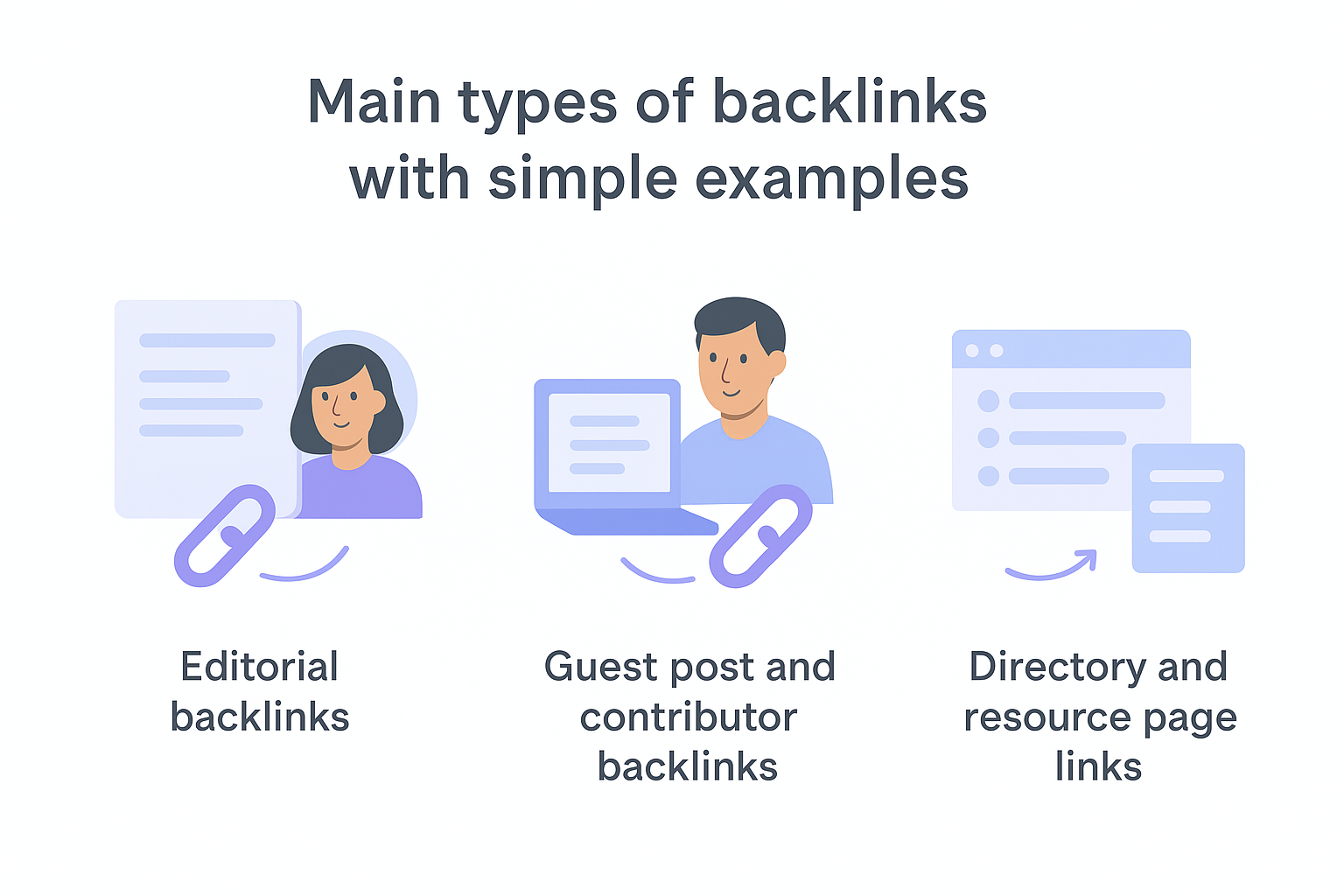
Main types of backlinks with simple examples
Different backlink types carry varying levels of SEO value depending on how you earn them and where they appear. Recognizing these distinctions helps you prioritize your link building efforts toward the types that deliver the strongest results. Each category below represents a common way backlinks form on the web, with practical examples that show what these links look like in real situations.
Editorial backlinks earned naturally
Editorial backlinks happen when another website's author chooses to link to your content without any request or arrangement from you. A food blogger writing about nutrition might link to your research study on vitamin absorption because it supports their article. These links carry the most weight because they represent genuine endorsements of your content's value.
Editorial backlinks signal the strongest trust to search engines because they come from voluntary citations rather than exchanges or payments.
Publishers include these links to enhance their own content and provide readers with additional resources. You earn editorial backlinks by creating content so useful that other writers naturally want to reference it when covering related topics.
Guest post and contributor backlinks
Guest posting lets you publish content on another site in exchange for links back to your pages. You might write an article about email marketing strategies for a digital marketing publication and include links to relevant tools or guides on your site. These backlinks help when the host site matches your industry and reaches an audience interested in your expertise.
Your guest posts should deliver the same quality as content on your own site. The value of these backlinks depends on whether you contribute to respected publications rather than low-quality sites that accept anyone's content.
Directory and resource page links
Business directories and curated resource pages provide structured listings with backlinks to websites in specific categories. Your local business profile on Google Business Profile includes a link to your website. Industry-specific directories like professional associations or regional business chambers also offer backlink opportunities, and these local link building tactics help with local SEO and niche visibility.
Resource page link building works because resource pages compile helpful links around particular topics. A university's entrepreneurship program might maintain a resource page linking to small business tools and guides, including yours if it serves their audience's needs.
Common backlink mistakes and how to avoid them
Many site owners waste time on backlink tactics that damage their rankings rather than improve them. You need to recognize which practices violate Google's guidelines and understand why certain approaches fail to deliver results. Avoiding these common mistakes protects your site from penalties while ensuring your efforts actually contribute to better search visibility.
Buying links or participating in link schemes
Purchasing backlinks or joining networks that trade links violates Google's spam policies and puts your entire site at risk. These schemes might promise quick results, but search engines have become sophisticated at detecting unnatural link patterns, so if you plan to pay for help, stick to link building services worth your money. Your site can face manual penalties or algorithmic demotions that tank your rankings and take months to recover from once Google identifies the manipulation.
Google's algorithms detect artificial link patterns and penalize sites that try to manipulate rankings through purchased or exchanged links.
Ignoring relevance and quality
Chasing any backlink regardless of its source wastes your time on links that provide little to no SEO value. A link from a random blog in an unrelated industry carries far less weight than one from a respected site in your niche. Focus your energy on earning backlinks from sites that share topical relevance with your content because these connections tell search engines your link makes sense contextually.
Over-optimizing anchor text
Using the same keyword-rich anchor text repeatedly across your backlinks triggers spam filters that can hurt your rankings. Natural backlink profiles include varied anchor text like branded terms, generic phrases, and exact keywords in moderate proportions. You want diversity that reflects how real people naturally link to content they find valuable.

Next steps for your backlinks
You now understand the importance of backlinks and how they strengthen your search rankings. Start by auditing your current backlink profile to identify which links help your site and which ones might harm it. Focus your efforts on creating content worth linking to and reaching out to relevant sites in your niche.
Building a strong backlink profile takes consistent effort over months, not days. Set aside time each week to find broken link opportunities, pitch guest posts, or create research that earns natural citations. Track which tactics bring you quality backlinks so you can double down on what works for your specific industry.
RankYak automates your entire SEO workflow, including content creation and backlink building, so you can focus on growing your business while your organic traffic increases. The platform handles keyword research, article writing, publishing, and an automated backlink exchange that connects you with relevant sites for quality backlinks without the manual grind that usually consumes hours each week.
Allan de Wit is a co-founder of RankYak and has worked in SEO since 2015: inside agencies, alongside them, for clients directly, and in-house on the products being ranked. He came to it as a software engineer building for marketers, which is why the platform is built the way it is. He went on to start companies of his own, two of which were acquired. At RankYak he sets the product direction and owns the features, the quality bar, the design, and the UX.