Content Strategy Vs Content Marketing Differences Explained
People use content strategy vs content marketing interchangeably all the time, and it causes real confusion. Teams end up debating tactics when they should be aligning on goals, or they build a publishing calendar without ever defining what success looks like. These two disciplines are deeply connected, but they serve fundamentally different functions in growing a business through content.
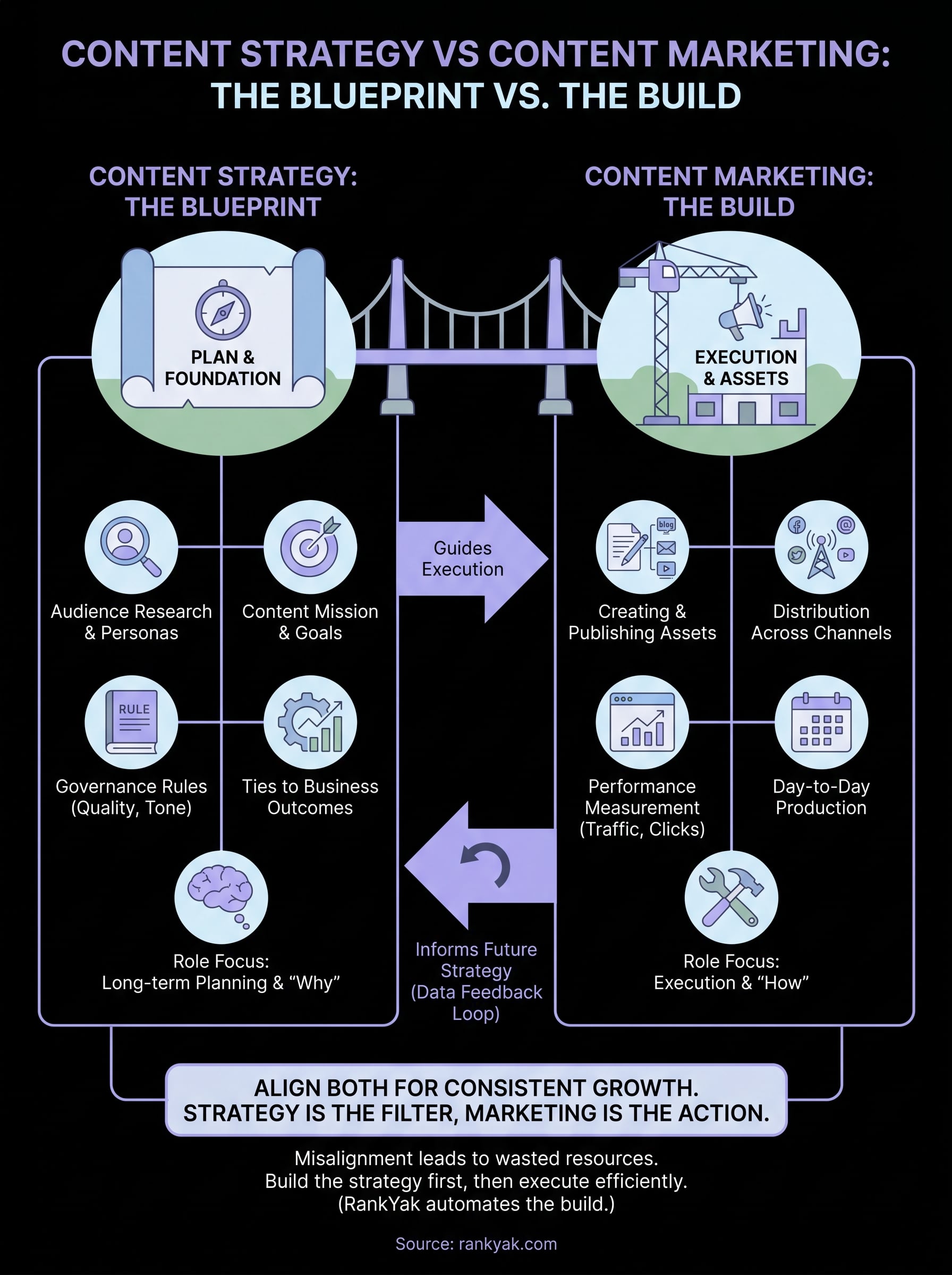
One is the blueprint. The other is the build. Content strategy defines the plan, who you're reaching, why you're creating content, and how it ties to business outcomes. Content marketing is the execution, the blog posts, emails, videos, and social content that actually reach your audience. Skip the strategy and your marketing efforts drift. Skip the marketing and your strategy collects dust.
This article breaks down exactly how these two disciplines differ, where they overlap, and how the roles within each field vary. Whether you're a business owner trying to figure out where to invest, or a marketer clarifying your own responsibilities, you'll walk away with a clear framework. And if you're looking to put your content strategy on autopilot once it's defined, that's exactly what RankYak automates, from keyword discovery to daily publishing, so your strategy turns into rankings, not just a document sitting in a Google Drive folder.
Why the difference matters
Understanding the difference between content strategy vs content marketing isn't just a semantic exercise. When teams blur the two, they make real operational mistakes, like assigning a content marketer to make strategic decisions they don't have the data to support, or asking a strategist to produce daily content at volume. Clarity on these two disciplines keeps your resources aligned with the right work and prevents the kind of costly churn that stalls growth.
Misalignment costs you time and money
When your team skips strategy and jumps straight to marketing, you produce content without a defined purpose. You might publish 50 blog posts over six months, hit none of your traffic goals, and have no idea why. The missing piece is almost always the strategic foundation: defined audience personas, a clear content mission, measurable goals, and a framework for deciding which topics actually move the needle.
Strategy isn't a phase you complete once. It's the filter you run every content decision through.
That guessing adds up fast. Freelancer costs, tool subscriptions, and your own hours pile up on content that doesn't rank, doesn't convert, and doesn't connect with your audience. Wasted content spend is one of the most common budget leaks in marketing, and it almost always traces back to a missing or ignored strategy layer.
The roles that own each discipline are different
A content strategist and a content marketer are not the same job. A content strategist, whether in-house or a content strategy consultant you bring in, focuses on research, governance, audience mapping, and long-term planning. They answer questions like: What business problems does content solve? What gaps exist in your current library? What does your audience actually need at each stage of the buying journey?
Content marketers execute against that plan. They write, edit, distribute, and optimize individual pieces of content. They manage publishing calendars, test headlines, and track engagement metrics on specific assets. Both roles require real skill, but they operate on different timeframes and with different definitions of success.
Trying to collapse both functions into one role, or worse, skipping one entirely, creates a gap that shows up directly in your traffic numbers. When you understand what each discipline actually does, you can staff, plan, and invest accordingly, and that clarity is what separates teams that grow consistently through content from teams that just keep publishing and hoping something sticks.
What content strategy includes
Content strategy is the planning layer that everything else depends on. Before you write a single word, your strategy determines who you're writing for, what outcomes you're chasing, and how you'll measure whether content is actually working. When you look at the broader debate around content strategy vs content marketing, strategy is where you define the rules of the game before the game starts.
The core components of a content strategy
A solid content strategy covers several interconnected decisions, and it helps to work through them with a step-by-step guide to building a content strategy. Audience research sits at the center, mapping out who your readers are, what problems they face, and what stage of the buying journey they're in when they find your content. From there, you define your content mission, a clear statement of what your content will help your audience do and why your brand is the right source for it.
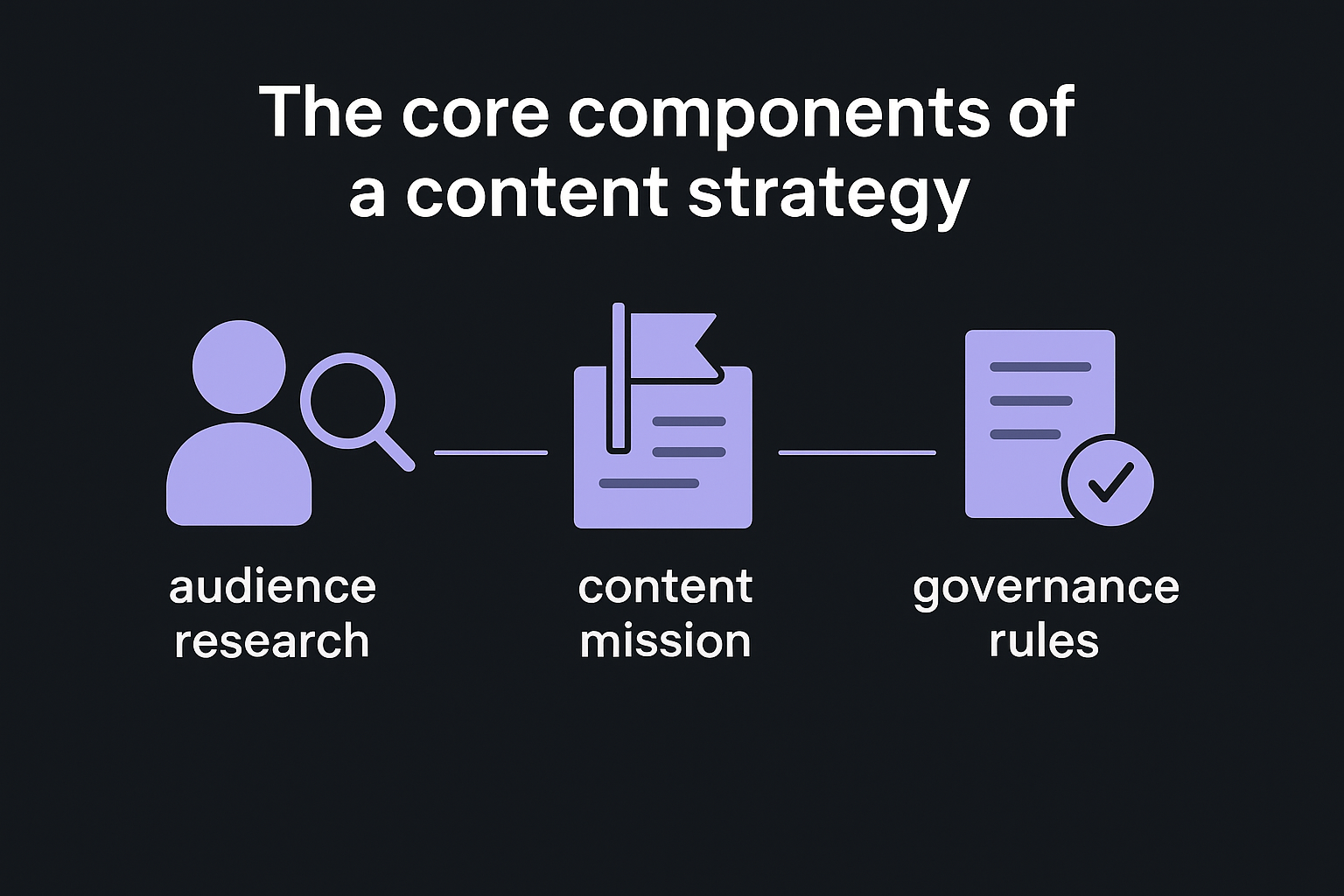
Your strategy also establishes governance rules: who approves content, how you maintain quality and consistency, and what voice and tone standards apply across every channel. These decisions feel administrative, but they're what keep your content recognizable and trustworthy at scale.
Without governance, even the best content calendar falls apart within 90 days.
How strategy connects to business goals
Strategy ties every content decision back to a measurable business outcome. You're not just deciding to write about a topic because it seems interesting. You're mapping specific content types to specific goals, whether that's driving organic search traffic, reducing customer support volume, or shortening your sales cycle by educating buyers before they ever speak to your team.
This connection between content and outcomes is what separates teams that grow consistently from teams that simply stay busy publishing without a clear direction behind the work.
What content marketing includes
Content marketing is the execution layer of the broader content function. Where strategy defines what you should create and why, marketing is the work of actually creating, publishing, and distributing individual pieces of content that reach your audience. In the context of content strategy vs content marketing, this is the side your audience actually sees, the blog posts, email sequences, landing pages, videos, and social updates that show up in their feeds and search results.
The execution work content marketers do
Content marketers handle the day-to-day production work, the content marketing production workflow that keeps a brand's publishing schedule running. That includes writing and editing articles, briefing designers on visual assets, scheduling distribution across channels, and monitoring how individual pieces perform after they go live. Each piece of content they produce should ladder up to a goal defined in the strategy layer, but their focus stays on the craft and the calendar.
The best content marketers don't just produce volume. They produce content that earns attention because it actually helps the reader accomplish something.
How content marketing connects to measurable results
Performance measurement sits at the core of what content marketers do beyond production. They track the KPIs that actually matter, like organic traffic, click-through rates, time on page, and conversion rates from specific pieces. These numbers tell you which topics resonate, which formats drive action, and where your distribution channels deliver the most return. That feedback loop matters because it informs future strategy decisions, showing what your audience responds to so you can invest more in what works instead of repeating what doesn't.
How to build both without confusion
The most practical way to approach content strategy vs content marketing is to treat them as two distinct phases that feed each other, not two names for the same process. You build strategy first, then you build the marketing plan on top of it. Trying to run them simultaneously without clear boundaries is where most teams lose their footing and end up producing content that looks busy but drives nothing.
Start with strategy before you open a content calendar
Your strategy needs to answer three questions before you schedule a single post: Who are you writing for, what outcome does each piece of content serve, and how will you measure whether it's working? Lock those answers down in a simple document, even a one-page plan you can fill in works, before you assign any writing tasks. That document becomes the filter every future content decision runs through.
If you can't point to a strategic reason for a piece of content, that's a sign you've skipped the strategy layer entirely.
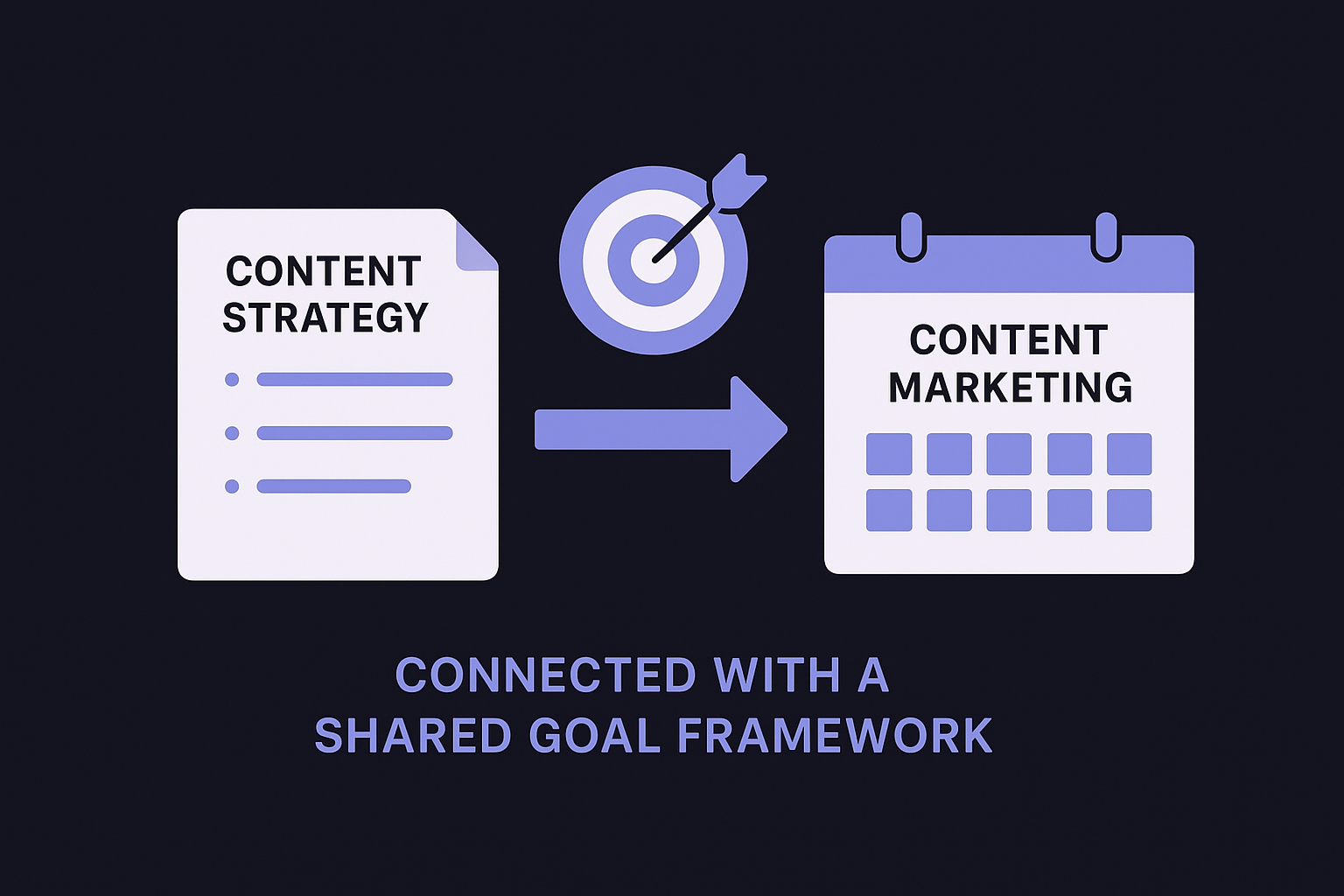
Connect the two layers with a shared goal framework
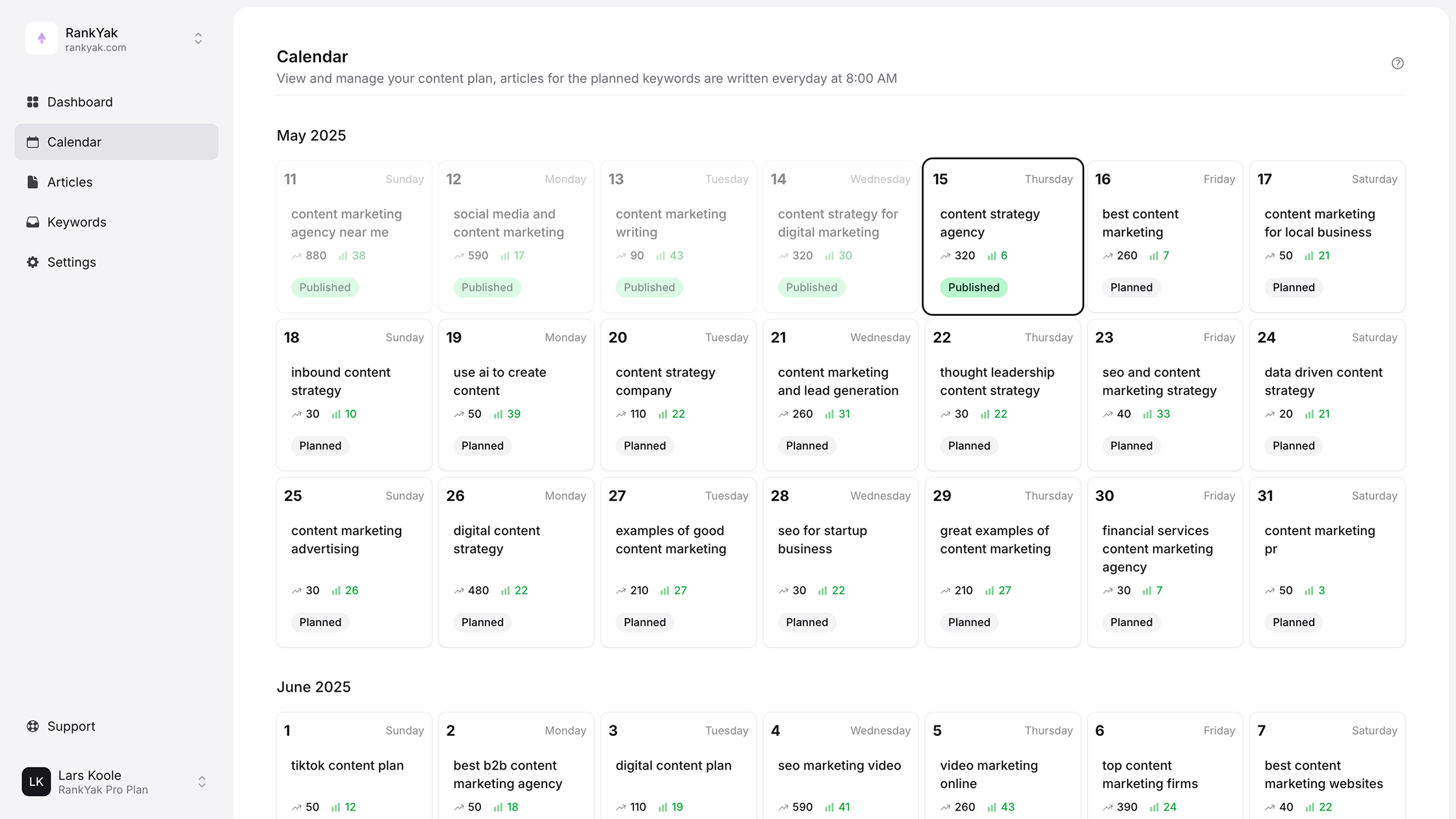
Once your strategy defines goals and audience, your content marketing execution, starting with a calendar that keeps you publishing consistently, needs a direct line back to those goals. The simplest way to do this is to tag every piece of content in your calendar with the goal it serves, whether that's organic traffic, lead nurturing, or brand awareness at the top of the funnel. When your content marketer writes an article, they should know exactly which audience segment it targets and which metric defines success for that piece. That connection keeps your production work grounded in outcomes instead of just filling a publishing schedule.
Quick examples and a simple framework
Seeing content strategy vs content marketing in action makes the distinction concrete. Abstract definitions only take you so far. Walk through a few real scenarios and you'll recognize immediately which layer a given task belongs to, which makes it much easier to assign the right work to the right person.
A real-world example for each discipline
Imagine you run a software company targeting small business owners. Your content strategist spends two weeks analyzing your current organic traffic, mapping audience personas, and mapping pillars and supporting articles into three topic clusters that align with your sales cycle. They document a content mission, set quarterly traffic goals, and define what success looks like for each content type. That's strategy.
Your content marketer then takes that plan and writes a 1,500-word article targeting a specific keyword in one of those clusters. They publish it, promote it through email, and monitor the traffic and conversion rate over 30 days. That's marketing.
The strategist defines the destination. The marketer drives the route.
Here's how the two layers split across common tasks:
| Task | Layer |
|---|---|
| Defining audience personas | Strategy |
| Writing a blog post | Marketing |
| Setting content goals | Strategy |
| Managing a publishing calendar | Marketing |
| Choosing topic clusters | Strategy |
| Distributing content across channels | Marketing |
A framework you can apply today
Use this three-step check before you start any content initiative. First, confirm your strategic foundation is documented: audience, goals, and governance rules. Second, make sure every piece of content on your calendar is tagged to a specific goal from that document.
Reviewing results monthly and feeding performance data back into your strategy sharpens future decisions. This loop between strategy and marketing keeps your content program improving over time instead of repeating the same mistakes quarter after quarter.
What to do next
Now that you understand content strategy vs content marketing as two distinct layers, the next move is simple: audit where you actually stand. Check whether your team has a documented strategy with defined audience personas, clear goals, and governance rules. If that document doesn't exist, build it before you publish another piece of content. Even a one-page summary beats nothing.
Once your strategy is in place, the execution challenge becomes consistency. Publishing one strong article every few days, week after week, is where most teams fall short because it takes real time and resources to sustain that output. That's the gap RankYak fills. It handles keyword discovery, daily article creation, and automatic publishing to your CMS so your strategy translates directly into content that ranks. If you want to see how it works for your site, see RankYak run SEO on your own site and put your content plan into motion without the manual grind.
Allan de Wit is a co-founder of RankYak and has worked in SEO since 2015: inside agencies, alongside them, for clients directly, and in-house on the products being ranked. He came to it as a software engineer building for marketers, which is why the platform is built the way it is. He went on to start companies of his own, two of which were acquired. At RankYak he sets the product direction and owns the features, the quality bar, the design, and the UX.