
Link Building Definition: What It Is and Why It Matters

Link building is the process of getting other websites to link back to yours. When a site places a hyperlink pointing to your content, that creates what's called a backlink. These links work as recommendations. They signal to search engines that your content offers something valuable enough for others to reference. The more quality backlinks you earn from relevant, trusted websites, the more authority your site builds in Google's evaluation. This authority directly impacts where you rank. Google treats backlinks as one of its core signals for determining which pages deserve top positions in search results.
This guide walks you through what link building means and why it should matter to you. You'll discover why backlinks influence your rankings, how to start building them using methods that actually work, what types of links exist, what makes certain backlinks more valuable than others, and which common mistakes could damage your SEO efforts. Whether you're just starting with SEO or refining your approach, you'll finish with a practical understanding of how to build links that improve your visibility.
Why link building matters
Link building directly influences where your pages appear in search results. Google's algorithms use backlinks as a primary ranking factor because they represent votes of confidence from other websites. When authoritative sites link to your content, search engines interpret this as proof that your information offers value. Without quality backlinks, even excellent content struggles to compete for top positions. Your competitors who invest in link building gain visibility advantages that translate to more traffic, leads, and revenue while you remain buried on page two or beyond.
Search visibility and rankings
Backlinks function as pathways that guide both search engines and users to your site. Google's crawlers discover new pages by following links from one site to another, which means your content stays invisible until other sites reference it. Once indexed, your rankings depend heavily on the number and quality of backlinks you accumulate. Research consistently shows that pages ranking in the top positions typically have significantly more backlinks than those appearing lower in results. This visibility difference matters because 75% of users never scroll past the first page of search results. Every position you climb brings exponentially more clicks and potential customers to your business.

Pages that rank at the top of Google don't just have content. They have the backlinks to prove their content deserves that position.
Trust and authority signals
Beyond rankings, link building establishes your credibility within your industry. Each quality backlink acts as a third-party endorsement that vouches for your expertise and reliability. When respected publications or established brands reference your work, you inherit a portion of their authority in Google's evaluation. This cumulative trust grows over time, making it progressively easier to rank for competitive keywords. Strong link profiles also protect you from algorithm updates that often penalize sites lacking legitimate backlinks. Understanding the link building definition and implementing it strategically transforms your site from an unknown entity into a recognized authority that both search engines and users trust.
How to start link building
Starting your link building efforts requires a strategic foundation rather than random outreach. You need linkable assets on your site before anyone will consider pointing their readers to you. The link building definition centers on earning endorsements, which means you must first deserve them. Your initial focus should be creating content that naturally attracts attention and provides genuine value that other websites want to reference. Once you have strong content, you can identify relevant sites in your industry and begin building relationships that lead to backlinks. This approach combines content creation with targeted outreach to produce sustainable results.
Create content worth linking to
Your link building success depends entirely on the quality of what you're asking others to link to. Start by identifying topics where you can provide unique insights, original research, or comprehensive guides that fill gaps in existing content. Listicles, case studies, data visualizations, and in-depth tutorials consistently attract backlinks because they serve as reference material for other writers. You need assets that people naturally want to cite when creating their own content. For example, if you operate in the fitness industry, publishing original survey data about workout habits gives journalists and bloggers credible statistics to reference.
Rather than producing dozens of average articles, concentrate your efforts on a smaller number of exceptional pieces that become go-to resources in your field. These cornerstone assets should solve specific problems, answer common questions thoroughly, or present information in formats that are easy to understand and share. Quality always outperforms quantity when building links because authoritative sites only reference content that enhances their own credibility.
Identify potential link sources
Finding the right websites to target separates effective link building from wasted effort. Begin by analyzing where your competitors earn their backlinks using free tools or manual research to discover relevant industry sites, publications, and blogs. Look for websites that have linked to similar content in the past because they've already demonstrated interest in your topic area. Trade publications, industry directories, resource pages, and educational sites (.edu domains) represent high-value opportunities worth prioritizing in your outreach.
You should also search for broken links or outdated content on relevant websites that you could replace with your superior resource. When a site links to a dead page or references outdated information, you're providing genuine value by offering an updated alternative. This approach converts your outreach from an ask into a helpful suggestion.
Reach out with clear value
Effective outreach focuses on how your content benefits the other website rather than what you need. Craft personalized emails that reference specific articles on their site where your resource would add value for their readers. Explain exactly why your content fits their audience and improves their existing article. Generic templates get ignored, while messages demonstrating you've read their work and understand their content strategy earn responses.
When you make your outreach about their audience instead of your backlink, you transform from a solicitor into a collaborator.
Keep your initial message concise and include a clear call to action that requires minimal effort on their part. Follow up once if you don't receive a response within a week, then move on to other prospects. Building genuine relationships over time produces better results than aggressive pitching.
Types of links in SEO
Understanding the different types of links helps you build a more effective strategy. Not all links function the same way or contribute equally to your SEO performance. The link building definition encompasses various link types, each serving distinct purposes in how search engines evaluate your site. Some links pass authority directly, while others provide navigation benefits or referral traffic without influencing rankings. Recognizing these differences allows you to prioritize your efforts toward the link types that deliver the strongest impact for your specific goals.
Internal links
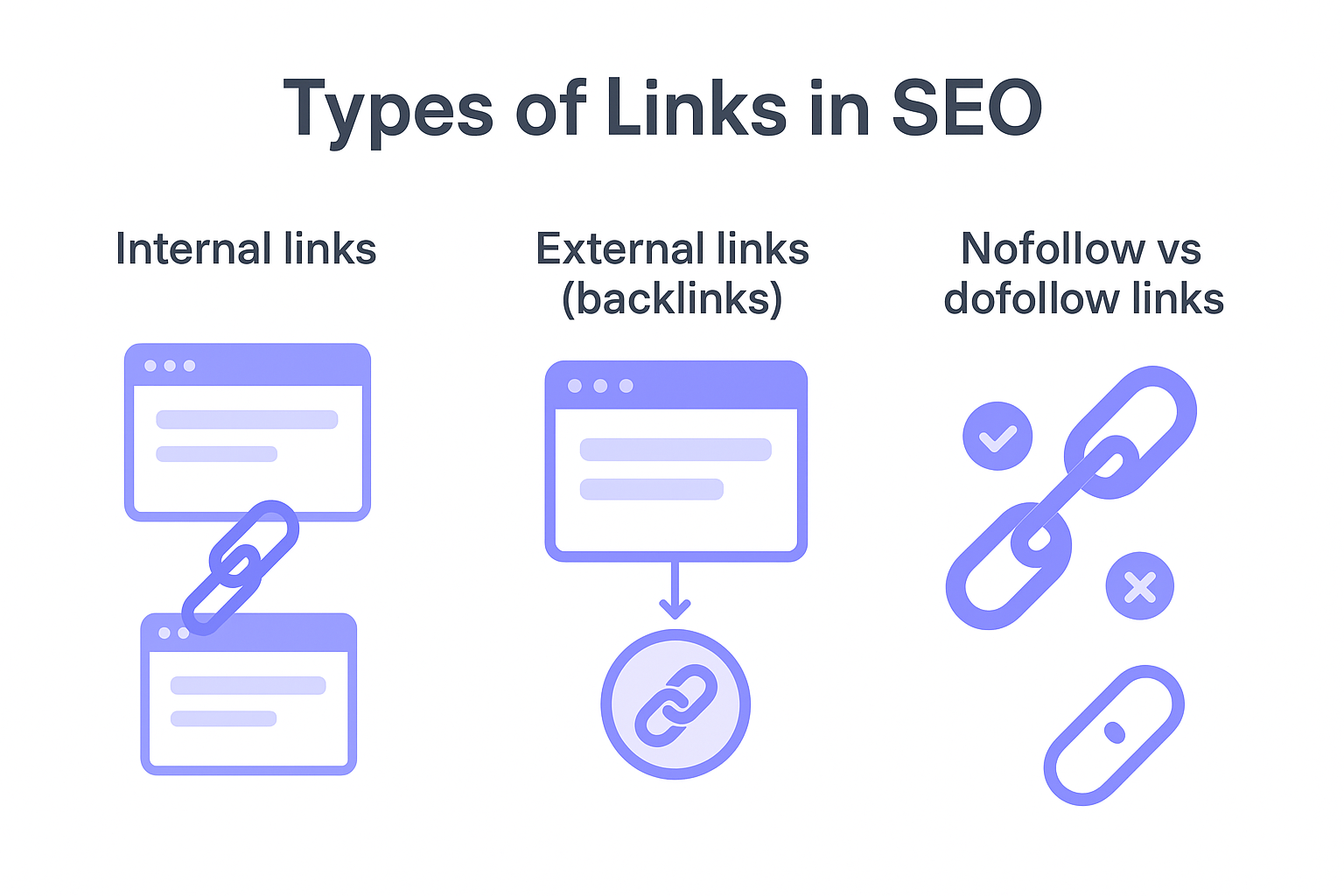
Internal links connect one page on your website to another page on the same domain. You control these links completely, which makes them your most immediate opportunity for SEO improvement. These connections help search engines understand your site structure and determine which pages you consider most important. Strategic internal linking distributes authority throughout your site and guides both users and crawlers toward your priority content. When you publish a new article, linking from existing high-authority pages on your site accelerates how quickly that new content gets discovered and indexed.
Effective internal linking also keeps visitors engaged longer by suggesting related resources they might find valuable. Your navigation menu, contextual links within content, and footer links all serve different purposes in creating a logical site architecture. Focus on using descriptive anchor text that tells readers and search engines exactly what they'll find on the destination page.
External links (backlinks)
External links originate from other websites and point back to yours. These represent the core of what most people mean when they discuss link building. Search engines treat each external link as a vote of confidence from another site owner who found your content valuable enough to reference. The domain authority of the linking site, the relevance of their content to yours, and the context surrounding the link all influence how much value you receive. Earning external links from respected industry publications carries significantly more weight than dozens of links from low-quality directories.
Nofollow vs dofollow links
Dofollow links pass authority from the linking site to yours, directly impacting your search rankings. These represent the standard link type that contributes to your SEO performance. Nofollow links include a special HTML attribute telling search engines not to pass authority, though they still drive referral traffic and brand awareness. Social media platforms, paid advertisements, and some user-generated content typically use nofollow attributes to prevent manipulation. While dofollow links remain more valuable for SEO purposes, a natural link profile includes both types since legitimate websites use nofollow attributes appropriately.
A healthy link profile mirrors natural patterns, combining internal organization with external validation across both dofollow and nofollow attributes.
What makes a quality backlink
Quality backlinks share specific characteristics that determine their value to your SEO efforts. Not every link carries the same weight, and understanding what separates valuable links from worthless ones shapes your entire strategy. The link building definition extends beyond simply accumulating backlinks to focus on earning the right kinds of links from the right sources. Google evaluates multiple factors when determining how much authority each backlink passes to your site. These factors include the linking site's own authority, how relevant their content is to yours, where the link appears on their page, and the anchor text they use. Recognizing these quality signals helps you prioritize outreach efforts toward opportunities that deliver real ranking improvements.
Relevance and context
The most valuable backlinks come from websites operating in the same industry or covering related topics. A link from a fitness blog carries far more weight for your gym equipment store than one from an unrelated automotive site. Search engines analyze the content surrounding your link to verify that the connection makes logical sense for readers. Links embedded naturally within relevant editorial content outperform those stuck in sidebars, footers, or dedicated links pages. For example, if you publish research about remote work productivity, earning a link from a human resources publication adds more value than one from a recipe blog. Context signals to Google that the link serves readers seeking information about your topic rather than existing solely for SEO manipulation.
Authority and trust metrics
Backlinks from established, authoritative domains transfer significantly more ranking power than links from newly created or low-quality sites. You can generally assess a site's authority by examining its own backlink profile, how long the domain has existed, and whether major publications reference it. Sites that consistently publish accurate information and maintain editorial standards build trust with search engines over time. Government websites, educational institutions, and recognized industry leaders represent premium link sources because they've established credibility through years of consistent quality. A single link from a respected news outlet can deliver more SEO impact than dozens of links from unknown blogs.
The strongest backlinks combine topical relevance with established authority, creating endorsements that search engines and users both recognize as legitimate.
Link placement and anchor text
Where your link appears on a page and the words used to link to you both affect the value you receive. Links placed within the main content body pass more authority than those relegated to sidebars or footers because readers actually click them and search engines recognize their prominence. The anchor text describing your link should match your content naturally without appearing manipulative. Using exact-match keywords excessively raises red flags, while descriptive, varied anchor text appears organic. Diversify your anchor text profile across branded terms, natural phrases, and relevant keywords to maintain a healthy pattern.
Link building pitfalls to avoid
Understanding the link building definition includes recognizing practices that damage rather than help your SEO performance. Certain tactics might promise quick results but ultimately trigger penalties that devastate your rankings. Google's algorithms have become increasingly sophisticated at identifying manipulative link patterns, and recovery from a penalty can take months of dedicated effort while your competitors continue gaining ground. Avoiding these common mistakes protects your investment and keeps your strategy focused on sustainable growth.
Buying links or using link schemes
Purchasing backlinks directly violates Google's spam policies and represents one of the fastest ways to earn a manual penalty. Private blog networks, link farms, and paid placement services create unnatural link patterns that algorithms detect easily. These schemes flood your profile with low-quality links from irrelevant or obviously manipulative sources. Google specifically targets sites participating in link schemes and removes them from search results entirely in severe cases. The temporary ranking boost never justifies the long-term damage to your domain authority and online reputation.
Ignoring relevance and quality
Accumulating hundreds of backlinks from unrelated or low-authority sites provides zero SEO value while making your link profile appear suspicious. Each link should come from a source that makes logical sense within your industry or topic area. Links from spam directories, comment sections, or automated link exchanges signal manipulation rather than genuine endorsements. Focus your efforts exclusively on earning links from reputable sites where the connection serves readers seeking information about your subject matter.
Quality always defeats quantity in link building, and a single authoritative backlink outperforms dozens of irrelevant ones.
Over-optimizing anchor text
Using identical keyword-rich anchor text across multiple backlinks creates an obvious manipulation pattern. Natural link profiles include diverse anchor text combining branded terms, generic phrases, and varied keyword descriptions. When every external link pointing to your page uses the exact same optimized phrase, you're essentially telling search engines you're gaming the system. Maintain anchor text diversity by accepting how other sites naturally reference your content rather than dictating specific wording in every outreach request.
Key takeaways
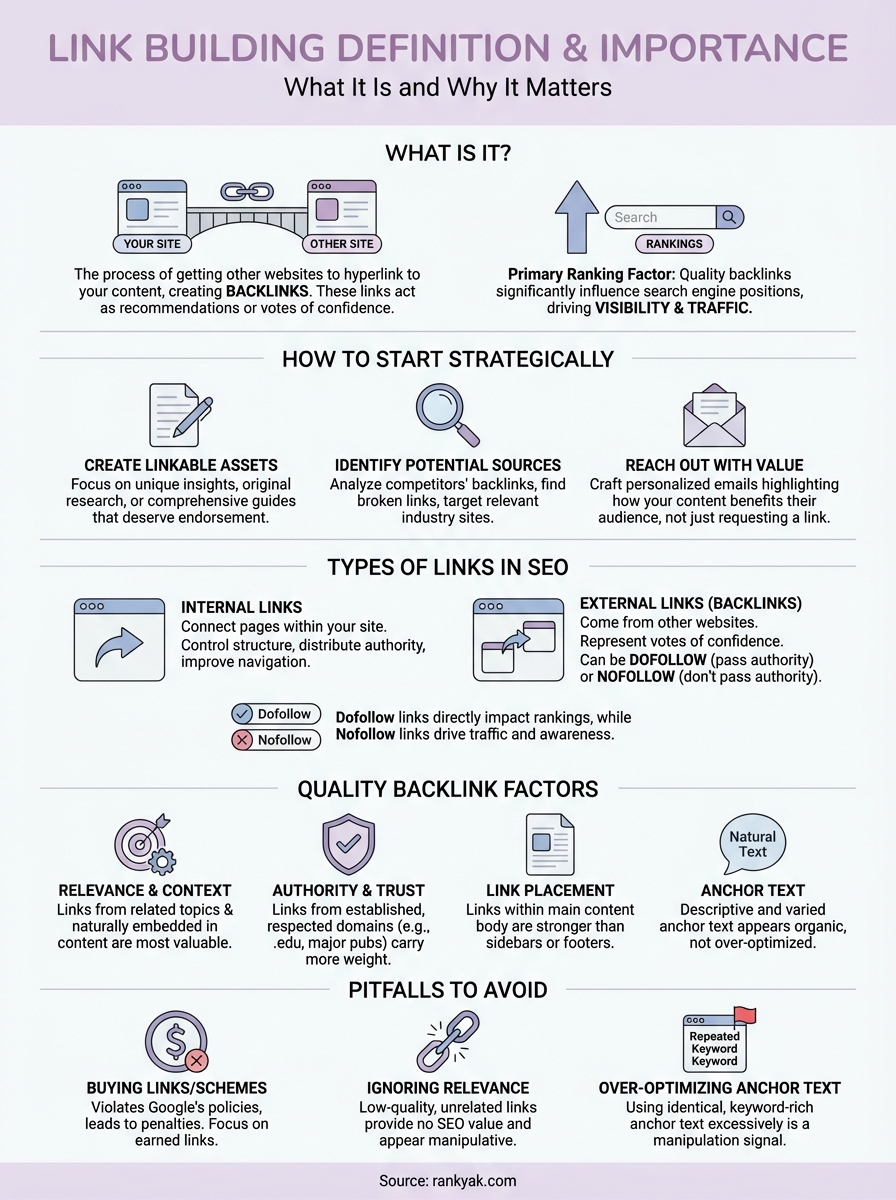
The link building definition centers on earning backlinks from other websites to establish authority and improve your search rankings. Quality matters far more than quantity when building your link profile, as a few authoritative backlinks from relevant sites outperform dozens of low-quality links. You need linkable content before starting outreach, which means investing in resources that genuinely deserve references from other websites. Avoid buying links, participating in schemes, or over-optimizing anchor text, as these practices trigger penalties that set your SEO efforts back months or longer.
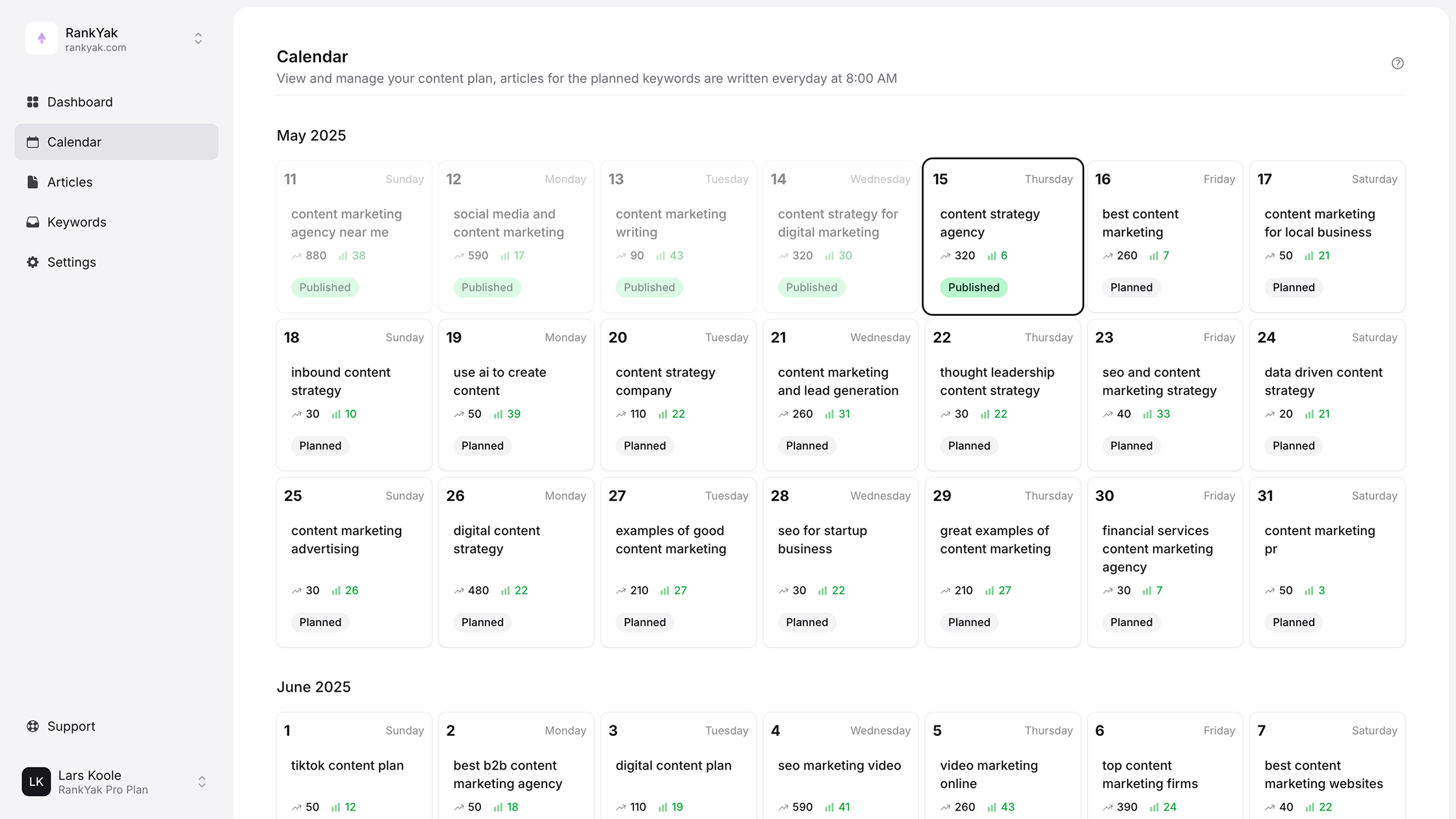
Building links manually consumes enormous time and resources that most businesses struggle to sustain consistently. RankYak automates your entire SEO process, generating optimized content daily and building quality backlinks while you focus on running your business. Start your free trial today and watch your organic traffic grow on autopilot.

Get Google and ChatGPT traffic on autopilot.
Start today and generate your first article within 15 minutes.
SEO revenue calculator
How much revenue is your website leaving on the table?
Take a quick quiz and see exactly how much organic revenue you're missing out on, along with personalized tips to fix it.
-
4 questions, under 1 minute
-
See traffic and revenue potential
-
No email required
Free · takes 1 minute · no signup needed
Question 1 of 4
Question 2 of 4
Question 3 of 4
Question 4 of 4
Your SEO growth potential
Extra visitors / month
after 6-12 months of consistent publishing
Revenue potential / year
at your niche's avg. conversion rate
Articles needed (12 mo)
to reach this traffic level
ROI with RankYak
at $99/mo ($1,188/year)
To hit that number, you'd need to:
- Build a topical authority strategy for your niche
- Research keywords & map out a full topical cluster
- Write, edit & publish an article every single day
- Build backlinks to the articles you publish
RankYak handles all of this automatically, every day.
* Estimates based on industry averages. Results vary by niche, competition, and domain authority. Most SEO results become visible after 3-6 months of consistent publishing.