Local SEO Services for Small Business: 9 Options Compared (2026)
Most small businesses depend on nearby customers to survive, and those customers are searching Google right now. If your business doesn't show up in local results, you're handing revenue to competitors who do. That's exactly why local SEO services for small business have become a priority, not a nice-to-have. But finding the right provider at a budget that makes sense is where things get complicated.
Agencies charge anywhere from $300 to $3,000+ per month, which is a wide spread once you compare small business SEO pricing side by side. Some deliver real results; others just send you a report full of vanity metrics. The difference often comes down to what's actually included, citation building, Google Business Profile optimization, content creation, on-page SEO deliverables, and whether they can scale with you as you grow. At RankYak, we handle the SEO content side of that equation on autopilot, publishing optimized articles daily that help your site rank for local and niche-relevant keywords.
But content is just one piece of local SEO. You likely need a broader strategy. Below, we've broken down nine local SEO services worth considering in 2026, with honest details on pricing, what each one actually does, and which type of small business they're best suited for.
1. RankYak
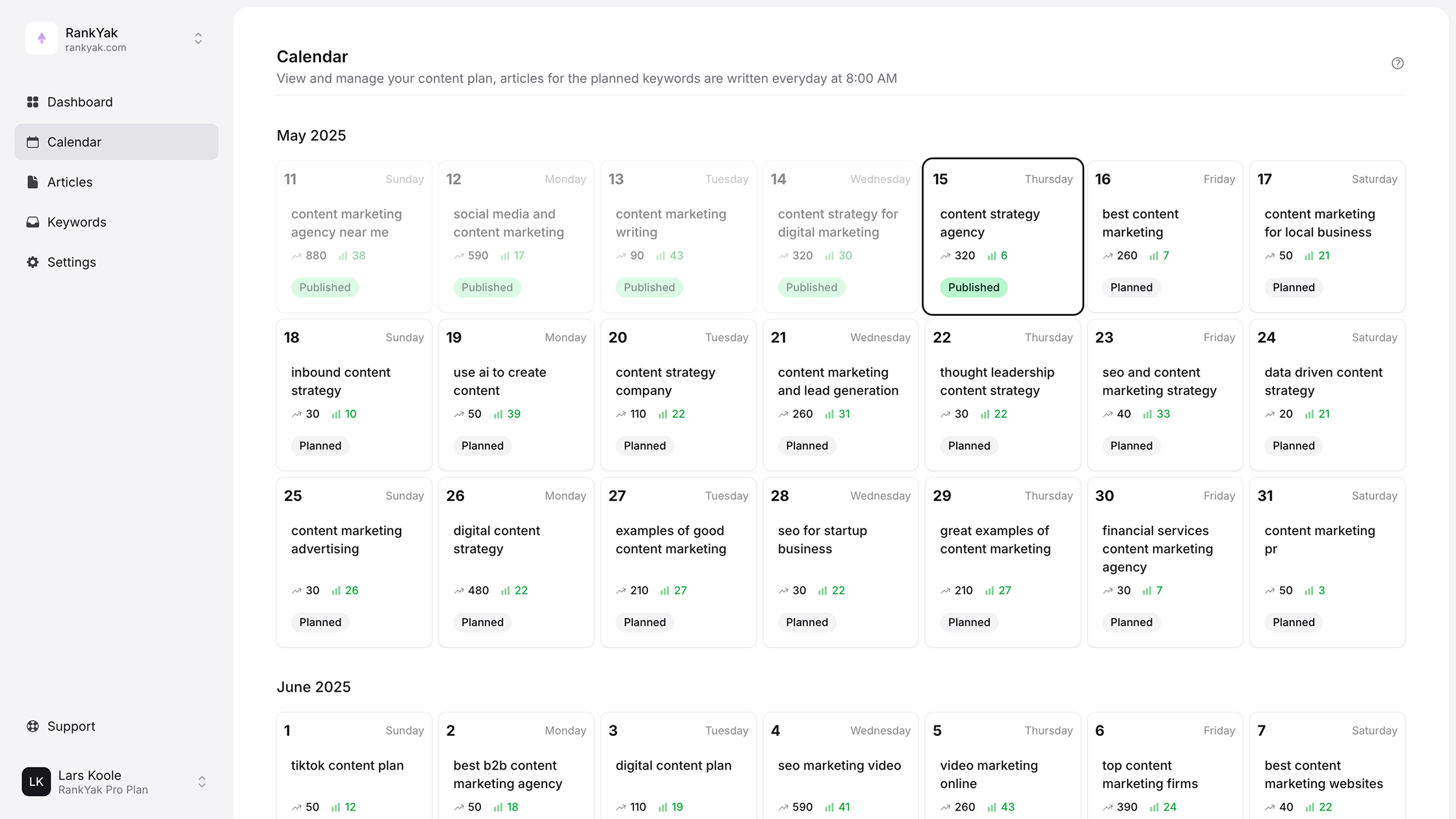
RankYak is an SEO content automation platform built for small business owners who need to publish consistent, optimized content without hiring a full-time writer or agency. It focuses specifically on the content and keyword side of SEO, which is one of the most time-consuming parts of any local SEO strategy for Google Maps.
What you get
RankYak handles the full content lifecycle from start to finish. It starts by analyzing your website and niche to identify high-potential keywords scored by volume and difficulty, including local and long-tail terms your target customers are actually searching for. From there, it builds a daily content roadmap and writes fully structured, SEO-optimized articles up to 5,000 words each, then publishes them directly to your CMS.
If you're a small business owner trying to rank for local search terms, consistent content publishing is one of the highest-leverage things you can do, and RankYak automates exactly that.
The platform publishes directly to WordPress, Shopify, Webflow, Wix, and custom CMS setups. Every article includes internal linking, topic cluster logic, citations, and brand voice adaptation. It also optimizes content for AI chat platforms like ChatGPT and Perplexity, which are increasingly driving local discovery. For businesses looking at local seo services for small business, this covers a critical gap that most citation-focused tools leave wide open.
Best for
RankYak works best for small business owners, content marketers, and entrepreneurs who already worked through a step-by-step local SEO checklist and have their Google Business Profile and citations in order, but struggle to produce regular blog content that ranks. It's also a strong fit if you manage multiple business websites and need each one publishing on autopilot.
This platform is less suited for businesses that need hands-on citation building, reputation management, or Google Ads management. Think of it as your content and keyword engine, not a full-service local SEO agency replacement.
Pricing
RankYak offers one flat-rate plan at $99 per month, which includes all features: keyword discovery, daily article generation, auto-publishing, backlink exchange, multi-site support, and integrations, and you can compare the plans and what each one covers before you commit. There are no tiered limits or hidden add-ons.
You can start with a 3-day free trial and cancel anytime with no commitment required. For the volume and automation you get, $99 per month is significantly lower than what most agencies charge for content alone.
2. BrightLocal
BrightLocal is a local SEO platform designed specifically around the tasks that help businesses rank in local search: citation tracking, reputation management, and Google Business Profile auditing. Unlike full-service agencies, it gives you the tools and data to manage your own local SEO or hand off specific tasks to your team.
What you get
BrightLocal covers the core pillars of local SEO services for small business in one dashboard. You get rank tracking for local and map pack results, a full citation audit to find gaps in your business listings, and review monitoring across major platforms. The platform also includes a Google Business Profile audit tool that shows you exactly where your profile falls short compared to competitors.
For small businesses that want visibility into their local rankings without paying agency-level fees, BrightLocal gives you a lot of actionable data in one place.
Citation building is available as an add-on service, where BrightLocal's team submits your business information to directories on your behalf, which saves you a significant amount of manual effort. Agencies also use BrightLocal to run white-label local SEO services and reports for their own clients, so if you eventually resell or manage SEO for other local businesses, the platform scales with you rather than forcing you onto a different tool.
Best for
BrightLocal works best for small business owners and local marketers who want hands-on control over their local SEO data. It's a strong fit if you have someone internal who can interpret reports and act on the findings.
Pricing
Plans start at $39 per month for the Core plan, which covers rank tracking and reporting for one location. Higher tiers unlock additional locations and more advanced features. Citation building services are priced separately based on the number of submissions you need.
3. Thryv
Thryv is a business management and marketing platform built specifically for small businesses. It goes beyond pure SEO, combining local online presence management with CRM, appointment scheduling, invoicing, and customer communication tools in a single platform.
What you get
Thryv covers several of the core areas you'd look for in local SEO services for small business. The platform manages your business listings across major directories, ensures your name, address, and phone number stay consistent, and helps you build and respond to online reviews. It also handles how to optimize a Google Business Profile and syncs your information across the web to improve local search visibility.
If you want one platform that handles both local SEO basics and day-to-day business operations, Thryv removes the need to juggle multiple separate tools.
Beyond SEO, Thryv includes a customer relationship manager, two-way text and email communication, online payment processing, and social media scheduling, which makes it a broader operational tool than most SEO-focused platforms on this list.
Best for
Thryv works best for service-based small businesses like plumbers, salons, contractors, and healthcare providers that need both local visibility and customer management in the same place. If you're already managing multiple software tools for scheduling, invoicing, and follow-ups, the all-in-one approach cuts down that overhead significantly.
Pricing
Thryv uses custom pricing based on your business size and needs, so you'll need to request a quote directly. The platform offers a free trial to test the tools before committing. Costs tend to run higher than pure SEO tools because of the additional business management features bundled into every plan.
4. Hibu
Hibu is a digital marketing company that builds and manages local online presence for small businesses. It focuses on combining a managed website, local listings, online reviews, and paid search advertising into one service package, making it a hands-off solution for owners who don't want to manage these pieces separately.
What you get
Hibu assigns you a dedicated specialist who handles your local SEO setup and ongoing management, which includes syncing your business information across directories, optimizing your Google Business Profile, and managing your online reviews. The company also builds and hosts your website if you don't already have one, and it bundles paid search and social advertising options into its service tiers. For service-based businesses, Hibu also layers in lead generation tools on top of its ad management, including call tracking, lead capture forms on your website, and automated text follow-ups for Google Ads, Facebook, and Instagram campaigns, so you can see which channel is actually generating booked jobs rather than just clicks.
For small business owners who want local SEO services for small business without touching a single dashboard themselves, Hibu's managed model removes the day-to-day work entirely.
Best for
Hibu works best for brick-and-mortar small businesses like restaurants, auto repair shops, and retail stores that want a fully managed digital presence without an internal marketing team. If you'd rather hand off the entire process and receive results without managing tools yourself, the dedicated specialist model fits that need well.
If you're comparing Hibu against Thryv, the two overlap on the surface, both manage listings, reviews, and business information, but the delivery model is different. Thryv hands you the software and expects your team to run it, covering CRM, invoicing, and marketing from one dashboard you control. Hibu assigns a dedicated specialist who runs your SEO, ads, and reviews for you, with far less hands-on work required from your side. If you want control and a lower monthly cost, lean toward Thryv. If you want a managed service and don't mind paying more for someone else to handle it, Hibu is the better fit.
Pricing
Hibu uses custom pricing based on your location, business type, and the services you select, so you won't find public rates on their website. You'll need to speak with a sales representative to get a quote. Costs vary depending on whether you add paid advertising, website hosting, or additional reputation management services to your base package.
5. Thrive Internet Marketing Agency
Thrive is a full-service digital marketing agency with a strong track record in local SEO for small and mid-sized businesses. Unlike platform-based tools, Thrive assigns dedicated account managers and SEO specialists who build and execute your strategy directly.
What you get
The agency covers a broad range of local SEO services for small business, including Google Business Profile optimization, on-page SEO, local citation building, link acquisition, and review management. Thrive also produces SEO-optimized content as part of its campaign packages, meaning you get both technical and content-driven improvements handled together. Campaigns typically include a monthly content calendar and periodic backlink profile audits, so you can see not just what was published but how your link profile is trending against competitors in your market.
Thrive's strength is in combining technical SEO work with content strategy, so your local rankings improve across both map pack results and organic search.
Each campaign is managed by a dedicated account team, which means you get consistent communication and a clear point of contact rather than being routed through a generic support queue.
Best for
Thrive works best for small businesses that want a managed agency relationship without the overhead of a large enterprise setup. It fits well if you need a complete local SEO campaign handled for you, including content, citations, and link building, and you want regular reporting to track progress.
This is a good fit if your business operates in a competitive local market where ranking in the map pack requires more than basic citation cleanup. Service-based businesses like law firms, dental practices, and home service contractors tend to see strong returns from Thrive's structured campaign approach.
Pricing
Standard pricing is not published on Thrive's website. Costs depend on your market, competition level, and the scope of services included in your campaign. You'll need to request a custom proposal, but managed local SEO campaigns typically start around $300 to $500 per month at the entry level.
6. Boostability
Boostability is a white-label and direct local SEO company that has built its reputation around affordable, scalable SEO services for small businesses. The company focuses on delivering core local SEO work at a price point that doesn't require an enterprise-level budget, which makes it a popular option for small business owners who want professional help without paying agency-tier rates.
What you get
Boostability covers the foundational elements of local SEO services for small business, including on-page optimization, citation building, link acquisition, and content creation. Their team handles the technical groundwork like keyword targeting and site structure improvements while also working to improve your visibility in local map results. You get access to a client portal where you can track campaign progress and see what work has been completed each month. Boostability also works behind the scenes for many other agencies as a white-label provider, which means the same standardized playbook often powers small business SEO campaigns sold under a different agency's brand name, so you're getting a proven, repeatable process rather than a one-off custom strategy.
Boostability's structured, task-based approach to SEO makes it easy to see exactly what you're paying for each billing cycle.
Best for
Boostability works best for small business owners in less competitive local markets who need foundational SEO work done professionally but want affordable small business SEO rather than a full-service agency retainer. It fits well if you want a managed campaign with clear deliverables and transparent reporting without handling the work yourself.
Pricing
Boostability's pricing starts at roughly $200 to $400 per month depending on your location and the scope of work included. They offer tiered packages, so you can scale up services as your budget grows. Custom pricing is available for more competitive markets or multi-location businesses.
7. Third Marble Marketing
Third Marble Marketing is a Virginia-based digital marketing agency that specializes in SEO and Google Ads for small businesses. The company has built its model around providing transparent, affordable campaigns without requiring long-term contracts, which makes it a lower-risk option for small business owners who are cautious about committing to a full agency relationship before seeing results.
What you get
Third Marble delivers core local SEO services for small business, including on-page optimization, Google Business Profile management, and local citation building. Their team also produces SEO-focused content and handles technical fixes that improve how search engines crawl and index your site. Campaigns are structured around measurable outcomes rather than vague monthly deliverables, so you can track what work was completed and why. For businesses running both channels, Third Marble also coordinates SEO and Google Ads together, so paid search data on which keywords actually convert helps refine which terms are worth targeting organically.
Third Marble's no-contract model gives small businesses the flexibility to test the service without locking into a long-term financial commitment upfront.
Best for
Third Marble works best for small businesses in moderately competitive local markets that want a managed SEO campaign without signing a lengthy contract. It fits well if you run a service-based business, like a contractor or medical practice, and you want steady ranking improvements through consistent, foundational SEO work handled by a small dedicated team rather than a large agency with high turnover.
Pricing
Third Marble publishes tiered pricing directly on their website, which is uncommon among agencies at this level. Plans start at roughly $350 per month and scale up based on the scope of services included. That pricing transparency makes it easier to compare your options before scheduling a sales conversation.
8. WebFX
WebFX is a full-service digital marketing agency known for its data-driven approach to SEO, built around its proprietary reporting platform, MarketingCloudFX. The agency positions itself as a numbers-first alternative to shops that send you a vague monthly report, giving small businesses a dashboard that ties SEO work directly to leads, calls, and revenue rather than just keyword rankings.
What you get
WebFX combines the standard local SEO deliverables, Google Business Profile optimization, citation building, local link acquisition, and on-page fixes, with proprietary tracking that shows which keywords and pages are actually driving phone calls and form submissions. Its MarketingCloudFX platform pulls call tracking, CRM data, and campaign analytics into one login, so you can see the revenue impact of your local SEO spend instead of just watching your map pack position move.
WebFX's biggest advantage over smaller local SEO shops is the depth of its reporting. If you want to know exactly which piece of local SEO work moved the needle on revenue, their platform is built for that.
Campaigns typically include a dedicated account manager plus a team of specialists working behind the scenes, a copywriter, a link builder, and a strategist, which gives you agency-level resources without needing to hire each role separately.
Best for
WebFX works best for small businesses that have outgrown flat-rate SEO tools and want granular ROI reporting tied to actual leads and revenue, not just rankings. It's a good fit if you're already spending on paid ads alongside SEO and want both channels tracked in the same dashboard.
This is less practical if you're an early-stage business with a tight budget. The reporting depth comes at a cost, and smaller providers on this list will get foundational local SEO work done for considerably less.
Pricing
WebFX doesn't always publish exact numbers, but based on typical engagement scope, local SEO campaigns generally start around $2,500 to $3,000 per month, scaling up with the number of locations and competitiveness of your market. That puts it at the higher end of the options on this list, closer to enterprise-level agency pricing than the budget-friendly options like Boostability or Third Marble.
9. DIY local SEO with tools
Taking a DIY approach means combining free and paid tools to manage your own local SEO work instead of paying for a managed service or agency. For business owners who can't yet justify the cost of professional local SEO services for small business, tools like Google Search Console, Google Business Profile Manager, Moz Local, and Semrush give you direct control over keyword research, citation management, and rank tracking without monthly service fees.
What you get
With DIY local SEO, every piece of the strategy falls on you. Tools give you data and recommendations, but they won't execute the work. You set up and optimize your Google Business Profile, submit citations manually or through low-cost platforms, monitor reviews, and produce your own content. For citation building specifically, local SEO automation software like Whitespark or Yext lets you submit your business information to dozens of directories at once instead of filling out each listing by hand, which is where most DIY efforts stall out. Results depend entirely on how consistently you act on what the tools surface.
DIY local SEO gives you full control over your strategy, but it only works if you can commit consistent time each week to execute it properly.
Best for
This route works best for budget-conscious business owners who have time to learn the fundamentals and apply DIY SEO tips regularly. It fits well if you operate in a low-competition local market where basic optimizations move rankings without a full agency campaign behind them.
Pricing
Most core tools are free: Google Search Console, Google Analytics, and Google Business Profile cost nothing. Paid platforms like Moz Local start at around $14 per month, while broader small business SEO tools such as Semrush run from $140 per month depending on the plan you select.
What to do next
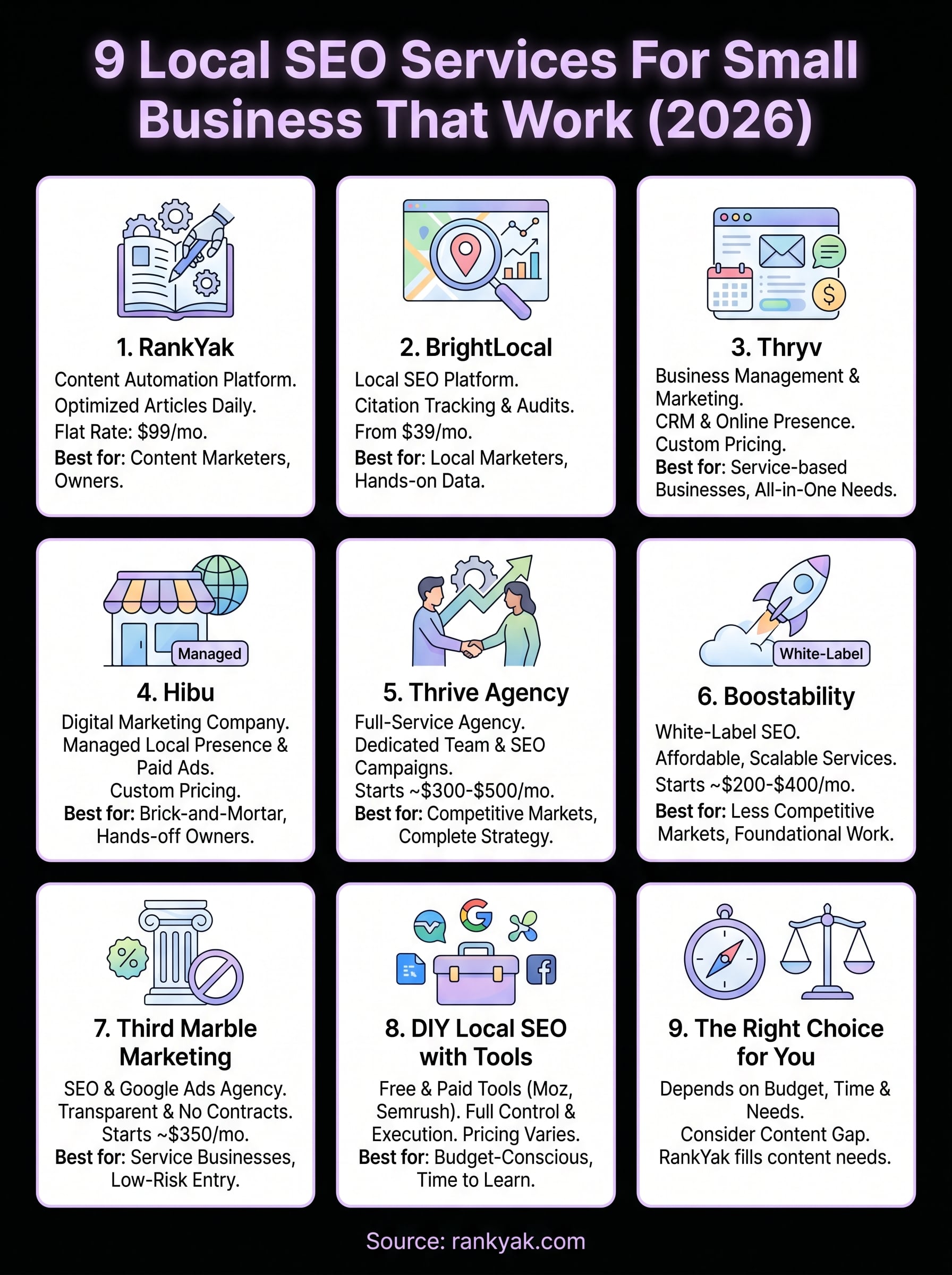
You now have nine concrete options for local SEO services for small business, ranging from fully managed agencies to data-driven platforms to DIY tool stacks. The right choice depends on your budget, how much time you want to spend managing the work, and which parts of local SEO you still need to build out. If your Google Business Profile and citations are already solid, the biggest gap is usually consistent content that targets local and niche keywords over time.
That's where RankYak fits in. While the agencies and platforms above cover citation building, reputation management, paid ads, and revenue reporting, RankYak handles daily content publishing on autopilot, writing and posting SEO-optimized articles directly to your site without any manual effort from you. At $99 per month with a 3-day free trial, it's one of the most cost-effective ways to keep your site growing in organic search. See how RankYak helps local businesses own the searches in their area, then start your free trial and watch what daily publishing does for your rankings.
Allan de Wit is a co-founder of RankYak and has worked in SEO since 2015: inside agencies, alongside them, for clients directly, and in-house on the products being ranked. He came to it as a software engineer building for marketers, which is why the platform is built the way it is. He went on to start companies of his own, two of which were acquired. At RankYak he sets the product direction and owns the features, the quality bar, the design, and the UX.