5 Best AI Product Description Generator Tools for Ecommerce
Writing product descriptions for dozens, or hundreds, of SKUs is one of those tasks that sounds simple until you're staring at product #47 with nothing left to say. An AI product description generator takes that grind off your plate by turning basic product details into polished, conversion-ready copy in seconds.
But not every tool delivers the same quality. Some spit out generic fluff. Others nail tone, SEO, and persuasion without much hand-holding. The difference matters when your descriptions directly impact click-through rates, search rankings, and sales.
At its core, a product description AI tool works as an automated AI description maker: you feed it product attributes, and it returns human-sounding copy positioned around benefits, use cases, and keywords. The best AI content generation tools for ecommerce product descriptions go further by incorporating tone controls, SEO signals, and bulk workflows so you can scale output without sacrificing quality. Whether you call it an AI description generator, an AI description writer, or simply AI for product description work, the goal is the same: get accurate, persuasive copy published faster.
Before picking a tool, it helps to know what separates a useful AI e-commerce product description generator from a mediocre one. The factors that matter most are output quality (does it read like a human wrote it?), AI for product description optimization features (keyword placement, readability scoring, search intent alignment), tone flexibility, pricing, and how well the tool fits into your existing ecommerce workflow. A generator that nails copy but forces you to copy-paste between five browser tabs will slow you down just as much as writing manually.
At RankYak, we automate SEO content for ecommerce stores and other businesses, so we know how critical well-optimized copy is at every level, from blog posts to product pages. We put together this list of the five best AI product description generators to help you find the right fit for your store, your workflow, and your budget.
1. Copy.ai product description generator
Copy.ai is one of the most widely used AI product description generators on the market, and it also ranks among the strongest AI copywriting tools for ads, emails, and blogs. The platform gives you a dedicated workflow for product descriptions that produces persuasive, benefit-focused copy without requiring much writing experience.
What it generates and how it sounds
Copy.ai generates short to medium-length product descriptions that lean into benefits over features. The output tends to sound conversational and direct, which works well for lifestyle brands, apparel, beauty, and consumer goods. You get multiple output variations per run, so you can pick the one that fits your brand voice or mix elements from several.
The AI descriptions it produces are structured to lead with a hook, highlight two or three customer-relevant benefits, and close with a call to action or sizing/availability detail. That structure maps well to how shoppers scan product pages, which means less reformatting on your end.
Best inputs to get strong results
The more specific your inputs, the sharper the output. Feed Copy.ai your product name, key features, target audience, and tone to get results worth using without heavy edits. Vague inputs like "blue shirt" produce generic copy; detailed inputs like "men's moisture-wicking performance tee for gym training, professional tone" produce something you can actually publish.
Treating your AI tool like a junior copywriter helps: give it a clear brief and it delivers a clear result.
Including a target keyword in your input also improves how the product description AI handles SEO. Copy.ai does not have a built-in keyword research layer, but when you provide a term explicitly, it weaves it into the copy naturally.
Ecommerce use cases and ideal teams
Copy.ai suits direct-to-consumer brands, Shopify store owners, and marketing teams that need to move through a product catalog quickly. It handles everything from individual product pages to bulk description batches when used with its workflow automations.
Teams that manage seasonal launches with dozens of new SKUs at once will appreciate the batch workflow. You can queue up product details in a spreadsheet-style input and let Copy.ai return an AI description for each row, which cuts catalog update time from days to hours.
Pricing and free tier limits
Copy.ai offers a free plan with limited credits per month, which is enough to test the tool on a small catalog. Paid plans start around $49 per month and unlock higher usage limits, team features, and access to advanced workflows.
2. Ahrefs AI product description generator
Ahrefs is best known as an SEO research platform, but its free AI product description generator brings search thinking directly into your product copy, which is something most standalone writing tools skip entirely.
What makes it different for SEO writing
Unlike tools focused purely on persuasion, Ahrefs builds search intent awareness into its outputs. The descriptions it generates tend to include natural keyword placement without reading like they were forced in, which gives your product pages a better shot at ranking in organic search. That combination of SEO data and copy generation is what sets the Ahrefs product description tool apart from general-purpose AI writers.
Because Ahrefs sits on top of one of the largest backlink and keyword databases available, the AI for product description optimization angle here is stronger than what you get from tools that treat SEO as an afterthought. Descriptions come out structured in a way that aligns with how Google evaluates product pages: clear product identity, benefit-driven language, and relevant terminology that matches real search queries.
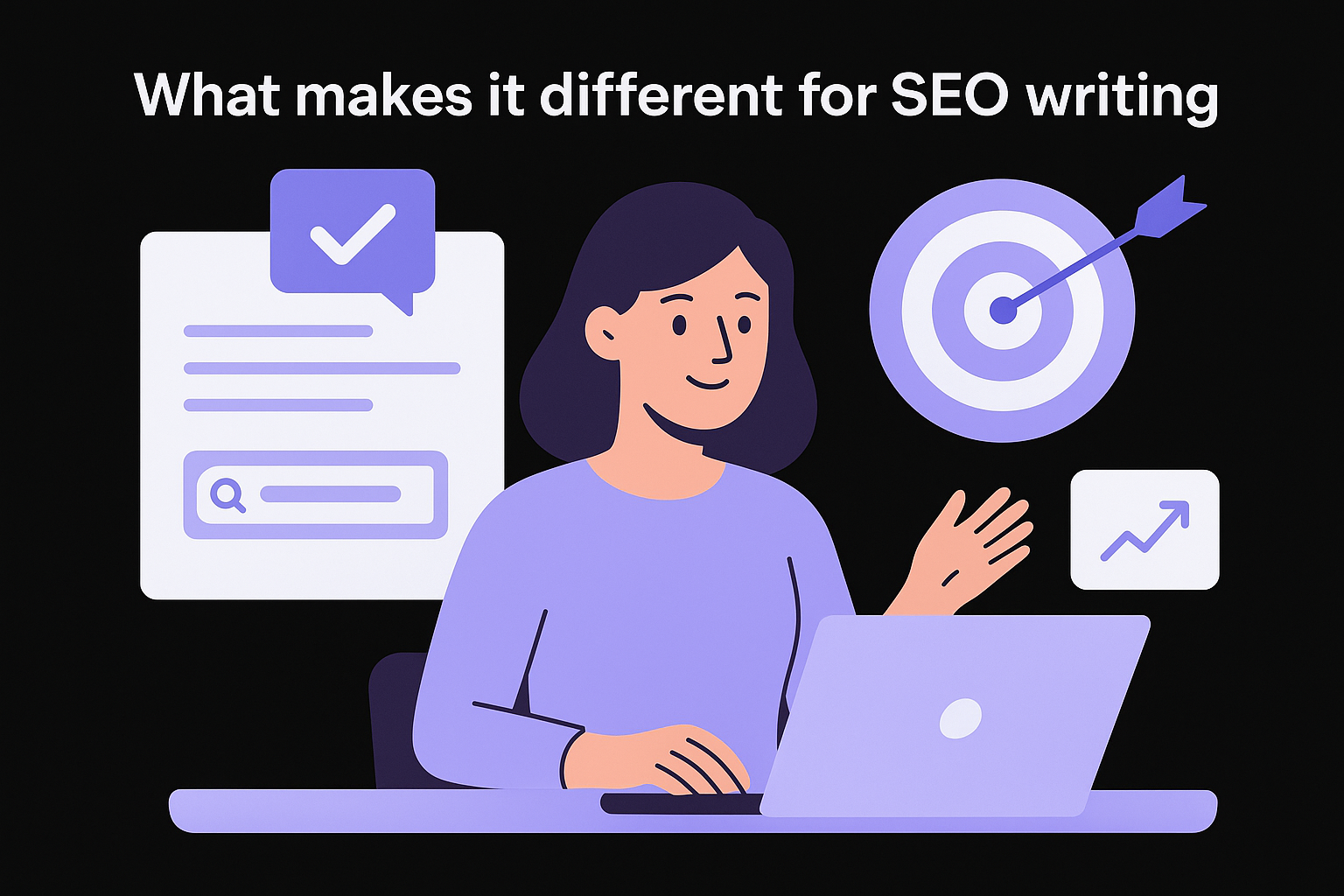
A description tool that understands search data gives your product pages a structural advantage that pure copywriting tools cannot match.
Workflow and output options
You paste in your product name and key details, and the generator returns a clean, usable description quickly. The workflow is straightforward, and no paid account is required to run it, making it one of the more accessible free options available.
The Ahrefs product description generator outputs a single polished description per run rather than multiple variations. If you want alternatives, you can adjust your input slightly and regenerate. The tradeoff is simplicity: there are no settings to configure, no credits to track, and no account to create before you start.
Best for ecommerce teams already using SEO tools
This tool fits teams that already think about finding the keywords they can win when building their product catalog. If you pull target keywords from Ahrefs during your SEO workflow, you can feed those terms directly into the description inputs to get tighter, more relevant output.
It is also a strong starting point for store owners exploring AI for ecommerce product descriptions for the first time. The zero-cost entry point removes risk, and the SEO-aware output sets a quality bar that helps you evaluate other paid tools later.
Pricing and free tier limits
The product description generator is completely free to access. A paid Ahrefs subscription unlocks the full SEO research platform, but you do not need one to use this specific tool.
3. QuillBot AI product description generator
QuillBot is best known for its paraphrasing and grammar toolkit, but its AI product description generator handles product copy with a focus on clear, readable language that gets to the point fast.
Strengths for clarity, tone, and rewrites
Its strongest advantage is the tone adjustment feature, which lets you shift descriptions from formal to casual without rewriting from scratch. It also excels at cleaning up clunky or feature-heavy drafts you already have, making it as useful for rewrites as for generating from scratch.
As an AI description writer, QuillBot focuses more on language quality than on SEO mechanics. If your primary pain point is descriptions that sound robotic, overly technical, or inconsistent in tone, this tool addresses that directly. It will not suggest keywords or score your copy for search optimization, but the readability of the output tends to be high enough that pages perform better simply because shoppers stay on them longer.
Workflow for turning features into benefits
You enter your product name and key features, and QuillBot rewrites them as customer-facing benefits. If your first output reads too technically, the paraphrase tool lets you adjust tone and length in the same interface without starting over.
Pairing a feature list with a tone setting is the fastest way to get publish-ready copy from QuillBot.
Best for solo sellers and small catalogs
Solo sellers, Etsy shop owners, and small ecommerce stores managing a limited product range get the most out of QuillBot. It does not offer the bulk workflow features that larger teams need, but it works well for focused, one-at-a-time editing sessions.
If you already have product descriptions that feel flat or outdated, QuillBot works as a rewrite layer. Paste in the old copy, select your desired tone, and the AI description maker returns a refreshed version in seconds. That makes it practical for catalog refreshes where you are updating existing listings rather than creating new ones from scratch.
Pricing and free tier limits
The free plan covers basic paraphrasing and writing tools with usage caps. Premium runs around $13 per month and unlocks higher word limits, faster processing, and advanced tone modes.
4. Grammarly AI product description generator
Grammarly is primarily a writing assistant with AI features and prompts, but those AI features include a product description generator that focuses on polished, error-free output with strong readability from the start.
Strengths for polish, brand tone, and readability
Grammarly's AI carries its editing DNA into description writing, which means the output is clean and on-brand rather than raw and rough. You can set a specific tone target, such as confident, friendly, or formal, and the tool applies it consistently across every description it produces.
Where Grammarly adds unique value for AI for product description optimization is its real-time scoring. As the AI generates or revises copy, it flags readability issues, passive voice overuse, and unclear phrasing. That feedback loop means the AI descriptions coming out of Grammarly rarely need a second pass for grammar or clarity, which saves editing time that adds up across a large catalog.
If brand voice consistency is your main challenge, Grammarly's tone controls give you a tighter grip than most writing-only tools.
Workflow for improving existing descriptions
This tool works especially well when you already have draft descriptions that need polish. You paste in your existing copy, and Grammarly's AI rewrites it for clarity and tone while catching grammar issues at the same time, cutting your editing time significantly.
You can also use Grammarly's browser extension to edit descriptions directly inside your CMS or marketplace dashboard. That means you can refine product copy on Shopify, Amazon Seller Central, or any web-based platform without switching tabs.
Best for teams that need consistent voice
Content teams managing multiple contributors or writers benefit most here. Grammarly enforces a shared style guide across your catalog, so descriptions written by different people read like they came from one unified brand voice.
This matters more than most teams realize. Inconsistent AI descriptions across a product catalog make a store feel disjointed, which erodes trust. Grammarly's style guide feature lets you define preferred terminology, banned words, and tone rules once, and every writer on the team sees inline corrections when they deviate.
Pricing and free tier limits
Grammarly offers a free plan with basic writing suggestions. The Pro plan starts at $12 per month and unlocks full AI generation features, advanced tone adjustments, and style guide tools.
5. Zoho Commerce product description generator
Zoho Commerce includes a built-in AI product description generator designed specifically for store owners already working inside the Zoho ecosystem. It skips the copy-paste workflow between separate tools by generating descriptions directly within your product catalog.
Strengths for store workflows and product data
Zoho's generator pulls from existing product data you have already entered in your store, which means the output stays grounded in accurate details rather than invented specs. It fits naturally into the product creation workflow, reducing the number of tools you need open at once.
Because the generator reads structured product attributes like material, dimensions, color, and category, the product description AI output stays factually accurate. That is a meaningful advantage over standalone tools where you manually type in details and risk introducing errors or omissions.
Workflow inside an ecommerce catalog
You trigger the generator from your product listing page, enter or confirm the key details, and get a ready-to-use description without leaving your dashboard. This tight integration saves time when you are adding multiple new products in a single session.
For store owners who update their catalog weekly, this embedded workflow eliminates the context-switching that slows down every other tool on this list. You stay inside one platform from product setup to published listing.
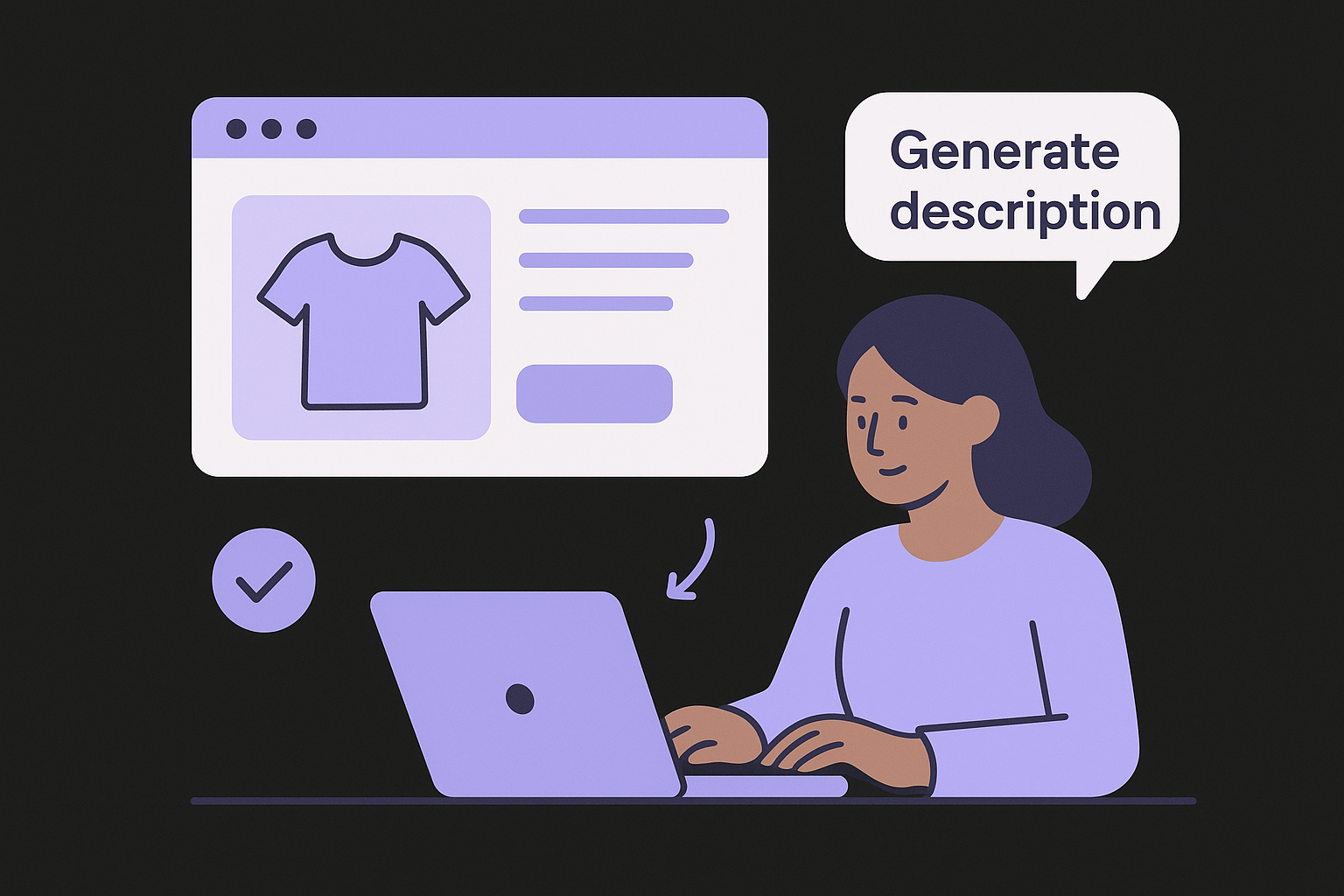
Keeping your description tool inside your store platform removes friction that slows down catalog updates.
Best for Zoho Commerce store owners
This tool works best if you already run your store on Zoho Commerce and manage product data within that platform. Sellers on other platforms will find standalone generators more flexible for their workflow.
It is a strong fit for:
- Zoho Commerce merchants adding new SKUs regularly
- Small business owners who prefer an all-in-one platform
Pricing and free tier limits
The generator is available as part of Zoho Commerce plans, which start at $22 per month. No separate subscription is required to access the description tool.
A simple way to choose and use one
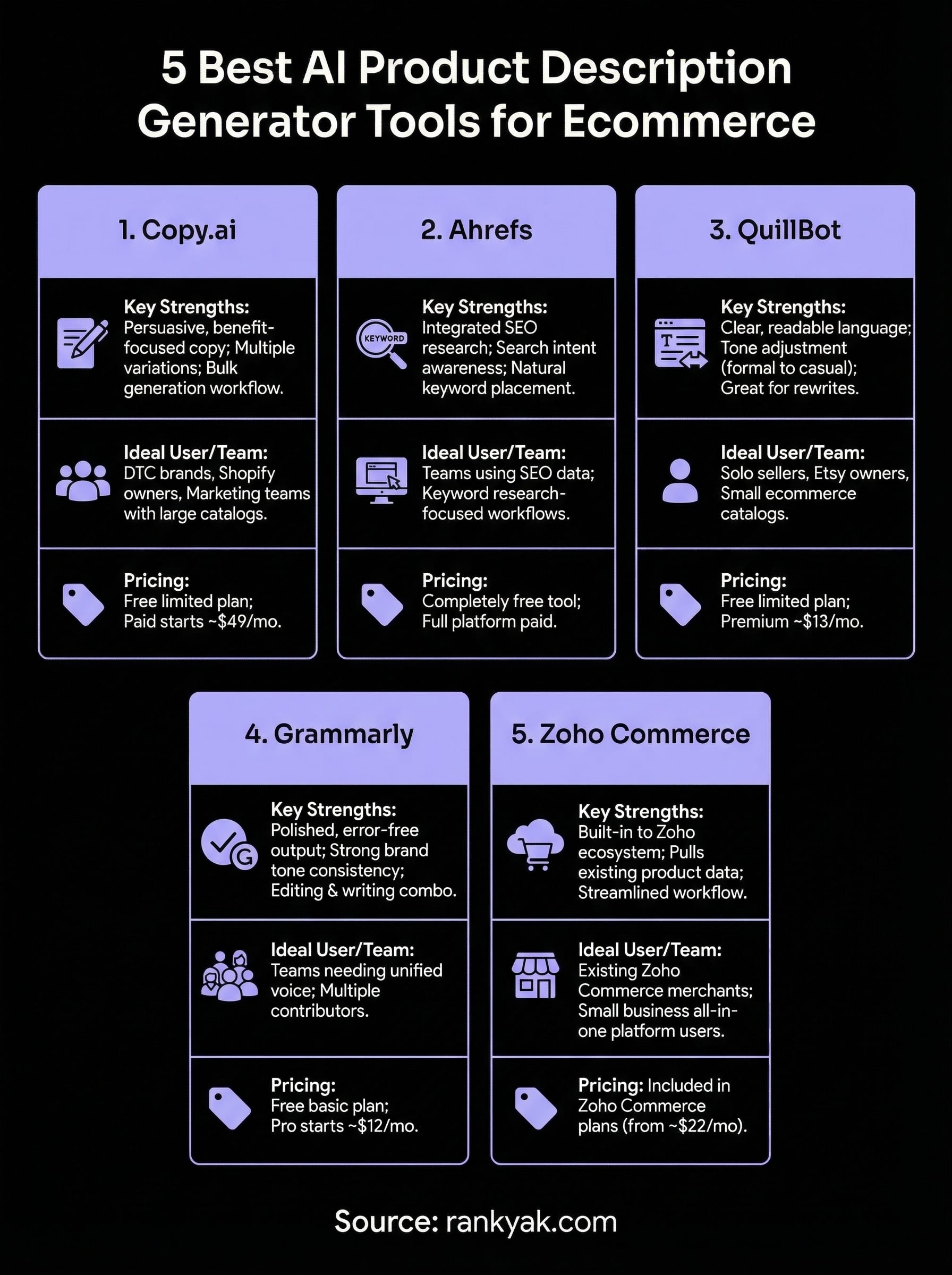
The right ai product description generator depends on what you already use and what you need most. If SEO rankings matter, start with Ahrefs. If you need bulk output with brand controls, Copy.ai or Grammarly fit better. Solo sellers with small catalogs will get solid results from QuillBot without paying much. Zoho Commerce users should stay inside their platform and skip the extra tools entirely.
Here is a quick framework for narrowing it down based on the factors that matter most when choosing an AI for product description work:
- Output quality: All five tools produce usable copy, but Grammarly and Copy.ai deliver the most polished first drafts. QuillBot is strongest when you already have a rough draft to improve.
- SEO optimization: Only Ahrefs brings search data into the generation process. If organic visibility is a priority, it should be part of your workflow even if you use another tool for the final copy.
- Tone and brand voice: Grammarly leads here with style guides and team-level tone enforcement. Copy.ai offers variation selection, and QuillBot gives you inline tone adjustment.
- Bulk workflows: Copy.ai handles batch generation best. The other tools are built for one description at a time.
- Budget: Ahrefs is free. QuillBot and Grammarly are under $15 per month. Copy.ai is $49 per month. Zoho Commerce bundles the generator into its $22 per month store plan.
- Platform integration: Zoho Commerce wins if you are already on that platform. For everyone else, Copy.ai and Grammarly offer the most flexible integration options through browser extensions and API access.
Whichever tool you pick, give it specific inputs: product name, key features, target audience, and tone. These details push the output closer to something you can publish without heavy editing.
A few practical tips for getting the most from any AI description generator:
- Start with your target keyword. If you know the search term shoppers use to find your product, include it in your input. The product description AI will place it naturally, and your listing gets a head start on organic ranking.
- Review for accuracy before publishing. AI tools occasionally invent specifications or benefits that do not exist. Always verify measurements, materials, compatibility claims, and any quantified benefit.
- Run A/B tests on high-traffic listings. Generate two or three variations, publish the strongest, and test alternatives over time. Even small wording changes in product copy can shift conversion rates.
- Pair your description tool with a broader ecommerce content strategy. Optimized product descriptions help individual pages rank, but sustained organic growth requires blog content, internal linking, and backlinks working together.
Your product descriptions are just one piece of the SEO puzzle. Building consistent organic traffic takes a full content strategy, not just polished copy. If you want a system that handles keyword research, article creation, and publishing on autopilot, try RankYak free for 3 days.
Lars Koole is a co-founder of RankYak and has worked in SEO since 2021, on the side where a strategy has to become a live page: inside agencies, alongside them, for clients directly, and in-house on the products being ranked. He is a software engineer by trade, which is how that page gets built. Before RankYak he founded companies of his own, two of which were acquired. At RankYak he owns the engineering and everything AI, and works out the solution and the implementation of each new feature.