13 AI SEO Automation Tools to Grow Traffic on Autopilot
Running SEO manually is a grind. Between keyword research, content creation, publishing, and link building, it can eat up hours every week, hours most small teams and solo operators don't have. That's exactly why AI SEO automation has taken off. These tools handle the repetitive, time-consuming parts of SEO so you can focus on actually running your business.
The problem? There are dozens of platforms claiming to automate your SEO, and they vary wildly in what they actually do. Some handle keyword research. Others generate content. A few, like RankYak, cover the full pipeline, from discovering keywords to writing optimized articles to publishing them directly on your site, every single day, without you lifting a finger.
So how do you pick the right tool for your workflow and budget? This article breaks down 13 AI SEO automation tools worth considering in 2026, covering what each one does best, where it falls short, and who it's built for. Whether you need a single-purpose assistant or a full autopilot SEO platform, you'll find a solid option on this list.
1. RankYak
RankYak is the most complete ai seo automation platform on this list. It doesn't just handle one piece of the SEO puzzle. It manages the entire workflow, from finding the right keywords to writing the article to pushing it live on your site, every single day without manual input.
What it automates
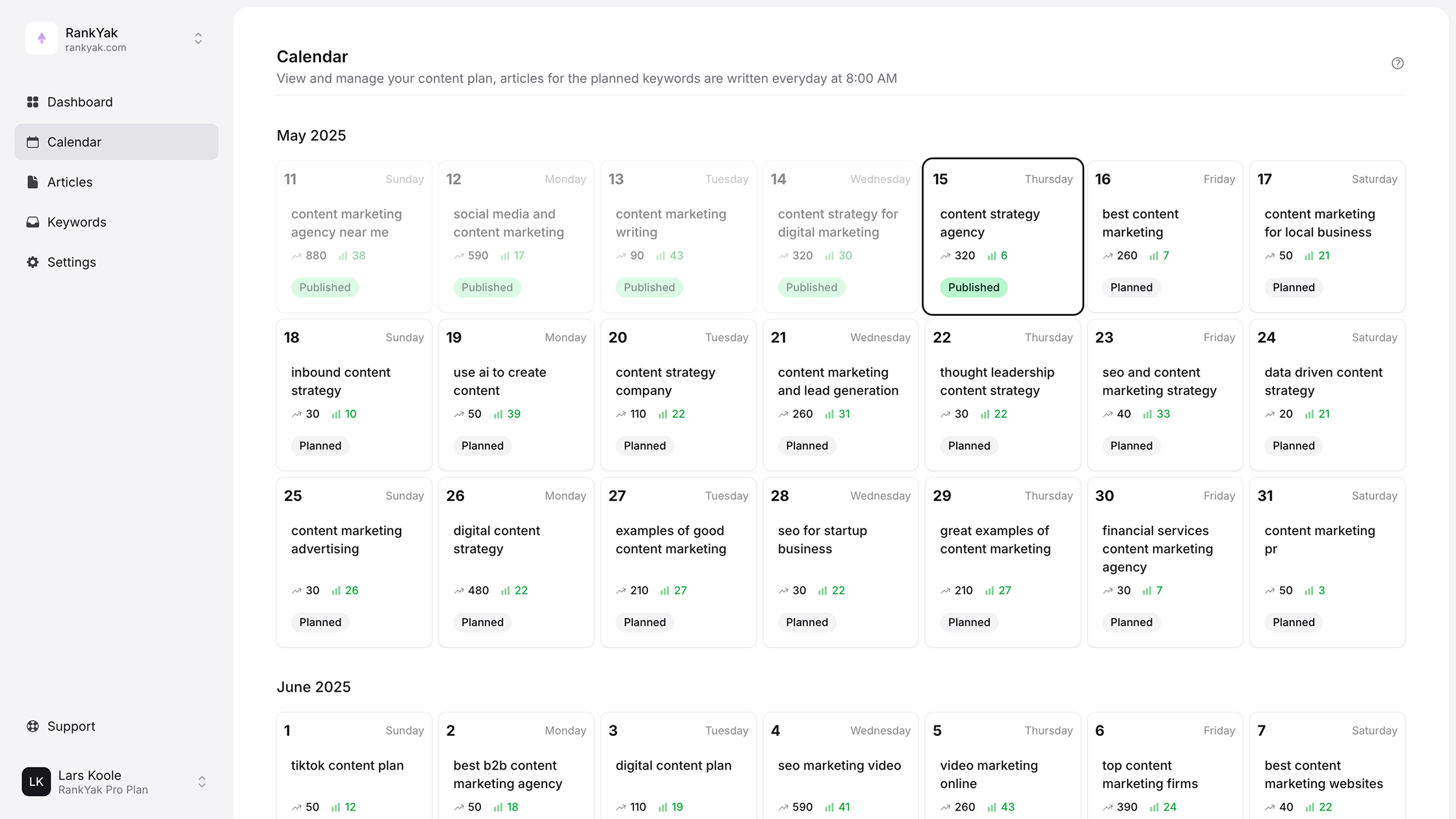
RankYak automates four core SEO tasks: keyword discovery, content planning, article creation, and publishing. After you connect your website, the platform analyzes your niche and identifies high-potential keywords you can realistically rank for. It then builds a daily content roadmap on a rolling content calendar so you always know what's getting published next, and when.
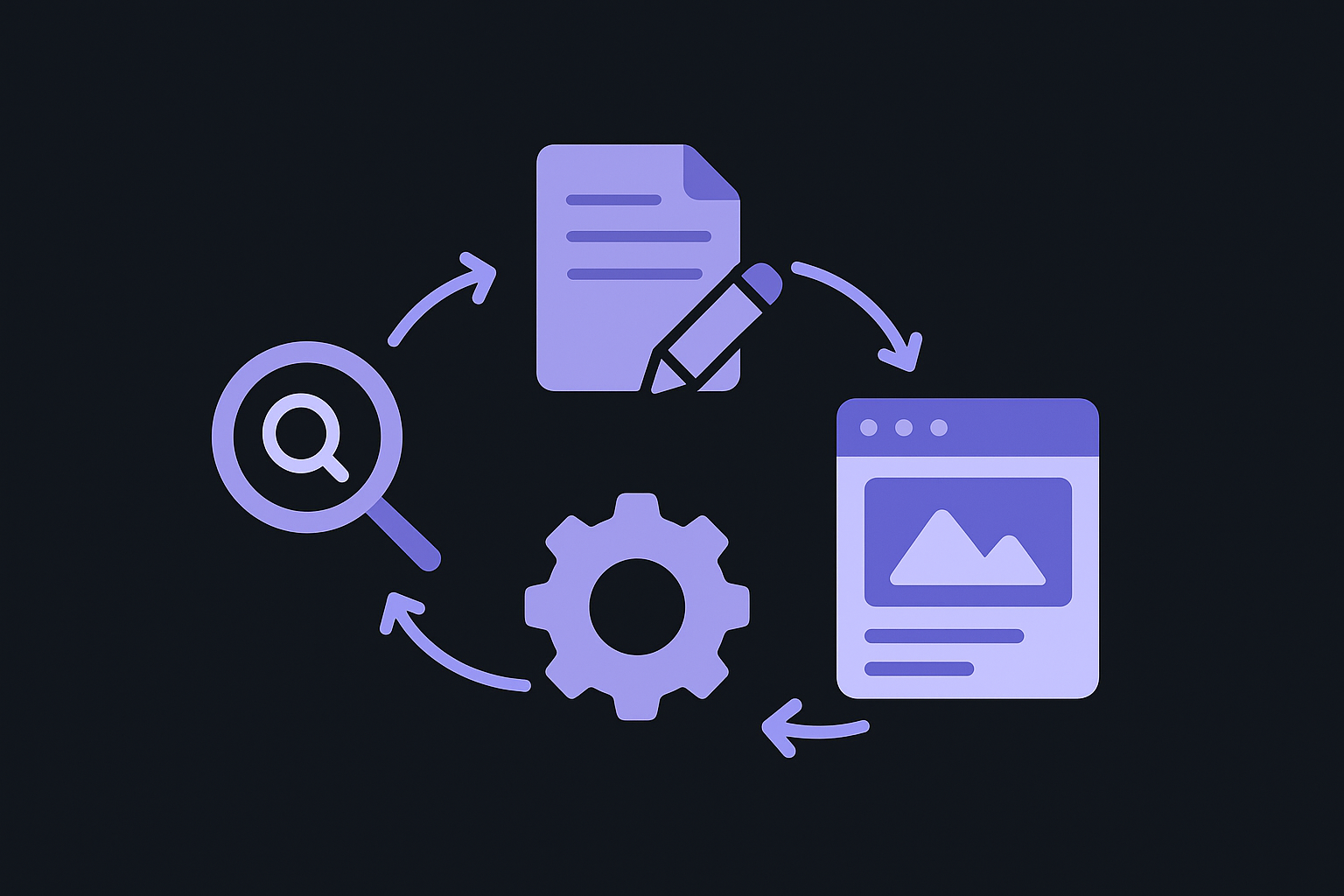
The automation here isn't surface-level. RankYak replaces the work of a full SEO team by handling research, writing, and publishing in one connected loop.
Standout features
Each article RankYak generates runs up to 5,000 words and includes a featured image, internal links, and topic cluster structure. The platform factors in search intent, competitor research, and Google's helpful content guidelines when writing, so output is optimized for actual rankings rather than just word count. It also supports 40+ languages and adapts to your existing brand voice.
RankYak publishes directly to your CMS — WordPress, Shopify, Webflow, Wix, and custom platforms — through its API and webhooks. Once you set it up, articles publish automatically without you touching anything. The automated backlink exchange feature helps you build authority by connecting your site with other niche-relevant websites.
Best fit
RankYak works best for small to medium-sized businesses, content marketers, and website owners who want consistent organic growth without hiring an SEO agency or building an in-house team. If you're managing multiple websites, the platform supports multi-site management under one account, which makes it a strong fit for agencies and consultants too.
It's also a smart pick if you've tried other tools but found them too narrow. RankYak handles the full cycle, so you're not stitching together five different subscriptions to get from keyword research to a published post.
Pricing
RankYak has a single plan at $99 per month, which includes all features. There's no tiered pricing or feature gating. You can test the platform with a 3-day free trial and cancel anytime if it's not the right fit.
2. Gumloop
Gumloop is a no-code workflow automation platform that lets you build custom AI pipelines without writing a single line of code. It's not a dedicated SEO tool, but it's flexible enough to power serious ai seo automation workflows when you configure it yourself.
What it automates
With Gumloop, you can chain AI models, web scrapers, and data sources together into multi-step workflows. For SEO, you build pipelines that pull keyword data, generate content briefs, write draft articles, and push output to a spreadsheet or CMS. The platform connects to tools like OpenAI, Google Sheets, and various APIs, so your workflow pulls from wherever your data lives.
Standout features
Gumloop's biggest strength is flexibility. You design the workflow, so it bends to your specific process rather than forcing you into a preset structure. The visual builder makes it accessible even if you're not technical, and the platform supports parallel processing, meaning multiple workflow steps run simultaneously to save time.
If you want full control over how your SEO automation runs, Gumloop gives you that at the cost of setup time.
Best fit
This platform suits technically curious marketers and operators who want to build custom SEO workflows without writing code. It's a strong fit if your process is non-standard and you need a tool that adapts to your exact requirements rather than forcing you into a predetermined structure.
Pricing
Gumloop offers a free tier with limited credits, and paid plans start at around $97 per month for higher usage limits and premium features.
3. AirOps
AirOps is a content operations platform built specifically for AI-powered content creation and SEO workflows. Unlike general automation tools, it focuses on content-driven ai seo automation tasks, making it a targeted option for teams that produce articles, briefs, and web copy at scale.
What it automates
AirOps lets you build repeatable AI workflows for tasks like generating content briefs, writing drafts, updating existing pages, and producing metadata in bulk. You connect your data sources, define the steps, and run the pipeline across hundreds of keyword inputs or URLs at once.
The platform is built for bulk content operations rather than single-article generation, so your output scales with the size of your content program.
Standout features
AirOps ships with a library of pre-built workflow templates covering common SEO tasks, so you're not starting from a blank canvas. It also connects with Google Sheets and various CMS platforms, letting you push generated content directly into your existing production pipeline.
AirOps is especially strong when you need to refresh large batches of older content or generate optimized metadata across hundreds of pages simultaneously.
Best fit
AirOps fits mid-sized marketing teams and content agencies that already have an SEO strategy mapped out and need faster execution. If your core bottleneck is content volume rather than figuring out what to write, AirOps addresses that gap directly.
Pricing
AirOps offers a free plan with limited workflow runs to get started. Paid plans begin at roughly $99 per month, with pricing scaling based on usage volume and team size.
4. Surfer AI
Surfer AI is a content optimization and writing platform that combines on-page SEO analysis with AI-generated article drafts. It focuses on helping you produce content that aligns closely with what the top-ranking pages in your target search results are already doing.

What it automates
Surfer AI automates the content brief and article writing process by analyzing SERP data for your target keyword and generating a structured draft built around those signals. Instead of manually reviewing competitors and pulling NLP terms, the platform handles that research automatically and bakes it into the output. You enter a keyword, and Surfer produces a full draft with headings, recommended word count, and term usage guidance built in.
Standout features
Surfer's Content Score is its most recognized feature. It gives every piece of content a real-time score based on how well the article uses relevant terms and covers the topic compared to current top-ranking pages. The tool also includes a SERP Analyzer that breaks down competitor pages by structure, word count, and keyword density. For teams running ai seo automation workflows, the integration with Google Docs and WordPress simplifies handoff to editors or direct publishing.
Surfer's strength is optimization depth. It tells you exactly where your content falls short against competitors, which removes a lot of guesswork.
Best fit
Surfer AI fits content teams and SEO professionals who write frequently and want data-driven guidance at the drafting stage, so it's worth seeing how Surfer SEO compares to RankYak. It's a strong pick if your focus is on-page optimization and you already have a keyword strategy in place.
Pricing
Surfer offers plans starting at $99 per month, with higher tiers unlocking more articles and team seats.
5. Alli AI
Alli AI approaches ai seo automation from the technical side. Rather than generating content for you, it focuses on automating on-page and technical SEO changes directly across your entire site, without requiring developer support or manual page-by-page edits.
What it automates
Alli AI automates site-wide on-page optimization, including title tags, meta descriptions, heading structures, schema markup, and internal linking. You set the rules once, and the platform pushes changes across hundreds or thousands of pages automatically. It can also handle page speed recommendations and structured data deployment, which typically require developer time to implement manually.
Standout features
The platform's bulk optimization engine is its defining feature. Instead of opening individual pages, you apply optimization rules globally and Alli AI executes them across your entire site. The real-time content editor also lets you preview how changes will look on a live page before committing, which reduces publishing risk when you're touching large batches of content at once.
Alli AI is one of the few tools that gives non-technical users direct control over site-wide SEO changes without writing a single line of code.
Best fit
Alli AI fits established website owners and agencies managing large sites where technical SEO debt is slowing down rankings. If your bottleneck is implementing changes at scale rather than generating new content, this tool fills that specific gap well.
Pricing
Alli AI's plans start at $299 per month, with higher tiers available for agencies managing multiple client sites. A free trial is available before committing to a paid plan.
6. Page Optimizer Pro
Page Optimizer Pro (POP) takes a data-first approach to on-page SEO, automating the analysis work that would otherwise require hours of manual competitor research. Rather than relying on gut instinct about what to include in your content, POP pulls signals from top-ranking pages to tell you exactly how to structure and optimize each article you publish.
What it automates
POP automates the process of competitive content analysis by scraping the top search results for your target keyword and extracting optimization signals like term frequency, heading structure, and page elements. You plug in your keyword and URL, and the platform generates a report that shows precisely where your page needs work compared to what's already ranking. This removes the guesswork from on-page optimization and replaces it with direct, actionable data.
Standout features
POP's most recognized feature is its correlation-based scoring system, which maps the relationship between specific on-page elements and rankings across competitors. It also includes a content editor where you apply changes and watch your score update in real time. For teams building out an ai seo automation workflow, POP plugs into the optimization stage cleanly without disrupting the rest of your process.
The scoring system gives you a concrete target to hit before publishing, which cuts down significantly on post-publish edits.
Best fit
POP works best for SEO professionals and content teams who want granular, evidence-based guidance on optimizing individual pages. It suits users who already produce content consistently and need a reliable scoring framework to make sure each piece has a legitimate shot at ranking before it goes live.
Pricing
POP plans start at $34 per month, with higher tiers unlocking more page reports and additional team seats.
7. ChatGPT
ChatGPT is OpenAI's general-purpose AI assistant, and while it isn't purpose-built for SEO, many marketers use it as a flexible layer in their ai seo automation stack. It handles a wide range of writing and research tasks that would otherwise eat into your workday.
What it automates
ChatGPT can handle content drafting, metadata writing, keyword brainstorming, and outline generation across any topic you throw at it. You prompt it with a keyword or brief, and it produces usable output in seconds. With the right prompt structure, it covers tasks like:
- Writing and rewriting title tags and meta descriptions in bulk
- Building content outlines from a keyword list
- Suggesting internal linking angles for existing content
Standout features
ChatGPT's custom GPTs and API access let you build repeatable SEO workflows without switching tools constantly. The ability to attach files, browse the web, and run code inside the same interface makes it more versatile than most single-purpose writing tools. You can build a shared prompt library that standardizes output across your team, which cuts down on inconsistency between writers.
ChatGPT works best as one component inside a larger workflow, not as a standalone SEO solution.
Best fit
ChatGPT suits individual operators and small teams who want a fast, low-cost way to speed up specific SEO tasks like drafting, editing, or ideation. Your results improve significantly when you already have a clear strategy and content structure in place and just need something to accelerate execution on the writing side.
Pricing
ChatGPT offers a free tier with access to GPT-4o mini. The ChatGPT Plus plan runs $20 per month and unlocks GPT-4o with higher usage limits and access to advanced features like file uploads and web browsing.
8. n8n
n8n is an open-source workflow automation platform that lets you connect apps, APIs, and AI models into custom pipelines. It sits in similar territory to Gumloop but leans toward self-hosted deployments and developer-friendly setups, giving you more control over your data and infrastructure.
What it automates
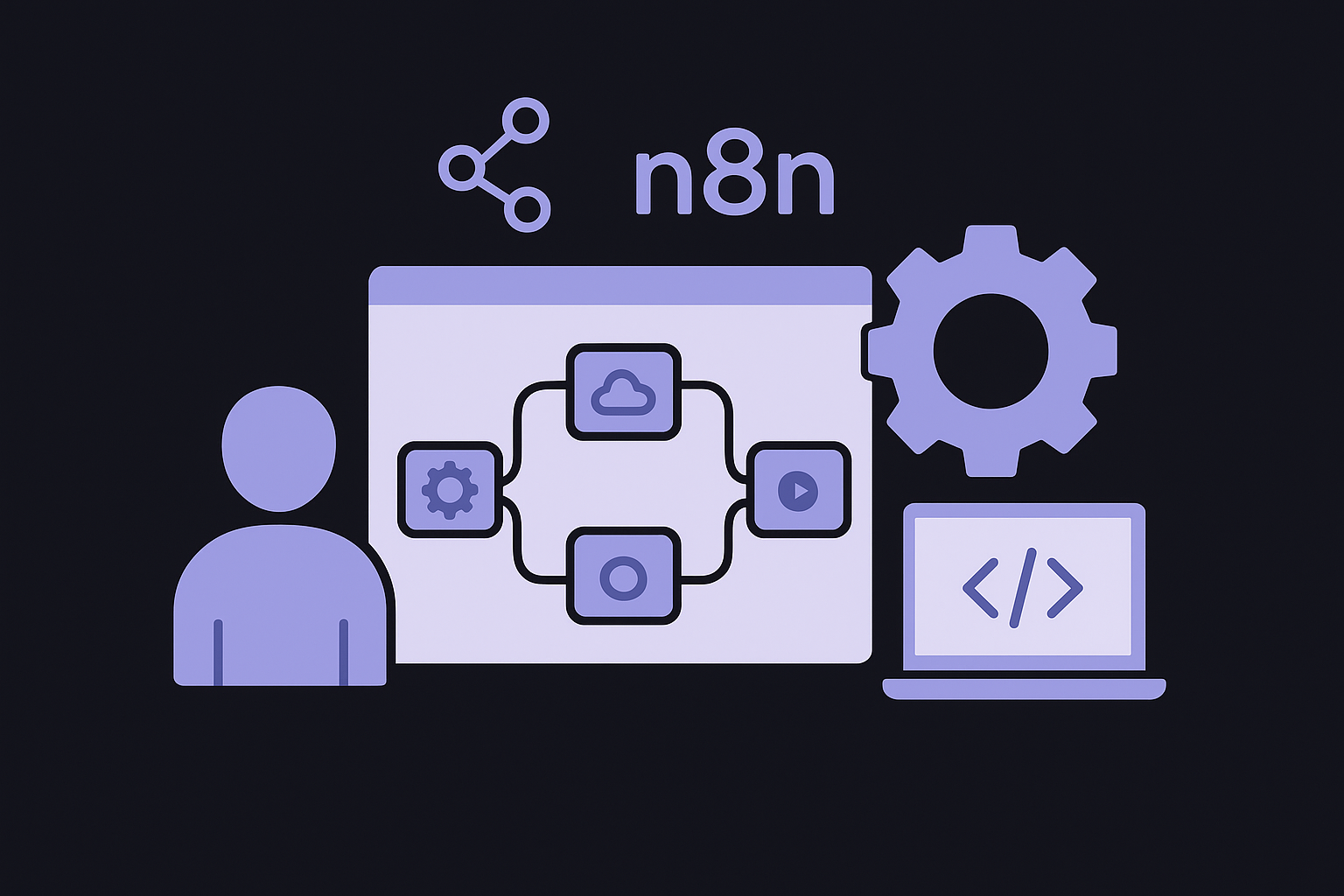
With n8n, you build multi-step automation workflows by connecting nodes that represent different tools and actions. For ai seo automation, you can chain together keyword data sources, AI writing models, Google Search Console data, and CMS publishing steps into a single automated pipeline that runs on a schedule without manual intervention.
Standout features
n8n's biggest differentiator is that you can self-host the entire platform on your own server, which matters if your business handles sensitive data and wants to avoid third-party data exposure. The platform ships with 400+ pre-built integrations covering everything from OpenAI to Airtable to WordPress, so you're rarely building connections from scratch.
Self-hosting n8n means your workflow data never touches an external cloud server, which gives you full ownership of the pipeline.
Best fit
n8n works best for developers and technical operators who want maximum flexibility in how their SEO workflows run. If you're comfortable managing a server environment and want to build custom automations that go well beyond what out-of-the-box SEO tools offer, including connecting your SEO data to an AI agent, n8n gives you that foundation without vendor lock-in.
Pricing
n8n offers a free self-hosted version with no usage caps. The cloud-hosted version starts at $20 per month, with higher tiers unlocking more workflow executions and team features.
9. SEO Stack
SEO Stack is a desktop-based SEO software that bundles multiple research and analysis tools into a single downloadable application. Unlike cloud platforms, it runs locally on your machine, giving you direct control over your data without a recurring subscription eating into your budget each month.
What it automates
The platform automates keyword research, rank tracking, backlink analysis, and competitor research from one interface. You feed it a seed keyword or domain, and it pulls data across multiple sources to build out a picture of your SEO landscape. It also automates site auditing to surface technical issues that could be holding your pages back in search results.
Standout features
This tool bundles a keyword scraper, rank tracker, and backlink checker into one package, which removes the need to jump between separate tools for each task. For anyone building an ai seo automation workflow, SEO Stack works well as a research layer that feeds keyword data into your broader content process.
The desktop-based format means your research data stays on your own machine rather than sitting in a third-party cloud environment.
Best fit
SEO Stack suits budget-conscious website owners and solo SEO practitioners who want a broad set of research tools without paying for multiple platform subscriptions, and it sits alongside other SEO tools under $100 a month. It fits well if you prefer desktop software over cloud tools and your workflow focuses primarily on research and analysis rather than content generation or publishing.
Pricing
Unlike most tools on this list, SEO Stack uses a one-time purchase model rather than a recurring subscription, with pricing starting at around $47 depending on the license tier you select.
10. LowFruits
LowFruits is a keyword research tool built around one specific idea: find the keywords where weak pages are already ranking so you can compete without massive domain authority. It strips away the complexity of traditional keyword tools and focuses your attention on search queries you can actually win.
What it automates
LowFruits automates the process of mining Google autocomplete for keyword variations and then analyzing the search results to identify weak spots in the competition. It scans each SERP and flags keywords where forum threads, user-generated content, or low-authority pages are ranking. That signal tells you the bar for entry is low, which saves you hours of manual SERP analysis you would otherwise do yourself.
Standout features
The platform's weak page detection is what sets it apart from standard keyword research tools. Instead of sorting by search volume alone, it highlights keywords where the current results are beatable. You also get a keyword clustering feature, like other keyword clustering tools, that groups related queries together, which helps you plan content that covers multiple keywords in a single article rather than spreading your effort thin.
LowFruits works best when you feed it into a broader ai seo automation workflow, using its keyword data as the input layer for your content creation and publishing process.
Best fit
LowFruits suits content creators and niche site builders who want to rank faster by targeting low-competition keywords. It fits well if your primary challenge is finding the right keywords rather than producing content at scale.
Pricing
LowFruits offers a pay-as-you-go credit model alongside subscription plans starting at around $29 per month, making it one of the more affordable standalone keyword tools on this list.
11. Looker Studio
Originally called Google Data Studio, Looker Studio is a free data visualization platform from Google that transforms raw SEO metrics into clean, shareable dashboards. It doesn't generate content or run audits, but it fills a real gap in any ai seo automation stack by making your performance data visible and actionable across your entire team.
What it automates
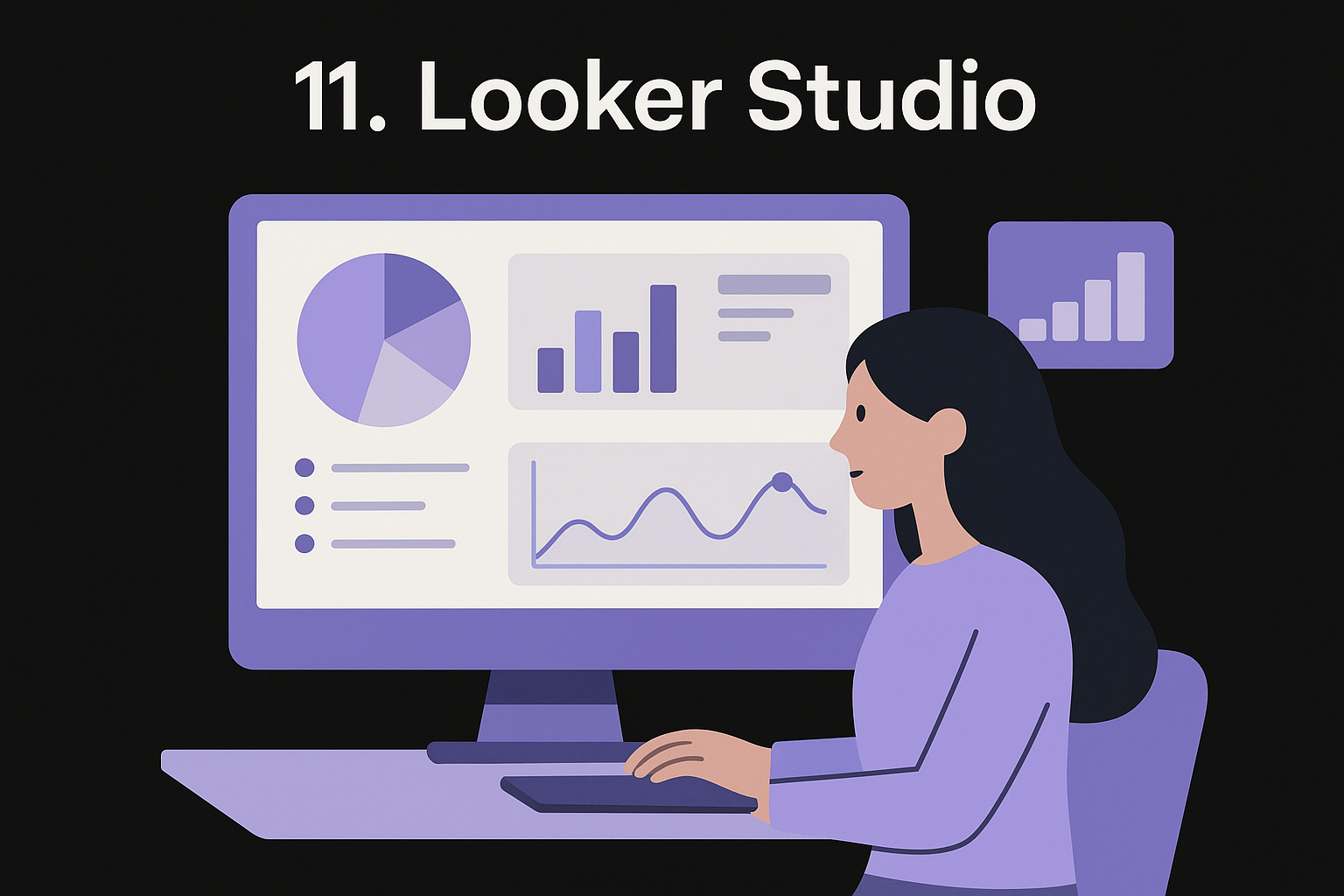
The platform automates data aggregation and reporting by pulling directly from sources like Google Search Console, Google Analytics, and Google Ads on a recurring schedule. Once you configure your dashboard, fresh data flows in without any manual effort, so you stop exporting spreadsheets and copying numbers between tools every week.
Standout features
Its native Google integrations are the strongest feature here. You connect Search Console to surface query-level impressions, clicks, and average position data, all visualized without manual exports. Key capabilities include:
- Custom calculated metrics that track the specific KPIs your SEO program relies on
- Shareable dashboard links so clients or teammates access live data directly
- Blended data sources that combine multiple connections inside one report
A well-configured Looker Studio dashboard removes most of the manual reporting your team handles every month.
Best fit
Looker Studio suits SEO managers and agency teams who need a polished way to present performance data without paying for a separate reporting platform, and there are plenty of SEO reporting dashboard examples to borrow from. It works best when you already run your program through Google's native tools and want a free layer that ties everything together cleanly.
Pricing
You get full access to Looker Studio completely free with a Google account, with no paid tiers or usage caps for standard dashboard functionality.
12. SE Ranking
SE Ranking is an all-in-one SEO platform that combines rank tracking, site auditing, competitor analysis, and content optimization under one roof. It covers more of the SEO workflow than most single-purpose tools, making it a practical option when you want a broader view of your site's performance without juggling multiple separate subscriptions.
What it automates
The platform automates keyword rank tracking across search engines, running daily checks and sending alerts when your positions change. It also runs automated site audits on a schedule, surfacing technical issues like broken links, crawl errors, and missing metadata without you manually triggering a scan each time.
Standout features
SE Ranking includes a content editor that scores your drafts against top-ranking competitors for a given keyword, similar to how Surfer and Clearscope approach on-page optimization. It also ships with a backlink monitoring tool that tracks new and lost links to your domain, which feeds directly into your link-building decisions.
SE Ranking's combination of technical auditing, rank tracking, and content scoring makes it a well-rounded layer inside any ai seo automation stack.
Best fit
This platform suits small businesses and growing marketing teams that want one tool covering multiple SEO functions without paying enterprise-level prices, and it's worth seeing SE Ranking compared with RankYak. It works well if your workflow spans keyword research, technical audits, and content optimization and you want all three accessible from the same dashboard.
Pricing
Plans start at around $65 per month, with higher tiers unlocking more tracked keywords, additional user seats, and extended white-label reporting features.
13. Clearscope
Clearscope is a content optimization platform built to help writers produce articles that cover a topic thoroughly enough to rank. It analyzes top-ranking pages for a target keyword and surfaces the terms and concepts your content needs to include before it goes live.
What it automates
The platform automates the content research and optimization process by scanning search results for your target keyword and generating a graded term list that shows which concepts top-ranking pages use most. Instead of manually reviewing competitors to figure out what to cover, you get a structured report that maps exactly where your article has gaps before publish.
Standout features
Clearscope's content grading system updates your draft score in real time as you write, showing how thoroughly your article covers the topic compared to current top-ranking pages. The platform integrates with Google Docs and WordPress, which fits cleanly into most existing content workflows. For teams running an ai seo automation stack, Clearscope slots in as the optimization layer between your first draft and final publish.
Clearscope's term-based grading removes the guesswork from on-page optimization and gives your team a consistent quality bar to hit before any article goes live.
Best fit
This tool suits content teams and SEO managers who produce articles at a steady pace and want a reliable way to verify that each piece covers its topic completely, and it holds up well against other content optimization tools compared side by side. It fits best when your core challenge is content depth rather than finding keywords or generating first drafts from scratch.
Pricing
Plans start at $199 per month, which puts Clearscope among the pricier optimization tools on this list. That cost makes the most sense for teams with consistent content volume who will use the platform across multiple articles each month.
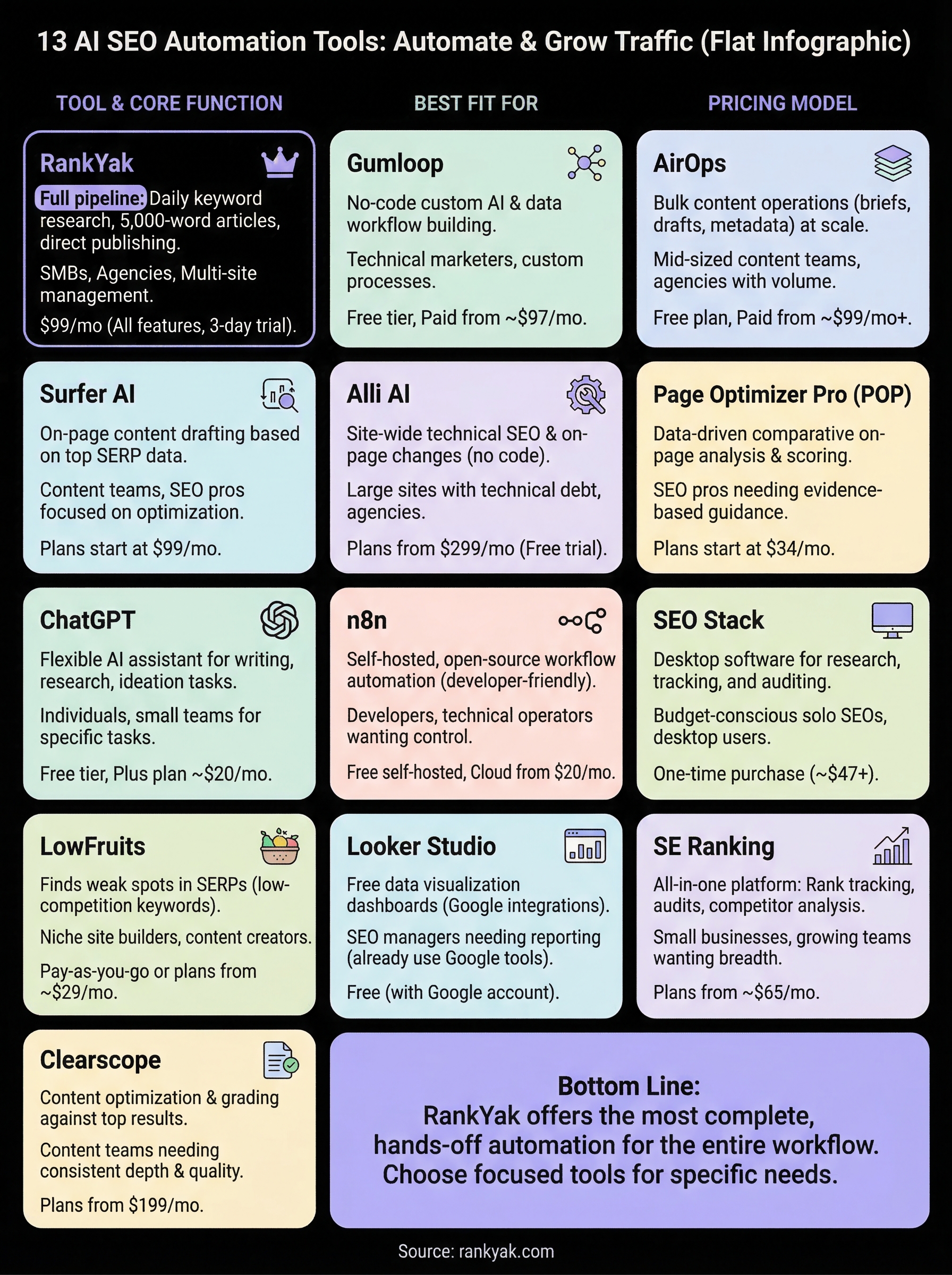
Next Steps
The right ai seo automation tool depends on what's actually slowing your growth down. If you need help with one specific task, like keyword research or on-page scoring, a focused tool like LowFruits or Clearscope gets the job done. But if you're spending hours every week managing the full SEO cycle and still not seeing consistent output, you need something that handles the whole process for you.
RankYak covers the entire pipeline, from finding keywords to writing optimized articles to publishing them on your site every day, automatically. You don't need a separate tool for each step or a team to keep everything running. One platform handles it all for $99 per month, with a 3-day free trial so you can see it work before committing.
Compare RankYak's plans, start your free trial, and put your SEO on autopilot
Allan de Wit is a co-founder of RankYak and has worked in SEO since 2015: inside agencies, alongside them, for clients directly, and in-house on the products being ranked. He came to it as a software engineer building for marketers, which is why the platform is built the way it is. He went on to start companies of his own, two of which were acquired. At RankYak he sets the product direction and owns the features, the quality bar, the design, and the UX.