How To Increase Organic Traffic: 13 Proven, Actionable Tips
You publish content regularly. You spend hours optimizing meta descriptions and tweaking keywords. Yet your organic traffic barely moves. Your articles sit on page three of Google, practically invisible to your target audience. You know SEO matters, but the constant algorithm updates, conflicting advice, and sheer time investment leave you frustrated and wondering what actually works.
This guide breaks down 13 proven strategies to increase your organic traffic. Each tip includes specific steps you can implement right away, along with metrics to track your progress. You'll learn how to automate time consuming SEO tasks, conduct research that uncovers winning keywords, create content that ranks, fix technical issues holding your site back, and build authority through smart link building. Whether you're starting from scratch or looking to scale your existing efforts, these methods will help you drive more qualified visitors to your site without burning out or breaking the bank.
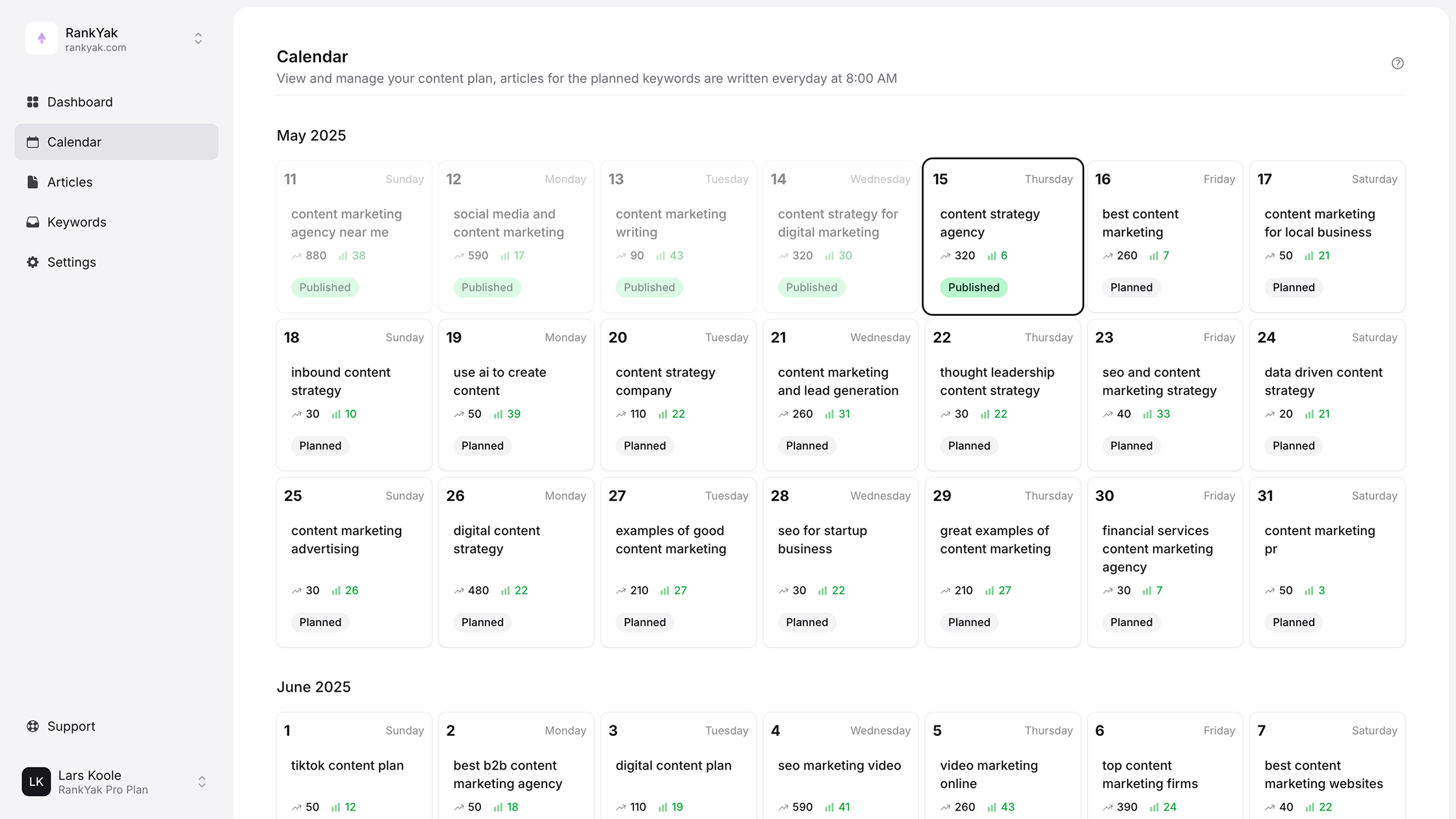
1. Put SEO on autopilot with RankYak
Manual SEO drains your time and energy. You spend hours researching keywords, writing content, publishing articles, and reaching out for backlinks. RankYak turns this into hands-off SEO automation, handling everything from keyword discovery to content publishing while you focus on running your business. The platform generates one fully optimized article daily, publishes it directly to your WordPress, Shopify, or Webflow site, and builds your backlink network automatically.
What this involves
RankYak analyzes your website and niche to discover high-potential keywords that match your business goals. The system creates a strategic content plan, writes SEO-optimized articles that follow Google's helpful content guidelines, and publishes them without your involvement. Each article includes proper internal linking, structured headings, and targets search intent to maximize ranking potential. The platform also connects you with other websites in your niche for backlink exchanges, building your domain authority while you sleep.
When you automate repetitive SEO tasks, you free up 90% of your time while producing 3x more rankable content.
How to do it
Start a 3-day free trial at RankYak and connect your website through the integration options. The system begins discovering keywords immediately and generates your first article within 24 hours. Review the automated content plan to ensure it aligns with your strategy, then let the platform handle daily publishing. Monitor the backlink exchange network to accept or decline partnership opportunities with relevant websites in your niche.
Metrics to track
Watch your organic traffic growth in Google Analytics to measure the impact of consistent content publishing. Track your keyword rankings using Google Search Console to see which articles move up in search results. Monitor your backlink profile to verify the quality and quantity of links pointing to your site. Review your indexed pages to confirm Google discovers and ranks your new content quickly.
2. Define your audience and topics
You cannot create content that ranks and converts without understanding who you're writing for and what they need. Generic content targeting everyone appeals to no one, while focused topics that address specific audience pain points earn better rankings and engagement. Before you research keywords or write articles, you must identify your ideal reader and map out the core topics they search for in your niche.
What this involves
Defining your audience means creating detailed profiles of the people who need your products or services. You identify their demographics, challenges, goals, and search behavior. Topic definition involves mapping out the main categories and subtopics your business covers, creating a content framework that guides your keyword research and article planning. This foundation ensures every piece of content serves a strategic purpose and attracts qualified visitors who might convert into customers.
When you understand your audience deeply, you create content that answers their questions before they finish typing them into Google.
How to do it
Start by analyzing your existing customers through surveys, interviews, or purchase data to identify common characteristics and needs. Review competitor websites and online communities where your audience gathers to understand their questions and frustrations. Create three to five topic clusters that represent your core business areas, then brainstorm specific subtopics within each cluster. Document these insights in a simple spreadsheet, the beginning of a content marketing plan that outlines audience segments, their pain points, and relevant topics you can address through content.
Metrics to track
Monitor your audience engagement metrics including time on page, bounce rate, and pages per session to verify your content resonates with visitors. Track conversion rates by audience segment to identify which groups respond best to your content. Use Google Analytics to analyze demographic and interest data about your actual site visitors, comparing this information against your target audience profiles to refine your understanding over time.
3. Do smart keyword research and clustering
Keyword research forms the foundation of every successful content strategy. You need to identify the exact terms your target audience types into search engines, understand the competition level for each keyword, and organize related keywords into logical groups. Smart keyword clustering groups similar keywords together so you can create comprehensive content that ranks for multiple search terms instead of targeting single keywords in isolation. This approach helps you increase organic traffic by covering entire topics rather than individual queries.

What this involves
Keyword research means discovering search terms your audience uses, analyzing their search volume and competition levels, and prioritizing keywords based on ranking potential, which is exactly what automatic keyword discovery and scoring handles for you. Clustering takes this further by grouping related keywords into topic categories, allowing you to create pillar pages and supporting content that covers subjects comprehensively. You identify primary keywords with decent search volume alongside long-tail variations that face less competition but attract highly targeted visitors who convert better.
When you organize keywords into clusters, you create content that dominates entire topics rather than competing for single terms.
How to do it
Start with seed keywords that represent your core business topics, then use Google Search Console to identify terms your site already ranks for. Expand your list by reviewing the "People Also Ask" and "Related Searches" sections on Google for each seed keyword. Group keywords by search intent and topic similarity, or paste your keyword list into a clustering tool, creating clusters where one comprehensive article targets a main keyword plus 5 to 10 related variations. Focus on keywords with moderate search volume and lower competition scores to increase your chances of ranking quickly.
Metrics to track
Monitor your keyword rankings in Google Search Console to see which terms move up in search results over time. Track the click-through rate for each ranking keyword to identify opportunities where better titles or meta descriptions could capture more traffic. Measure impressions versus clicks to understand which keywords generate visibility but need optimization to convert that visibility into actual visits.
4. Fix and optimize existing pages
Your website already contains valuable assets that need improvement rather than replacement. Many pages sit indexed in Google but rank on page two or three, missing out on traffic they could capture with strategic updates. Optimizing existing content delivers faster results than creating new articles because these pages already have crawl history, accumulated backlinks, and indexing advantages that new content must build from scratch.
What this involves
Page optimization means updating underperforming content to match current search intent, improve readability, and strengthen technical SEO elements, the core of content optimization in SEO. You refresh outdated information, expand thin content sections, add relevant internal links, and fix on-page SEO issues like missing meta descriptions or weak headings. This process also includes identifying pages with high impressions but low click-through rates, suggesting your titles and descriptions need improvement to convert visibility into visits.
When you optimize pages that already rank on page two, you often jump to page one faster than brand new content ever could.
How to do it
Open Google Search Console and filter for pages ranking between positions 11 and 30 that receive at least 100 impressions monthly. Analyze the top-ranking competitors for those keywords to identify content gaps in your existing pages. Update your content by adding missing subtopics, improving your introduction and conclusion, inserting relevant statistics or examples, and strengthening your headings with target keywords. Refresh your publish date after making substantial improvements to signal freshness to search engines.
Metrics to track
Monitor ranking position changes for optimized pages in Google Search Console, focusing on keywords that moved up after your updates. Track your organic traffic increases to specific URLs using Google Analytics to measure the direct impact of your optimization efforts. Watch your click-through rates for improved pages to verify your title and meta description updates attract more clicks from search results.
5. Publish people first helpful content consistently
Google's algorithms prioritize helpful content created for people, not content manufactured solely to manipulate rankings. You cannot game the system with keyword-stuffed articles or shallow posts that fail to answer real questions. Consistent publishing of valuable content builds trust with both readers and search engines, establishing your site as a reliable resource that deserves higher visibility. This approach aligns with Google's helpful content guidelines and represents the most sustainable way to increase organic traffic over time.
What this involves
People first content means creating articles that solve actual problems your audience faces, written by someone with genuine knowledge or experience in the topic. You demonstrate expertise through detailed explanations, practical examples, and insights that go beyond surface-level information readily available elsewhere. Consistency matters because regular publishing signals to search engines that your site actively maintains fresh and relevant information, while building a content library that covers your niche comprehensively.
When you publish helpful content consistently, you transform your website from a static brochure into a trusted resource that attracts repeat visitors and earns better rankings.
How to do it
Create a publishing schedule you can maintain long term through a content planning calendar, whether that's one article weekly or three times per week. Focus each piece on answering specific questions your audience asks, drawing from customer support inquiries, forum discussions, or keyword research. Write from experience when possible, including examples, case studies, or data that support your points. Edit ruthlessly to remove fluff and ensure every paragraph adds value to the reader's understanding of the topic.
Metrics to track
Monitor your publishing consistency by tracking how many articles you publish monthly and whether you meet your schedule targets. Measure engagement signals including average time on page and scroll depth to verify readers find your content valuable enough to consume fully. Track your returning visitor rate in Google Analytics to see if your consistent content builds an audience that comes back for more information.
6. Match content to search intent
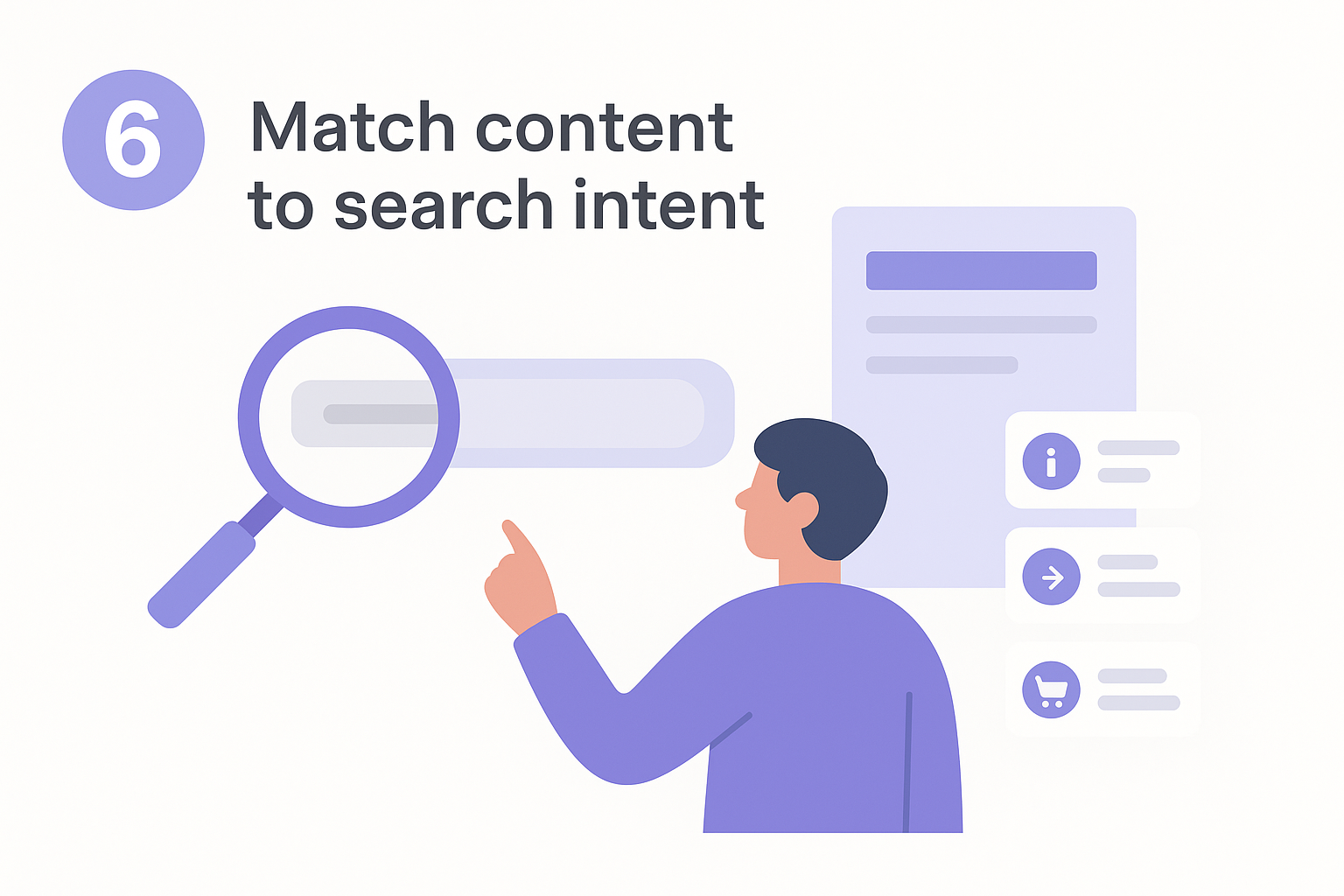
Search intent defines what users actually want when they type a query into Google. You might rank for a keyword but receive low traffic if your content fails to match the searcher's goal. Google analyzes user behavior signals like bounce rate and time on page to determine whether your content satisfies search intent, rewarding pages that deliver what searchers need and demoting those that miss the mark. Understanding how to increase organic traffic means creating content that answers the specific question behind each search query.
What this involves
Matching search intent means identifying whether users want information, navigation, transactional options, or commercial research when they search for your target keywords, which comes down to knowing the types of keywords in SEO. You analyze the top-ranking pages for each keyword to understand what format, depth, and angle Google considers most relevant. This process reveals whether searchers expect a blog post, product page, comparison guide, or tutorial, allowing you to structure your content accordingly.
When you align your content format and angle with search intent, you earn clicks, engagement, and rankings that stick.
How to do it
Type your target keyword into Google and study the top five results to identify patterns in content type, structure, and purpose. Look for consistency in whether results are informational articles, product pages, videos, or lists. Match your content format to these patterns while adding unique value through better examples, deeper research, or clearer explanations that differentiate your page from competitors.
Metrics to track
Monitor your bounce rate and time on page in Google Analytics to verify visitors find your content relevant to their search intent. Track click-through rates in Google Search Console to see if your titles and descriptions accurately represent your content's purpose. Measure ranking stability over time, as pages mismatched to intent typically drop rankings even after initial success.
7. Build strong internal links and structure
Internal links connect your pages together, guiding both visitors and search engines through your content. A well-structured internal linking strategy distributes page authority across your site, helps Google discover and index new content faster, and keeps visitors engaged longer. When you build strategic internal links, you create pathways that strengthen your entire domain's relevance for related topics while making it easier for readers to find additional helpful information.
What this involves
Building internal links means strategically connecting related pages on your site using descriptive anchor text that tells readers and search engines what the linked page covers. You create a hierarchical structure with pillar pages covering broad topics that link to supporting articles exploring specific subtopics in depth. This approach establishes topical authority by demonstrating comprehensive coverage of your niche, signaling to Google that your site serves as a reliable resource worth ranking higher in search results.
When you connect related content through internal links, you transform isolated pages into a cohesive knowledge base that search engines reward with better visibility.
How to do it
Start by identifying your pillar content or most important pages that cover core topics in your niche. Create a spreadsheet listing these pillars alongside related supporting articles that dive deeper into specific aspects of each topic. Add contextual internal links using natural anchor text that describes the linked page's content rather than generic phrases like "click here." Aim for three to five relevant internal links per article, focusing on connections that genuinely help readers explore related information.
Metrics to track
Monitor your crawl depth in Google Search Console to verify search engines can reach all important pages within a few clicks from your homepage. Track which pages receive the most internal links and whether those pages earn better rankings than isolated content. Measure user flow patterns in Google Analytics to see if internal links successfully guide visitors to additional pages, increasing engagement and session duration across your site.
8. Earn high quality backlinks
Backlinks from other websites act as votes of confidence that signal to Google your content deserves higher rankings. When reputable sites in your niche link to your pages, search engines interpret this as validation of your expertise and authority. Quality matters far more than quantity because one link from an authoritative domain outweighs dozens from low-quality directories or spam sites. Learning how to increase organic traffic requires building a backlink profile that strengthens your domain authority and helps your content compete for top positions.
What this involves
Earning backlinks means creating content that other website owners, bloggers, and journalists find valuable enough to reference in their own articles, which is the whole idea behind link building for SEO backlinks. You focus on attracting links naturally through exceptional content rather than buying links or participating in link schemes that violate Google's guidelines. Quality backlinks come from websites with strong domain authority, relevant content in your niche, and genuine editorial standards that make their endorsement meaningful.
When you earn backlinks from trusted sources, you build authority that compounds over time and lifts your entire site's ranking potential.
How to do it
Create original research, comprehensive guides, or unique data that provides value other content creators cannot easily replicate elsewhere. Reach out to websites that have linked to similar content in the past, explaining how your resource improves on what they currently reference. Guest post on reputable sites in your industry when opportunities align with your expertise, ensuring your contributed content meets high editorial standards rather than serving purely as a link placement vehicle.
Metrics to track
Monitor your referring domains using Google Search Console to see which sites link to your content and verify they come from relevant, authoritative sources. Track your domain authority score through regular checks to measure how your backlink profile strengthens over time. Watch your organic traffic growth to confirm that increased backlinks correlate with better rankings and more visitors discovering your site through search results.
9. Refresh and expand old content
Your content library contains hidden ranking opportunities waiting for updates. Articles published months or years ago may have lost rankings as competitors published fresher, more comprehensive content on the same topics. Refreshing existing content often delivers faster ranking improvements than creating new articles because these pages already have indexing history, accumulated backlinks, and domain authority working in their favor. This strategy represents one of the most efficient ways to increase organic traffic when you identify which pages deserve attention.

What this involves
Content refreshing means updating articles with new information, expanded sections, and improved optimization that makes them competitive again in search results. You identify pages that once ranked well but dropped in position, along with articles covering topics where search intent or competitive standards have evolved. Expansion involves adding missing subtopics, current examples, updated statistics, or sections that address questions your original piece overlooked.
When you refresh content strategically, you breathe new life into existing assets instead of starting from scratch every time search landscapes shift.
How to do it
Review your Google Search Console data, or let an audit find the pages losing traffic, to spot articles that lost rankings or traffic over the past six to twelve months. Analyze current top-ranking competitors to identify gaps in your existing content, then add those missing elements through new sections, better examples, or updated data. Include fresh statistics from 2025 or 2026 to demonstrate currency, expand thin sections with more depth, and update your publish date after making substantial improvements.
Metrics to track
Monitor ranking changes for refreshed pages in Google Search Console to measure position improvements after updates. Track your organic traffic increases to specific URLs through Google Analytics, comparing traffic before and after content updates. Watch your click-through rates to verify your updated titles and meta descriptions attract more clicks from the search results they already appear in.
10. Fix technical SEO and crawl issues
Technical problems prevent search engines from discovering, crawling, and indexing your content properly. You might publish excellent articles that never appear in search results because robots.txt blocks crawlers, broken links create dead ends, or duplicate content confuses Google about which version to rank. Fixing these foundational issues removes barriers that keep your site from reaching its full ranking potential, often delivering immediate improvements in how search engines interact with your pages and how to increase organic traffic overall.
What this involves
Technical SEO focuses on ensuring search engines can access and understand your website without obstacles, and a step-by-step technical SEO checklist keeps you from missing anything. You identify crawl errors that prevent bots from reaching important pages, fix broken links that waste crawl budget, resolve duplicate content issues that dilute ranking signals, and optimize your XML sitemap to guide search engines to your most valuable content. This work also includes implementing proper robots.txt directives, canonical tags, and redirects that tell search engines exactly how to handle your pages.
When you eliminate technical barriers, you let your content compete on its merits rather than losing rankings to preventable errors.
How to do it
Access Google Search Console and review the Coverage report to identify pages excluded from indexing or experiencing crawl errors. Fix broken internal and external links using your site's audit tools or plugins. Set up 301 redirects for deleted pages to preserve any ranking value they accumulated. Run an XML sitemap validator to verify your sitemap includes all important pages while excluding low-value content like tags or archives.
Metrics to track
Monitor your crawl stats in Google Search Console to see if Google requests more pages as you fix issues, indicating improved site health. Track your indexed page count to verify search engines discover and include more of your content in their databases. Watch your crawl error reports regularly to catch new technical problems before they impact rankings.
11. Improve site speed and core web vitals
Slow loading pages drive visitors away before they ever read your content. Google treats site speed as a ranking factor because users expect instant access to information, and pages that load in under three seconds earn better positions than sluggish competitors. Core Web Vitals measure specific aspects of user experience including loading performance, interactivity, and visual stability, directly impacting both your rankings and how to increase organic traffic by reducing bounce rates and improving engagement metrics.
What this involves
Core Web Vitals focus on three key measurements: Largest Contentful Paint (LCP) tracks how quickly your main content loads, First Input Delay (FID) measures how fast your page responds to user interactions, and Cumulative Layout Shift (CLS) evaluates whether elements jump around during loading. You optimize these metrics by reducing file sizes, eliminating render-blocking resources, and ensuring your page structure remains stable while content loads. Google uses these signals to determine whether visitors enjoy using your site, rewarding fast pages with better visibility in search results.
When your pages load instantly and respond smoothly, visitors stay longer and search engines rank you higher than slower competitors.
How to do it
Test your site using Google PageSpeed Insights to identify specific problems affecting your Core Web Vitals scores. Optimize your images for SEO by compressing them without sacrificing quality, enable browser caching so repeat visitors load pages faster, and minimize JavaScript that blocks initial rendering. Consider using a content delivery network to serve files from servers closer to your visitors' geographic locations.
Metrics to track
Monitor your Core Web Vitals scores in Google Search Console to see which pages fail to meet Google's thresholds and need improvement. Track your average page load time in Google Analytics to measure overall site performance trends. Watch your bounce rate to verify that speed improvements keep more visitors engaged with your content rather than abandoning slow-loading pages.
12. Make your site mobile friendly
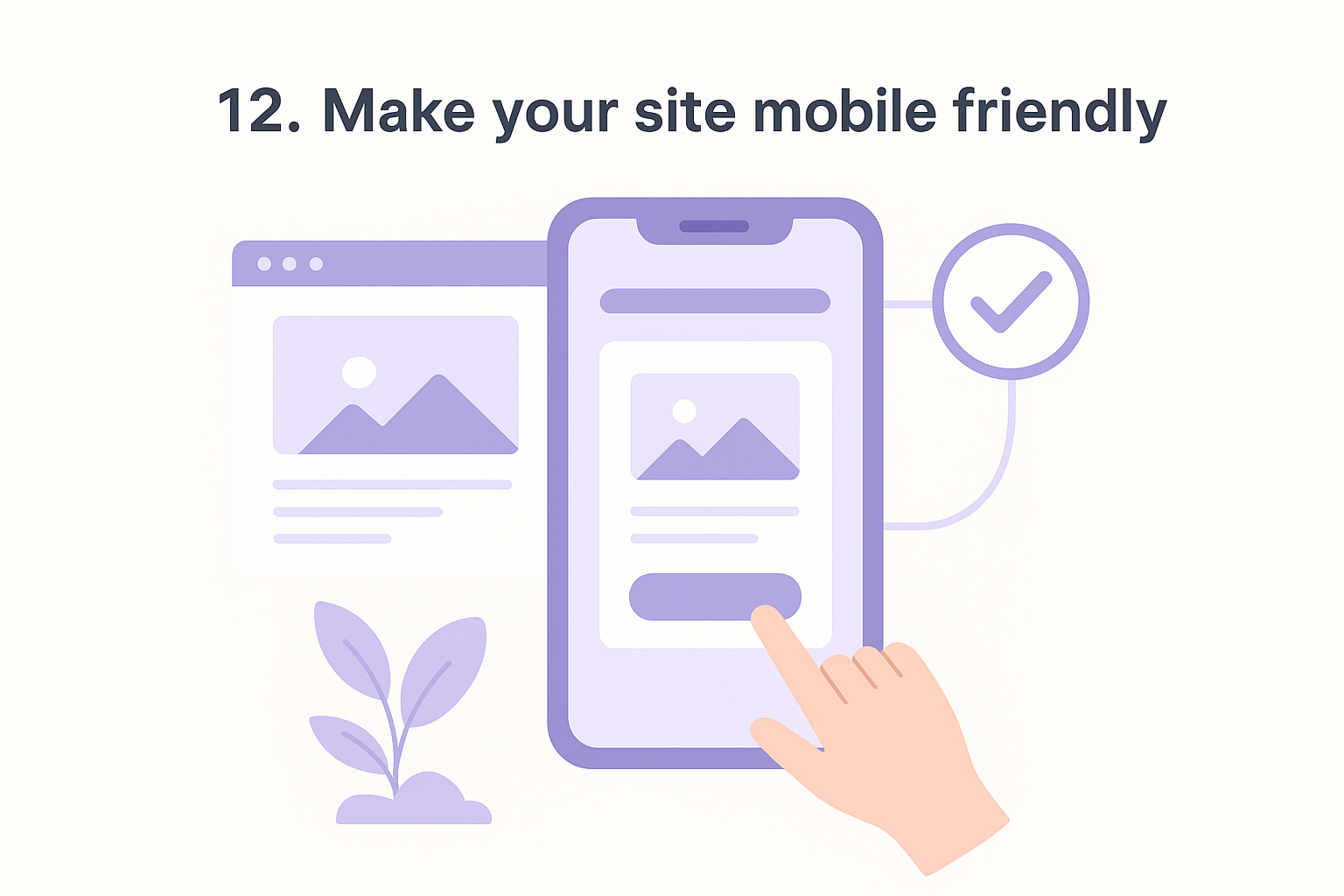
More than half of all web traffic comes from mobile devices, yet many websites still deliver poor mobile experiences that frustrate visitors and hurt rankings. Google uses mobile-first indexing, meaning it evaluates the mobile version of your site to determine rankings for all devices, which makes mobile SEO best practices unavoidable. When your site fails to display properly on phones and tablets, you lose both visitors and search visibility regardless of how well your desktop version performs.
What this involves
Mobile friendliness means ensuring your website displays correctly on screens of all sizes and provides easy navigation without requiring zooming or horizontal scrolling. You implement responsive design that automatically adjusts layouts, images, and text to fit different devices. This includes making buttons and links large enough to tap accurately, removing intrusive popups that block content on small screens, and ensuring pages load quickly on cellular connections with limited bandwidth.
When your mobile experience matches or exceeds your desktop quality, you capture traffic from the majority of searchers who browse exclusively on phones.
How to do it
Test your site using Google's Mobile-Friendly Test to identify problems affecting mobile users. Choose a responsive theme or template that adapts automatically to different screen sizes. Increase font sizes to at least 16 pixels for body text so visitors can read without zooming, and space interactive elements far enough apart to prevent accidental taps.
Metrics to track
Monitor your mobile versus desktop traffic split in Google Analytics to understand what percentage of visitors use mobile devices. Track mobile bounce rates separately to identify if mobile users leave faster than desktop visitors, indicating usability problems. Check your mobile usability report in Google Search Console to catch issues Google identifies that impact how your site appears on phones.
13. Use data to refine your SEO strategy
Guessing which tactics work wastes time and budget on strategies that never deliver results. Data-driven decisions separate successful SEO campaigns from those that stagnate or fail, revealing exactly which pages gain traction, which keywords drive qualified visitors, and where your efforts produce the strongest return on investment. You cannot improve what you do not measure, making regular analysis essential to understanding how to increase organic traffic systematically rather than through trial and error alone.
What this involves
Using data to refine your strategy means learning to track SEO performance across multiple tools so you can identify patterns in what earns rankings and conversions. You analyze which content types attract backlinks naturally, which topics generate engagement, and which optimization efforts correlate with traffic increases. This process reveals underperforming pages that need updates, successful tactics worth repeating, and opportunities competitors overlook in your niche.
When you let data guide your decisions, you stop wasting resources on tactics that sound good but deliver poor results.
How to do it
Export your top 50 pages by organic traffic from Google Analytics monthly and compare performance trends over time. Cross-reference this data with Google Search Console to identify which keywords drive that traffic and whether your average positions improve or decline. Document what you changed on pages that gained traffic, then replicate those successful tactics across similar content to compound your results.
Metrics to track
Monitor your month-over-month organic traffic growth to verify your overall strategy moves in the right direction. Track your ranking distribution to see what percentage of keywords land in positions one through three versus lower positions that generate minimal clicks. Measure your conversion rate from organic traffic to determine whether increased visitors translate into actual business results rather than vanity metrics alone.

Final thoughts
Increasing organic traffic requires consistent execution across multiple strategies rather than hoping a single tactic will transform your results overnight. You need to research the right keywords, create helpful content that matches search intent, optimize your technical foundation, and build authority through backlinks. Each strategy compounds over time, building momentum that accelerates your visibility in search results and drives more qualified visitors to your site.
The challenge is that implementing all thirteen tactics manually demands enormous time and expertise most businesses cannot spare. This is where automation delivers decisive advantages by handling repetitive tasks that drain your resources while maintaining the consistency search engines reward. When you automate your SEO with RankYak, you get daily optimized content, strategic keyword targeting, automatic publishing, and backlink building without the manual grind. Check what RankYak costs for your number of sites and articles, start your free trial today, and let the platform handle how to increase organic traffic while you focus on growing your business.
Allan de Wit is a co-founder of RankYak and has worked in SEO since 2015: inside agencies, alongside them, for clients directly, and in-house on the products being ranked. He came to it as a software engineer building for marketers, which is why the platform is built the way it is. He went on to start companies of his own, two of which were acquired. At RankYak he sets the product direction and owns the features, the quality bar, the design, and the UX.