
Marketing Automation Explained: Definition, Uses, Examples

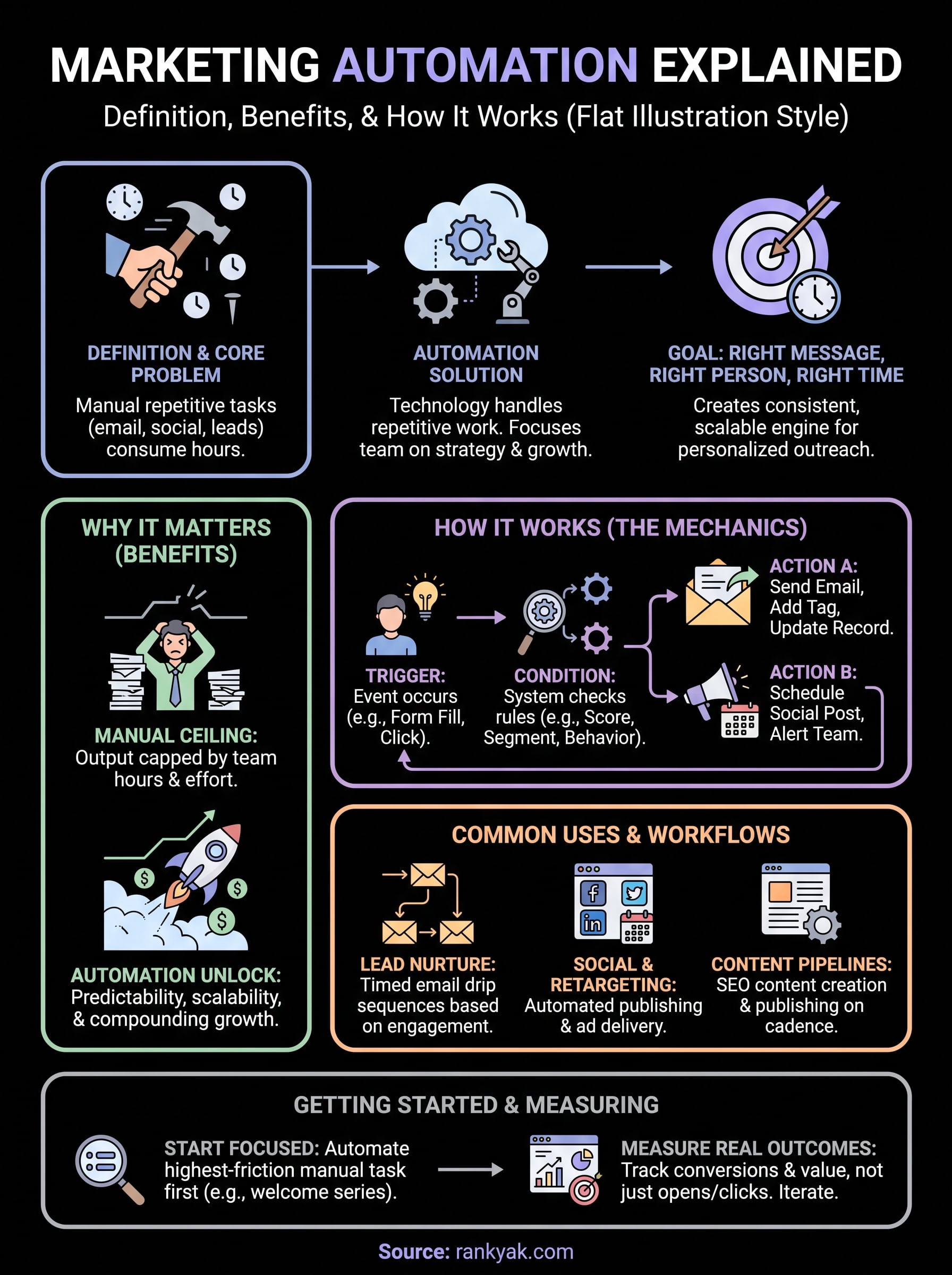
Every business has tasks that repeat, sending emails, scheduling social posts, scoring leads, publishing content. Doing all of that manually eats hours that could go toward strategy, product development, or actual growth. That's the core problem marketing automation explained in simple terms: it's technology that handles repetitive marketing work for you, so your team can focus on what moves the needle.
But marketing automation isn't just about saving time. When set up well, it creates a system where the right message reaches the right person at the right moment, without someone clicking "send" each time. From email drip campaigns to SEO content pipelines, automation turns scattered efforts into a consistent, scalable engine.
At RankYak, we built our platform around this exact principle. SEO is one of the most repetitive and time-consuming areas of marketing, keyword research, content creation, publishing, backlink outreach, and automating those tasks is what we do every day. So when we talk about marketing automation, we're not just defining a concept; we live it as a product.
This article breaks down what marketing automation actually is, how the technology works under the hood, the core benefits it delivers, and real examples of tools and strategies businesses use right now. Whether you're evaluating your first automation platform or looking to understand the broader category, you'll walk away with a clear, practical foundation.
Why marketing automation matters
The gap between marketing teams that grow consistently and those that stall usually comes down to one thing: systems. When you rely on manual effort for tasks like email follow-ups, lead scoring, or content publishing, you create a ceiling on how much your marketing can produce. That ceiling isn't a talent problem. It's a workflow problem, and automation removes it by turning scattered, one-off actions into repeatable processes that run without constant human input.
When your marketing runs on manual effort alone, your output is capped by the hours your team has. Automation breaks that constraint entirely.
The cost of doing it all manually
Most marketing teams underestimate how much time repetitive tasks consume each week. Drafting individual follow-up emails, manually tracking which leads engaged with which content, updating spreadsheets after every campaign, logging into three different tools to publish one piece of content, all of that adds up fast. Research from McKinsey & Company has found that nearly 45% of work activities could be automated using current technology, and marketing sits among the highest-impact areas.
Beyond the hours lost, manual execution introduces inconsistency and error. A follow-up email that should go out 24 hours after a sign-up gets delayed because someone missed it. A lead who was ready to buy goes cold because no one triggered the next touchpoint. A blog post that needed to publish Monday morning sits in draft until Tuesday afternoon. These aren't edge cases. They happen constantly in teams that haven't built automated workflows into their core marketing operations.
There's also a compounding cost. Every week you spend on manual execution is a week you're not spending on strategy, creative work, or testing new channels. The opportunity cost accumulates, and over a year, it often exceeds what a solid automation platform would have cost in the first place.
What automation actually unlocks
Once you grasp marketing automation explained at a systems level, the real benefits become clear. Automation doesn't just save time; it creates predictability. Your lead nurture sequence runs whether your team is in the office or not. Your weekly content publishes on schedule. Your highest-value prospects get scored and flagged automatically, so your sales team knows exactly where to focus without guesswork.
The second major unlock is personalization at scale. Without automation, you can personalize for a small list before the effort becomes unmanageable. With it, you can segment by behavior, purchase history, location, or engagement level, and send each group exactly what they need to hear next. That kind of targeted communication consistently drives higher conversion rates and stronger retention, because people respond to relevance, not broadcast messages.
For smaller businesses and lean teams, this matters most. You don't need to hire five more people to run five times the campaigns. You build the workflow once, the system executes it every time a trigger fires, and your marketing compounds over time without linear increases in headcount or budget. That scalability is the core reason businesses of every size are moving away from manual marketing operations and toward automated systems.
How marketing automation works
At its core, marketing automation runs on a simple logic loop: something happens, and the system responds with a predetermined action. A visitor fills out a form, a lead reaches a score threshold, a subscriber clicks a link. These events tell the platform what to do next, whether that's sending an email, updating a contact record, or alerting your sales team. Understanding how the mechanics work is what turns marketing automation explained from a buzzword into a practical framework you can actually build on.
Triggers, actions, and conditions
Every automation workflow starts with a trigger: an event that fires the sequence. That could be a user signing up, abandoning a cart, downloading a resource, or simply reaching a specific date. Once the trigger fires, the system moves through a set of conditions and actions you've defined in advance. A condition might check whether the contact belongs to a specific segment or has opened a previous email. An action might send a follow-up message, add a tag, or move the contact into a different workflow entirely.
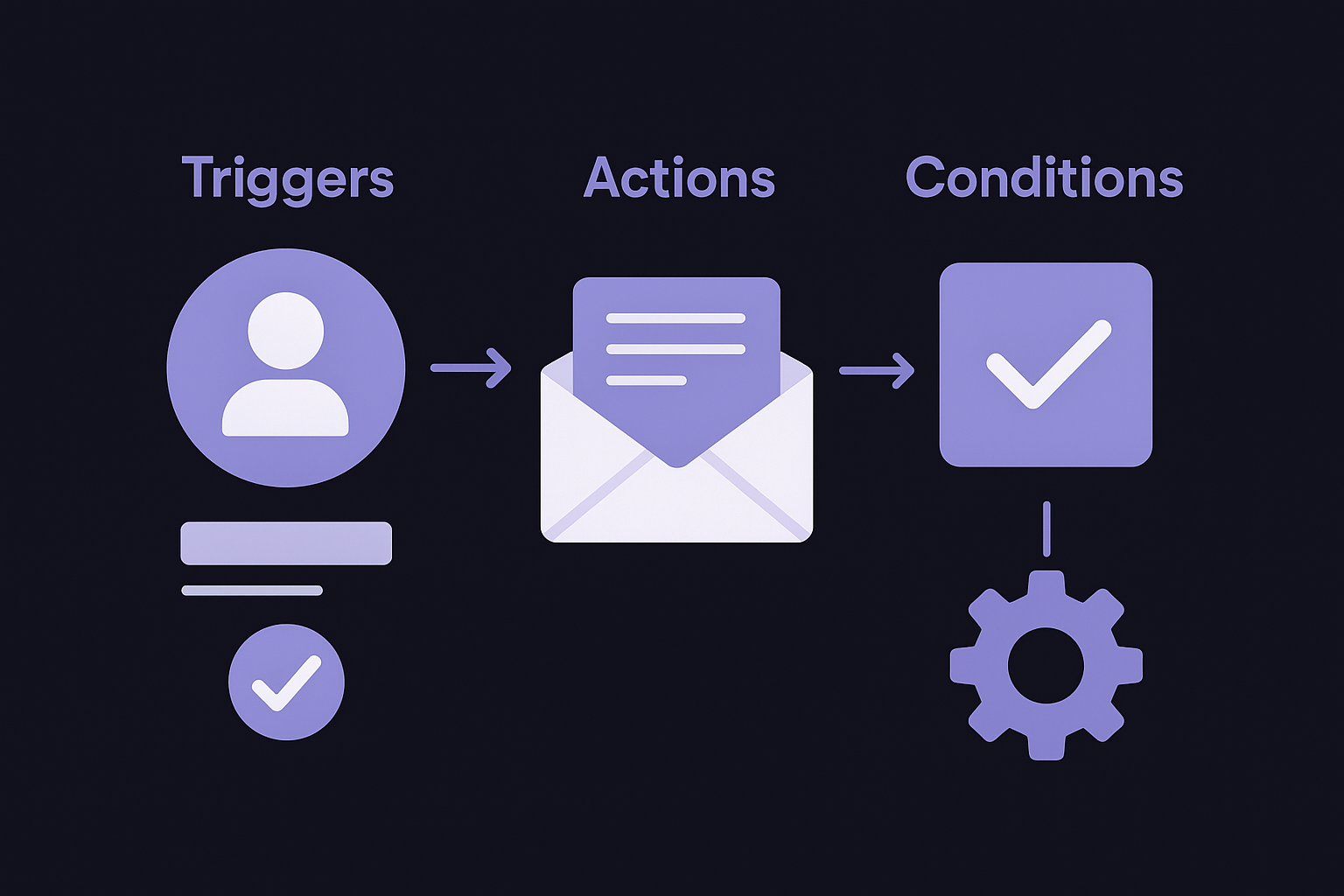
The cleaner your trigger logic, the more precisely your automation delivers the right message to the right person at the right time.
This layered structure gives you granular control over how contacts move through your funnel. Rather than sending the same message to everyone, your workflows branch based on real behavior, so each contact receives a path that matches where they actually are in their decision process.
The role of data and segmentation
Automation platforms collect behavioral and demographic data on every contact: what pages they've visited, what emails they've opened, what products they've viewed, and how recently they've engaged. That data feeds into segmentation rules that determine which workflow a contact enters and when. Without clean, structured data, even well-built workflows send irrelevant messages to the wrong people, which damages both conversion rates and sender reputation.
Most platforms also connect to your CRM, ad accounts, and website analytics through native integrations or APIs. This creates a single source of truth for your marketing data, so every tool in your stack works from the same contact records and behavioral signals, and your marketing responds to real user actions rather than assumptions.
Common marketing automation uses and workflows
Marketing automation touches nearly every channel your business uses to reach customers. The most effective teams don't automate one isolated task; they build connected workflows that move a contact from first touch to loyal customer without a single manual handoff. Understanding which use cases deliver the highest return is where marketing automation explained becomes genuinely practical for your day-to-day operations.
Lead nurturing email sequences
When someone signs up for your newsletter or downloads a resource, they've shown interest but they're rarely ready to buy. Email drip sequences close that gap automatically. You set up a series of messages, each timed to deliver value based on where the contact sits in their journey, and the system handles delivery based on engagement triggers. If a contact opens email two but ignores email three, your workflow can branch and send a different message that addresses a common objection instead of repeating the same pitch.
The best lead nurture sequences feel like a conversation because they respond to what the contact actually does, not what you assume they need.
These workflows consistently outperform one-off campaigns because timed, relevant communication builds trust that a single email blast never can. Contacts who receive structured nurture sequences convert at significantly higher rates and tend to spend more per purchase than those who receive no follow-up at all.
Social media and ad retargeting
Scheduling social posts across multiple platforms manually is one of the most common time drains marketers face. Automation tools let you build a publishing calendar in advance, then distribute content across channels at optimal times without logging into each platform separately. On the paid side, ad retargeting workflows automatically serve relevant ads to visitors who viewed a specific product page or abandoned a checkout, keeping your brand visible without manual campaign adjustments every day.
Content publishing and SEO pipelines
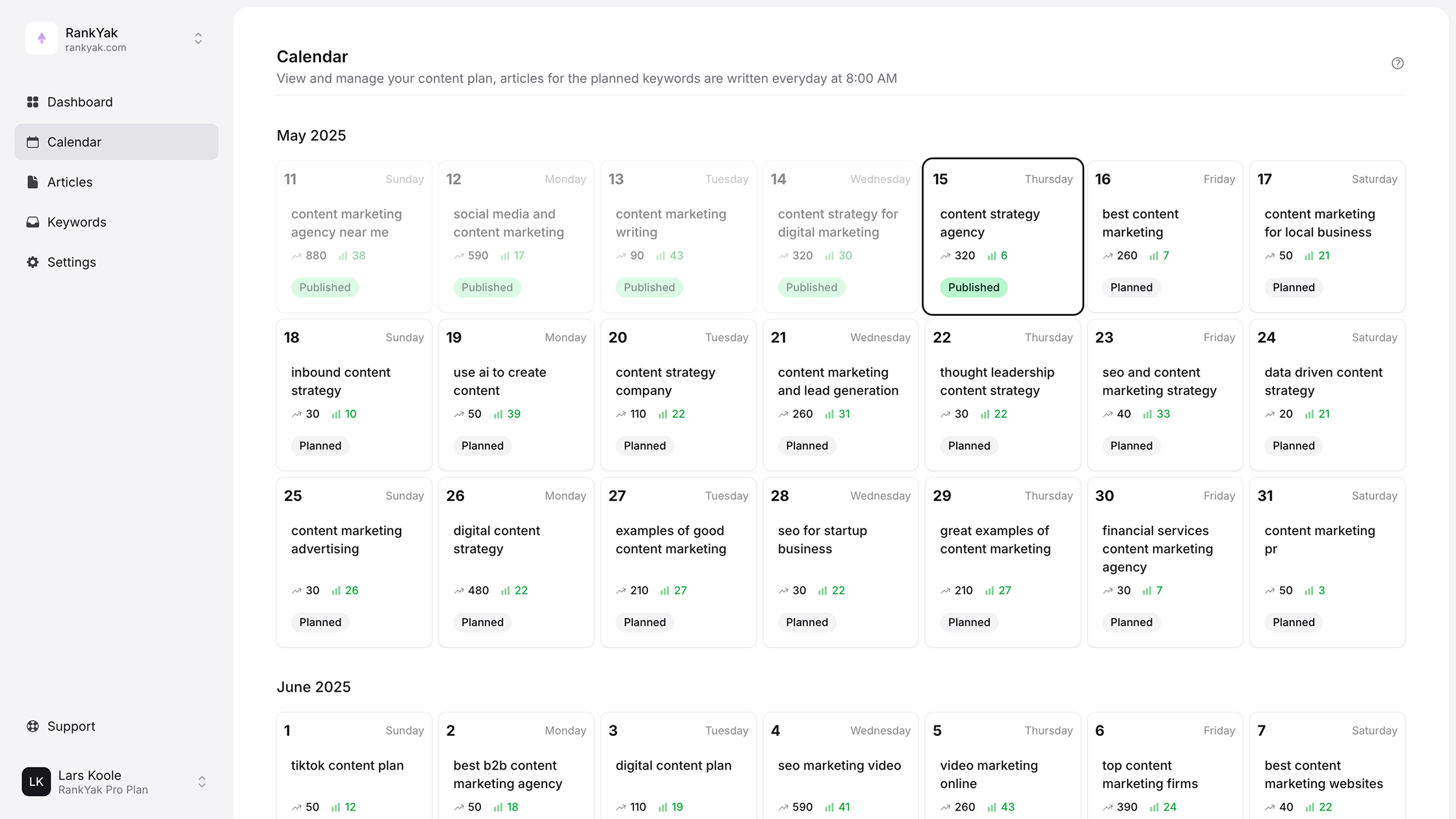
Content publishing workflows are where automation creates compounding growth. Rather than manually uploading, formatting, and scheduling each article, you build a pipeline that handles the full process from creation to live publication. For SEO specifically, this means your site produces and publishes optimized content on a consistent cadence, which is exactly what search engines reward over time.
Marketing automation tools and key features
The platform you choose shapes what marketing automation explained looks like in practice for your business. Not every tool does the same thing, and picking one that doesn't match your actual workflows wastes both money and setup time. The market broadly splits into email-focused platforms, full-suite marketing hubs, and specialized tools built for a single channel like SEO or social media. Your decision should start with the specific workflows you need to automate, not with the brand name everyone's talking about.
Core features to look for
Every platform worth evaluating should handle a few non-negotiable tasks well. Workflow builders let you map out trigger-action sequences visually, so you can see exactly how a contact moves through your funnel without digging into code. Contact segmentation gives you the ability to split your audience by behavior, demographics, or engagement level, ensuring each workflow targets the right group. Beyond those fundamentals, look for native integrations with the tools you already use, whether a CMS, CRM, or ad platform, because disconnected data creates gaps that no amount of automation can fix.
The more tightly your automation platform connects to your existing stack, the more accurately it responds to real user behavior.
Reporting is the feature most buyers underestimate. Real-time analytics tell you which workflows are converting, where contacts drop off, and what needs adjustment. Without that visibility, you're running automated campaigns blind, making meaningful optimization nearly impossible.
Platform categories and examples
Email-centric platforms like Mailchimp or Klaviyo focus primarily on subscriber journeys and campaign performance. Full-suite hubs like HubSpot or Marketo layer in CRM functionality, ad management, and deeper behavioral tracking on top of email. For SEO content pipelines specifically, dedicated platforms automate the entire workflow from keyword discovery through publishing, which is exactly the gap RankYak fills for businesses that need consistent organic content without hiring a full editorial team.
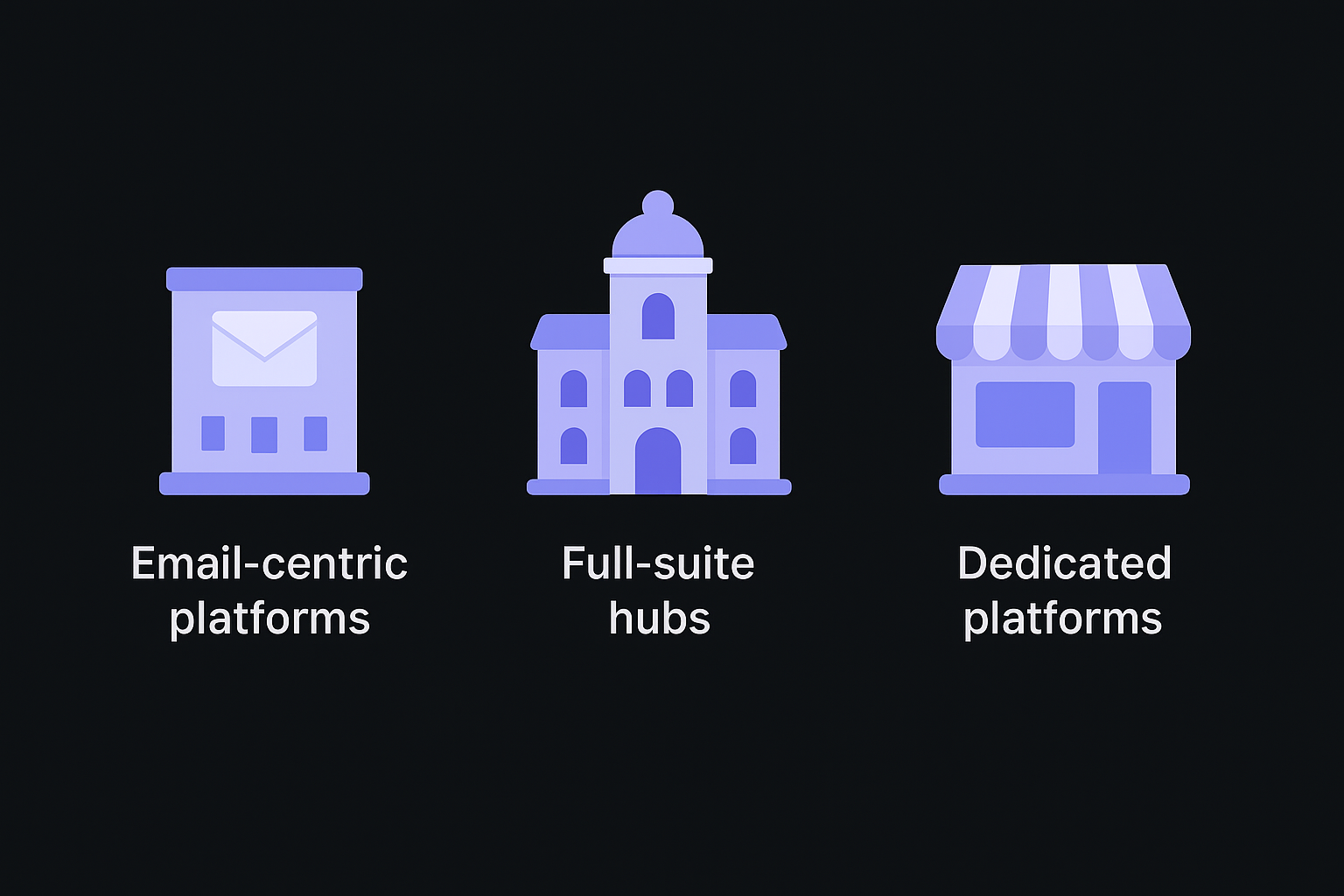
Matching the right platform category to your primary growth channel is the fastest path to seeing a genuine return on your automation investment.
How to get started and measure results
Getting started with marketing automation doesn't require you to automate everything at once. The most common mistake is trying to build ten workflows simultaneously before you understand how any of them perform. Start with a single high-impact workflow, validate that it works, then expand from there. This approach keeps your setup manageable and gives you real data to learn from before you commit more resources to the platform.
Pick your highest-friction task first
Before you touch any software, identify the single manual task that costs your team the most time each week. For most businesses, that's either a welcome email sequence, a lead follow-up process, or a content publishing pipeline. Build your first automation around that task, map the trigger and the action sequence clearly, and run it for at least two to four weeks before adjusting anything. A focused first build teaches you more about how your audience responds than a complex multi-channel workflow launched before you've established a baseline.
The best starting point is always the workflow that removes the most friction from your current process, not the most technically impressive one you could build.
Once that first workflow is stable, you can layer in additional automations, connect more channels, and increase complexity step by step. Marketing automation explained at a practical level is really about iteration over installation, and each workflow you add builds on real data rather than assumptions.
Measure the metrics that reflect real outcomes
Tracking open rates and click-through rates tells you whether your messages land, but conversion metrics tell you whether your automation generates actual business value. Set a clear goal for each workflow before you launch it: a lead nurture sequence should move contacts toward a sales call; a content pipeline should grow organic traffic month over month. Tie every workflow to a specific, measurable outcome so you can evaluate it honestly rather than by vanity numbers.
Review your workflow performance on a regular schedule, monthly at minimum. Look for where contacts drop off, which segments convert best, and what trigger timing produces the strongest response. Consistent measurement over time turns a functioning workflow into a high-performing one that compounds results rather than just maintaining them.
Next steps
Marketing automation explained is a framework you apply and refine over time, not a one-time setup. The businesses that see the biggest gains don't pick the most complex tool or build elaborate workflows on day one. They identify their highest-friction manual process, automate it well, measure the outcome, and build from there. Every workflow you add creates a system that grows your marketing output without growing your workload at the same rate.
For many businesses, SEO content is exactly that high-friction area: keyword research, writing, formatting, and publishing eat hours every week with no guarantee of consistency. RankYak automates that entire pipeline, from keyword discovery through daily article publishing, so your site produces optimized content on a consistent schedule without a full editorial team behind it. You can start testing the platform immediately with no long-term commitment. Start your free trial of RankYak and see how far automated content can take your organic growth.

Get Google and ChatGPT traffic on autopilot.
Start today and generate your first article within 15 minutes.
SEO revenue calculator
How much revenue is your website leaving on the table?
Take a quick quiz and see exactly how much organic revenue you're missing out on, along with personalized tips to fix it.
-
4 questions, under 1 minute
-
See traffic and revenue potential
-
No email required
Free · takes 1 minute · no signup needed
Question 1 of 4
Question 2 of 4
Question 3 of 4
Question 4 of 4
Your SEO growth potential
Extra visitors / month
after 6-12 months of consistent publishing
Revenue potential / year
at your niche's avg. conversion rate
Articles needed (12 mo)
to reach this traffic level
ROI with RankYak
at $99/mo ($1,188/year)
To hit that number, you'd need to:
- Build a topical authority strategy for your niche
- Research keywords & map out a full topical cluster
- Write, edit & publish an article every single day
- Build backlinks to the articles you publish
RankYak handles all of this automatically, every day.
* Estimates based on industry averages. Results vary by niche, competition, and domain authority. Most SEO results become visible after 3-6 months of consistent publishing.