On-Page vs Off-Page SEO: Differences, Examples, And Tips
Most SEO advice throws around terms like on-page vs off-page SEO without explaining what actually falls into each bucket, or why the distinction matters for your rankings. The result? Business owners end up pouring effort into one side while completely neglecting the other, then wondering why their traffic stays flat.
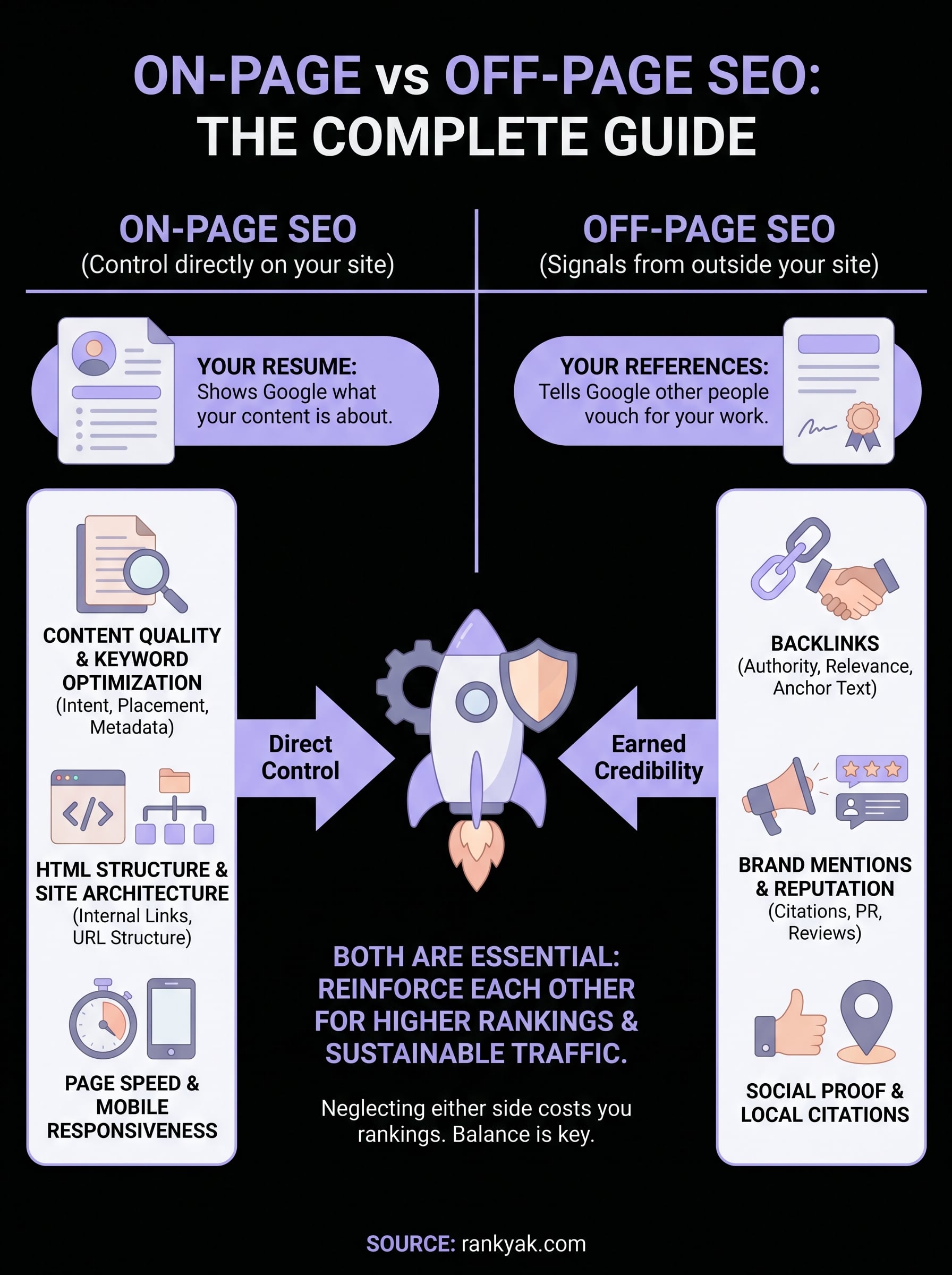
Here's the short version: on-page SEO covers everything you control directly on your website, content, HTML, site structure. Off-page SEO is everything that happens elsewhere, backlinks, brand mentions, authority signals. Both are essential, and they reinforce each other. A perfectly optimized page won't rank without external trust signals, and a mountain of backlinks won't save thin or poorly structured content.
This guide breaks down each category with clear definitions, real examples, and practical tips you can act on. We'll also cover how on-page and off-page SEO work together as a system, which is exactly the approach we built RankYak around. From automated content creation with full on-page optimization to a built-in backlink exchange network, RankYak handles both sides of the equation so your site grows consistently without the manual grind.
Let's get into it.
Why on-page and off-page SEO both matter
Think of your website like a job application. On-page SEO is your resume, showing Google exactly what your content covers, how well it's structured, and whether it matches what someone searched for. Off-page SEO is your references, the external signals that tell Google other people vouch for your work. You need both to get the job. A brilliant resume with no references raises doubt. Strong references tied to a weak resume raise the same concern from the hiring manager.
Google treats your site as a whole system
Google doesn't evaluate your pages in isolation. Its ranking algorithm pulls from hundreds of signals simultaneously, including your content quality, page structure, backlink profile, and the authority of the sites pointing to you. When you understand the on-page vs off-page SEO distinction, you start to see these aren't two separate strategies. They're two halves of a single system that reinforce each other.
A site with strong on-page SEO and solid off-page signals will consistently outperform sites that invest heavily in just one side.
On-page signals help Google understand what your content is about and whether it satisfies the search intent behind a query. Off-page signals help Google determine how much to trust your site relative to all the other pages competing for the same keyword. Strip either one away, and your ability to rank drops sharply.
Your on-page work also affects how well your off-page efforts pay off. When someone links to your page, Google crawls that page to evaluate what it's about and how well it's built. If your content is thin, poorly structured, or misaligned with your target keyword, the backlink still passes some authority, but far less than it would if your content clearly delivered on its topic.
What happens when you focus on only one side
Sites that pour resources into content creation without building any external authority tend to plateau quickly. They rank for low-competition, low-volume keywords where few backlinks are required, but they can't break through for anything with real search demand. Google needs external validation before it pushes your content into competitive positions.
On the flip side, sites that chase backlinks without solid on-page foundations often see rankings that fluctuate month to month. If Google's crawlers can't clearly read your page, understand its structure, and match it to actual search intent, links alone won't hold your position. Traffic may spike and then fall off with no obvious explanation.
The practical takeaway is direct: treat on-page and off-page SEO as a budget you split, not as competing priorities. Neglecting either side costs you rankings, and fixing the gap later requires significantly more effort than building both in parallel from the start. Most sites that struggle with stagnant organic traffic have a visible imbalance between the two, and closing that gap is usually where the biggest gains come from.
What on-page SEO covers and how it works
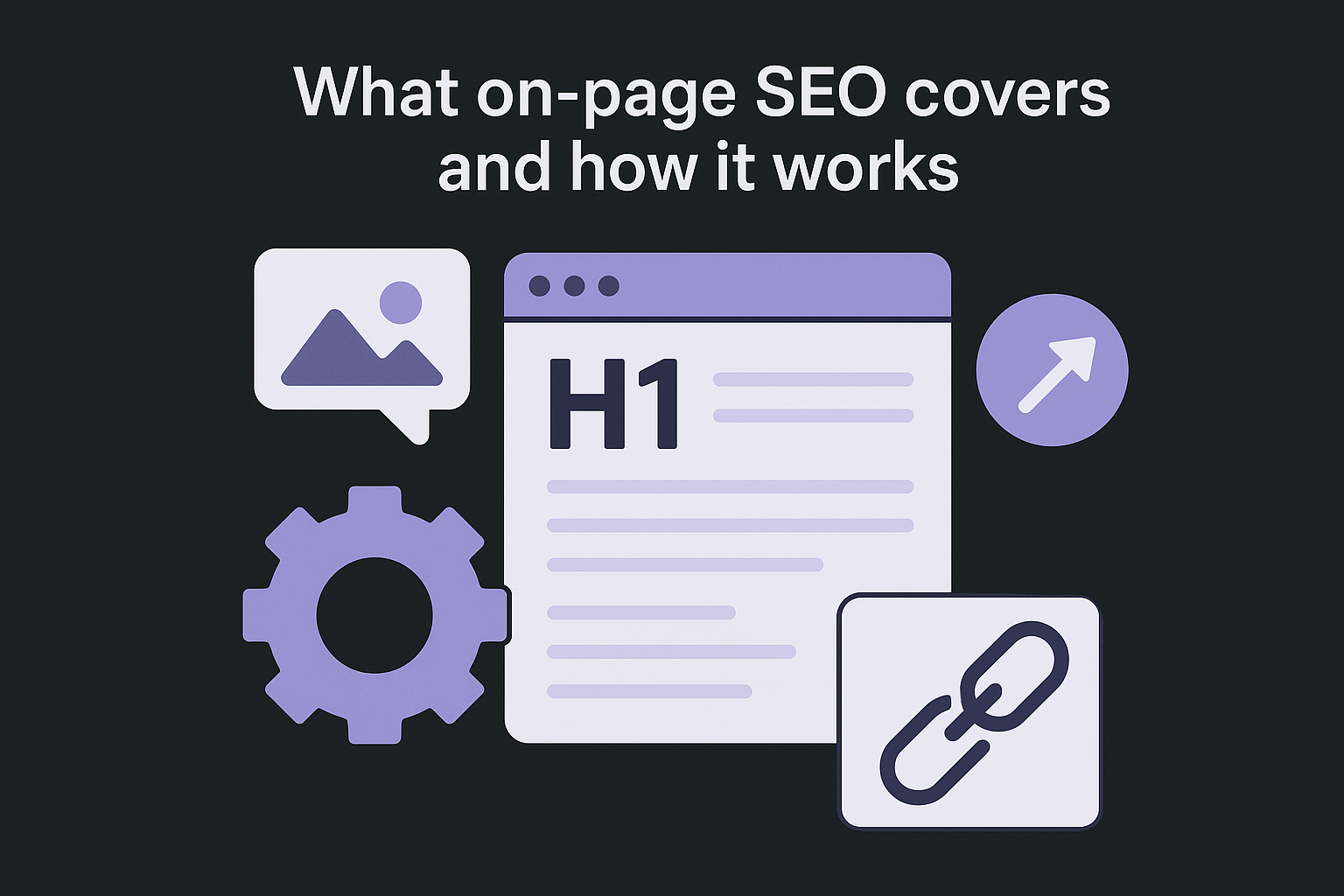
On-page SEO includes every element you can directly control within your own website, and doing on-page SEO right starts with knowing which of those elements Google actually reads. When you think about on-page vs off-page SEO, on-page is your side of the equation: content quality, keyword placement, HTML structure, and page architecture all fall here. Google reads these signals to understand what your page is about and whether it deserves to rank for a specific query.
Content and keyword optimization
Your content is the foundation of on-page SEO. Targeting the right keyword in the right places, your title tag, H1, opening paragraph, and naturally throughout the body, tells Google exactly what topic you're covering. Beyond placement, search intent alignment matters even more: if someone searches for a comparison and your page delivers a product pitch, Google will rank a more relevant result above you regardless of how well you placed your keyword.
Getting search intent right is the single biggest factor in whether your content earns a top ranking or stays buried on page three.
Metadata also plays a role here. Title tags and meta descriptions influence both rankings and click-through rates, so write them with your target keyword and a clear value statement, then preview how your title and description appear in Google before the page goes live.
Technical and structural elements
Technical on-page factors include page speed, mobile responsiveness, URL structure, internal linking, and crawlability. These don't directly drive rankings on their own, but weak technical foundations limit how much your content improvements can accomplish. A slow page with poor mobile formatting signals a bad user experience, and Google's systems factor that into ranking decisions.
Internal linking deserves specific attention. Connecting your pages with descriptive anchor text helps Google understand the relationships between your content and distributes page authority across your site. Building topic clusters, where a pillar page links to supporting articles and vice versa, is the part of site architecture for SEO that signals both depth and organization to search crawlers.
What off-page SEO covers and how it works
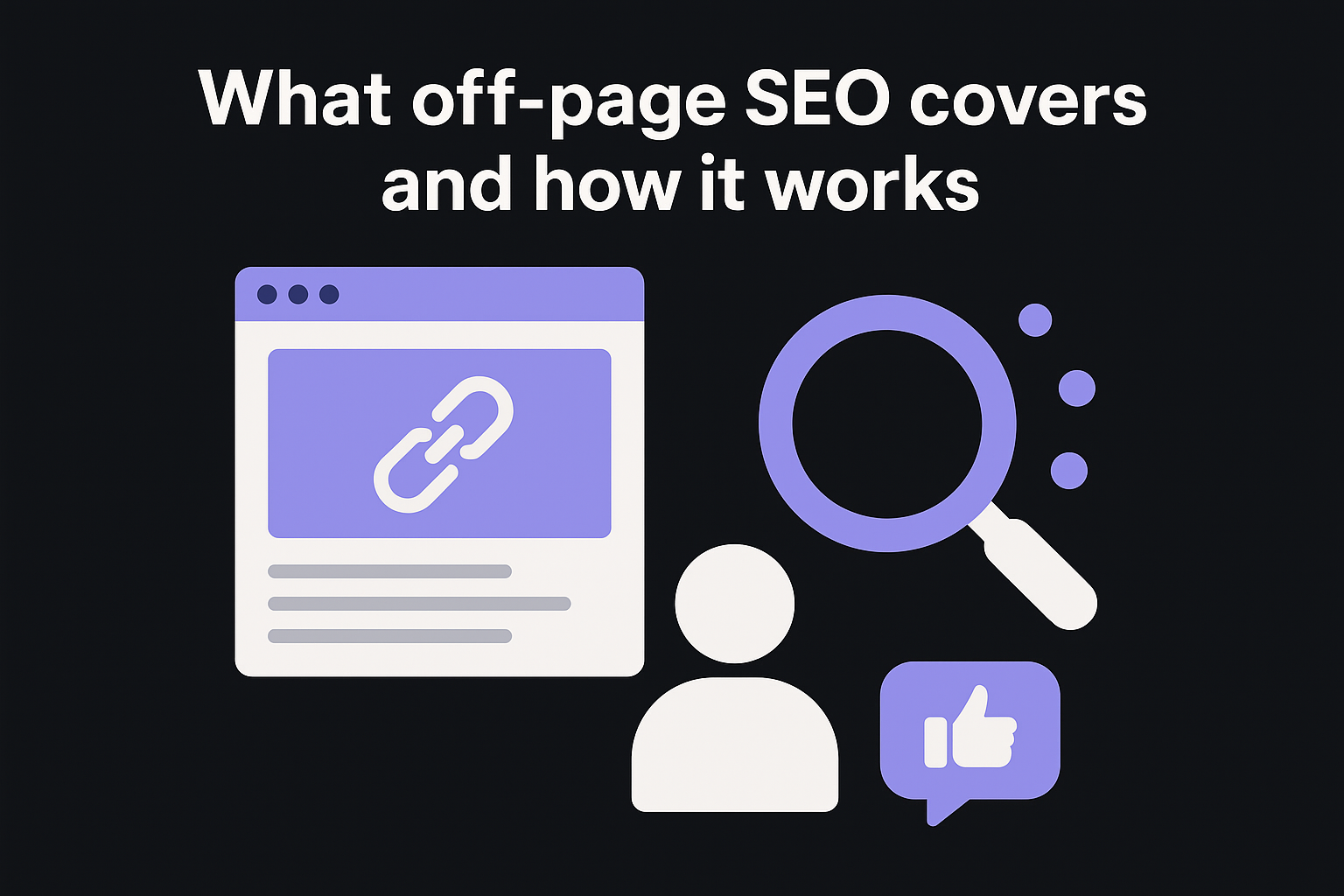
Off-page SEO includes every signal that originates outside your website but influences how Google ranks your pages, and there are off-page tactics that build authority for each of them. When you compare on-page vs off-page SEO, the off-page side is about earned credibility: who links to you, who mentions you, and how much the broader web treats your domain as a trustworthy source on your topic.
Backlinks: the core of off-page authority
Backlinks remain the most powerful off-page ranking factor Google uses, which is why backlinks matter so much for SEO. Each link from an external site functions as a vote of confidence, but not all votes carry equal weight. A single link from a high-authority, topically relevant site in your niche will move the needle far more than dozens of links from unrelated or low-quality domains. Google's systems evaluate the source, the anchor text, and the context surrounding the link before deciding how much authority to pass along.
Link quality almost always beats link quantity, and one strong backlink can outperform a hundred weak ones.
Building backlinks takes real effort: publishing content worth citing, earning coverage through digital PR, contributing guest articles, or using an automated backlink network that replaces outreach to connect you with sites in adjacent niches. The common thread across all these methods is that links need to feel earned and natural, not forced or purchased, which is why shortcuts in this area tend to backfire quickly.
Other off-page signals that matter
Beyond backlinks, brand mentions and online reputation signals feed into how Google evaluates your domain. When authoritative sources reference your brand by name, even without a hyperlink, Google connects those mentions to your site and factors them into its trust assessment. Reviews, social proof, and local citations also play a role, particularly for businesses competing in local search results.
Your off-page profile builds over time. Consistent effort compounds, and a strong backlink profile built gradually is far more durable than one assembled through bulk tactics that trigger algorithmic penalties.
How to build a balanced SEO plan
Understanding on-page vs off-page SEO as separate disciplines only gets you so far. The real gains come from building a plan that develops both simultaneously rather than in phases. Most site owners default to content first and backlinks later, but waiting until your content library is "ready" before pursuing links means leaving authority on the table for months.
The strongest SEO plans treat on-page and off-page work as parallel tracks, not a sequence.
Start with your on-page foundation
Your on-page work needs to be solid enough that any backlink you earn actually converts into ranking power. Begin with keyword discovery tied directly to your niche, targeting terms with clear search intent and realistic competition levels for your current domain authority. Each piece of content you publish should have a defined target keyword, a fully optimized title tag, and a logical internal link structure connecting it to related pages on your site.
Prioritize building topic clusters early, and turn one seed subject into a map of pillars and supporting articles before you start writing. When you group content around a central pillar page with supporting articles pointing to it, Google reads your site as an authoritative source on that subject rather than a collection of unrelated posts. That structure pays dividends when your off-page authority starts to grow.
Layer in off-page efforts consistently
Once you have a core set of well-optimized pages, start building links to your highest-value, most thoroughly developed content. Focus on relevance over volume: a backlink from a site covering your exact industry is worth far more than a generic directory listing. Pursue links through guest contributions that earn quality links, digital PR, and backlink exchange programs that connect you with topically aligned sites.
Consistency is the key variable in off-page growth. A site that earns five to ten quality backlinks per month over a year will dramatically outperform a site that runs one large link-building campaign and then stops. Build the habit of monthly outreach alongside your regular content publishing, and your authority compounds steadily.
Common mistakes and quick fixes
When you understand on-page vs off-page SEO as two halves of the same system, the most common mistakes become easier to spot. Most site owners don't fail because they're doing things wrong entirely. They fail because they're inconsistent on one side or skipping steps that seem minor but compound into real ranking problems over time.
On-page mistakes that limit your rankings
The most frequent on-page error is targeting the wrong keyword intent. You might optimize a page perfectly for a keyword, but if your content answers an informational question while the searcher wants a product comparison, Google will rank a better-matched page above yours regardless of your technical setup. Fix this by reviewing the top-ranking results for your target keyword before writing: if they're all listicles, your long-form guide won't match what Google wants to rank there.
Another common mistake is neglecting internal links. Publishing content without connecting it to related pages on your site wastes the authority each post builds and fragments your topic coverage in Google's eyes. Go back through your existing content and add links between related articles using descriptive anchor text that signals what the destination page covers.
Fixing internal linking on existing pages often produces faster ranking improvements than publishing new content.
Off-page mistakes that stall authority growth
Many site owners focus on link volume over link quality, collecting dozens of links from generic directories or low-relevance blogs while ignoring the few high-authority placements that would actually move their rankings. A single strong link from a respected publication in your niche is worth more than fifty irrelevant links. Audit your backlink profile with Google Search Console to identify which links are driving real authority and where the gaps are.
The other off-page mistake is building links in bursts rather than consistently. Algorithms flag unnatural spikes in link acquisition. Spreading your outreach evenly across months looks far more natural and produces durable ranking gains that hold through algorithm updates.
Next steps to improve your rankings
You now have a clear picture of how on-page vs off-page SEO work together and where most sites lose ground. The next move is to act on both tracks without letting one outpace the other. Start by auditing your existing pages for keyword intent alignment and internal linking gaps, then prioritize fixing those before publishing new content. On the off-page side, identify two or three high-authority sites in your niche and begin consistent outreach this month rather than waiting until your content library feels complete.
Consistency separates sites that rank from sites that stall. Publishing optimized content daily while simultaneously building quality backlinks is exactly the kind of compounding effort that produces durable organic growth, but it's also the part that most business owners don't have time to sustain manually. If you want both sides of your SEO handled on autopilot, let RankYak research, write, and publish your content every day and do the heavy lifting for you.
Lars Koole is a co-founder of RankYak and has worked in SEO since 2021, on the side where a strategy has to become a live page: inside agencies, alongside them, for clients directly, and in-house on the products being ranked. He is a software engineer by trade, which is how that page gets built. Before RankYak he founded companies of his own, two of which were acquired. At RankYak he owns the engineering and everything AI, and works out the solution and the implementation of each new feature.