Meta Tag Checker
Enter a URL and this pulls its meta tags, measures the title in the pixels Google truncates by, and checks the canonical, robots, social, and heading tags alongside them. Paste a list of URLs instead to audit a whole site in one pass and find the titles and descriptions your pages repeat.
Why pixels rather than characters
Almost every free meta tag tool counts characters and calls 60 the limit. Google does not count characters. It renders the title in a specific font at a specific size and cuts it when it runs out of room, which is about 600 pixels on desktop. A title of narrow lowercase letters fits far more than 60 characters; a title in capitals fits closer to 45.
The practical consequence is that a title can pass a character check and still be truncated in the result, which is exactly the case a checker is supposed to catch. This tool measures the rendered width in the same font Google uses, so a title reported as fitting will fit.
Auditing a whole site
Meta tags fail in patterns rather than one page at a time. A template ships with a suffix that pushes every title past the limit, a category page loses its description in a migration, a staging noindex survives a launch on a handful of URLs, or forty product pages inherit one title from the layout. Checking one page never surfaces any of those; checking fifty does.
Paste a list into the bulk tab and the table sorts the problem into view: titles over the pixel limit in red, missing and empty titles, missing descriptions, and pages a noindex keeps out of search whether it sits in the markup or in a header. Above the table, every title and description that two of the pages share is listed with the URLs carrying it, because a repeated title leaves Google choosing which page answers a query. Export the CSV and it becomes the fix list. If you need the URLs first, the sitemap validator will list them from any sitemap.
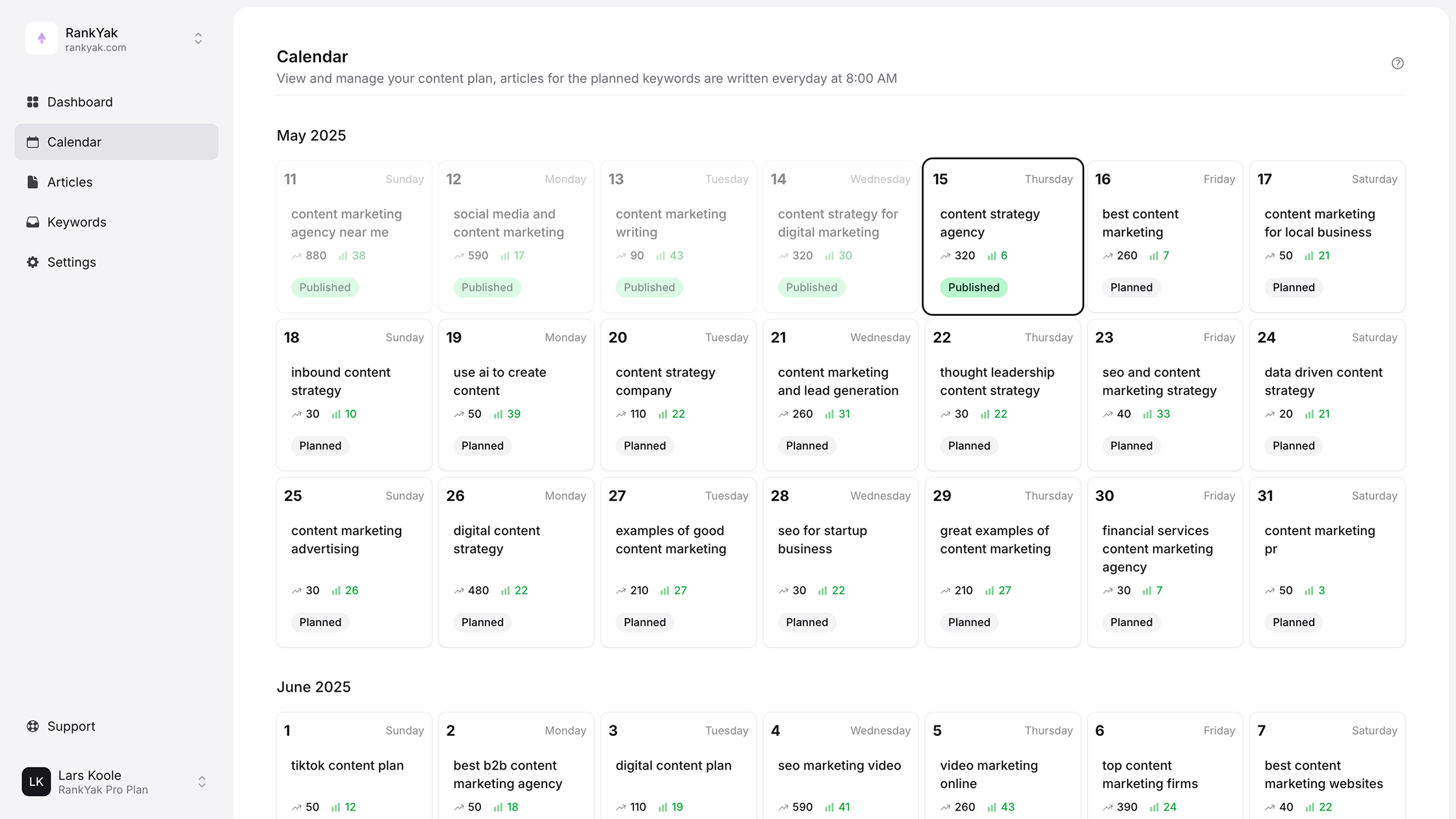
RankYak does this continuously for the sites it manages, and writes the replacement titles and descriptions itself rather than handing back a list. That is the difference between an audit and the work getting done.
Frequently Asked Questions
Google truncates by pixel width rather than by character count, at roughly 600 pixels on desktop. That works out to about 55 to 60 characters in ordinary sentence case, but a title in capitals or full of wide letters runs out of room sooner. This tool measures the actual pixel width, so the number it reports is the one that decides whether your title is cut.
Yes. Switch to the bulk tab and paste up to 50 URLs, one per line. Each is fetched and scored, the results fill in as they land, and the whole table exports to CSV. Any title or description that two of the pages share is listed above the table, which is the finding one page at a time never shows. This is the fastest way to audit a client site's templates or to check a migration before it goes live.
Google rewrites the snippet when it thinks another passage answers the query better, which happens on a large share of results. That is not a fault to fix. Writing a description that matches the query your page targets makes the rewrite less likely, and matching the query also earns the bolding that lifts click-through rate.
No, and it has not been one for many years. It affects rankings indirectly: the description decides whether your result gets clicked, and a result that consistently earns clicks tends to hold its position. Treat it as ad copy for a listing you already won rather than as a place to put keywords.
It weighs the checks listed underneath it: title and description length in pixels, keyword placement, whether the page is indexable in the markup and in the response headers, whether the canonical points at itself, whether there is exactly one H1, and whether the social tags carry an image as well as text. A failing check costs more than a passing one earns, because the failures on this list are the ones that cost traffic.
A noindex reaches Google by three routes, and only one of them is in the part of the markup people think to read. The response may carry an X-Robots-Tag: noindex header, which never appears in the page source at all, and a <meta name="googlebot"> tag is read ahead of the general robots tag for Google alone. This tool reads the response headers alongside the robots directives on the page, and names the one that is blocking it.
Both, and it reports them separately, because they are different things. The title tag is what a search result shows; the H1 is the heading on the page itself. They may differ, and often should: the title can carry the brand and the query, while the H1 reads naturally to someone who has already arrived.
Related tools
See exactly how a page appears in Google on desktop and mobile, measured in pixels the way Google truncates it.
Write five meta descriptions for any URL, each inside Google's pixel limit and built around the keyword you target.
Turn any title into a clean URL slug, one at a time or a whole list at once.
Get Google and ChatGPT traffic on autopilot.
Start today and generate your first article within 15 minutes.